


29 April 2026
The LIFE Aegypius Return project enters its final phase, having already achieved significant milestones
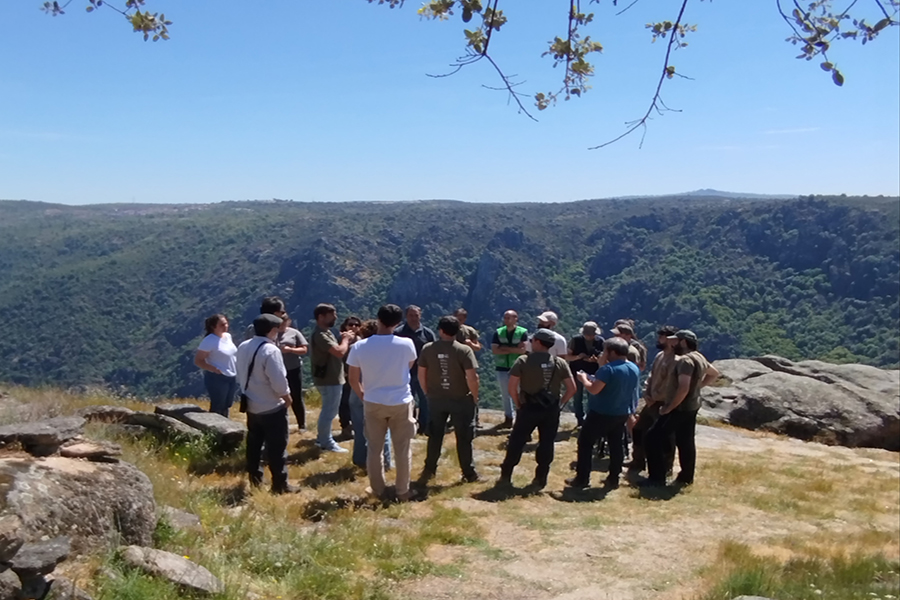
The Douro International Natural Park hosted the 5th partners’ meeting and external evaluation. Photo: Uliana de Castro/Palombar.
The fifth meeting of partners and external evaluators for the LIFE Aegypius Return project took place at the Douro International Natural Park on 14, 15 and 16 April. As has become tradition, the annual meetings of the LIFE Aegypius Return project bring together the nine consortium partner organisations, as well as authorities and collaborating NGOs, whose contributions have been essential to the implementation of the project.
Over the course of three days, the partners, the various regional directorates of the ICNF (Institute for Nature Conservation and Forests) and the NGO Rewilding Portugal discussed the progress made and planned the actions for the final phase of the project.
The meeting also included a monitoring visit by CINEA – The European Climate, Infrastructure and Environment Executive Agency, the body co-funding the project through the LIFE Programme. The overall assessment is largely positive, but conservation work continues.
.jpg)
The meeting was attended by the partners, organisations collaborating on the project and external evaluators. Photo: VCF.
The project's main achievements
As the project enters its consolidation phase, stakeholders highlight the growth of the Portuguese Cinereous Vulture population as a major victory, underpinned by decisive milestones:
• New breeding colony: Establishment of the country's fifth breeding colony (in Alentejo, in the municipalities of Vidigueira and Portel).
• Acclimatisation in the Douro Internacional: Soft release programme with ten individuals already acclimatised and five currently in the acclimatisation station.
• Remote monitoring: Approximately 60 Cinereous Vultures tagged with GPS/GSM transmitters, allowing for the detailed study of movements, behaviours, and causes of mortality or disturbance.
• Food reinforcement: Increased food availability through the approval of several Private Areas for the Feeding of Necrophagous Birds (APAAN), in close collaboration with livestock farmers across the country.
• Breeding success: Fighting breeding failure by repairing existing nesting platforms and increasing available nesting sites through the installation of new ones.
• Reducing disturbance: On-the-ground presence within local communities and intensified patrolling by the GNR (National Republican Guard) around colonies, now bolstered by three new canine units specialised in poison detection.
• Combating lead contamination: Training and awareness-raising within the hunting sector to promote the transition to lead-free ammunition, preventing collateral wild bird contamination.
• Strategic intervention: Active participation in public consultations and forums on land-use planning and the expansion of renewable energies, advocating for the species’ conservation.
• Scientific contributions: Partnerships with national and European universities and research centres to deepen ecological and clinical-veterinary knowledge of this endangered species, as well as identifying mortality factors and producing highly relevant reports and studies.
• Cross-sector cooperation: Collaboration between conservationists, veterinarians, authorities, livestock farmers, land managers, hunters, rural communities, the media, and other stakeholders has been fundamental to the success of all initiatives.
The project is set to conclude in December 2027; therefore, a phase of consolidating progress and developing numerous strategic documents to guide the future conservation of the Cinereous Vulture now begins.
.jpg)
The five Cinereous Vultures currently undergoing acclimatisation in Douro Internacional. Photo: VCF.
Douro Internacional Nature Park, much more than vultures
The days of intense work were accompanied by sunny weather, breathtaking views of the cliffs above the river and the unfailing hospitality of the people of Trás-os-Montes. The host partners – Faia Brava and Palombar –enriched the sessions with a gastronomic itinerary and visits to the local culture. The final day, dedicated to a field trip, showcased the impressive habitat restoration work carried out by Palombar following the major wildfire that devastated the region last August.
Highlights include the re-equipping of the acclimatisation station (including the logistics centre and CCTV system), the sowing of key species for ecosystem functioning, the reinforcement of riparian galleries, and the increase in food availability for vultures.
The recovery effort is evident in the green once again covering the Nature Park and in the species that inhabit it. Cinereous Vultures, Griffon Vultures, and Egyptian Vultures once again soar the skies, accompanied by Montagu's Harriers, Golden Eagles, Booted Eagles, kites, and dozens of other species in the height of the breeding season.
.png)
Habitat restoration following the 2025 fire was carried out by Palombar. Left: seedbeds. Photo: Uliana de Castro/Palombar; Right: restoration of the tree canopy to create biodiverse riparian galleries. Photo: VCF.
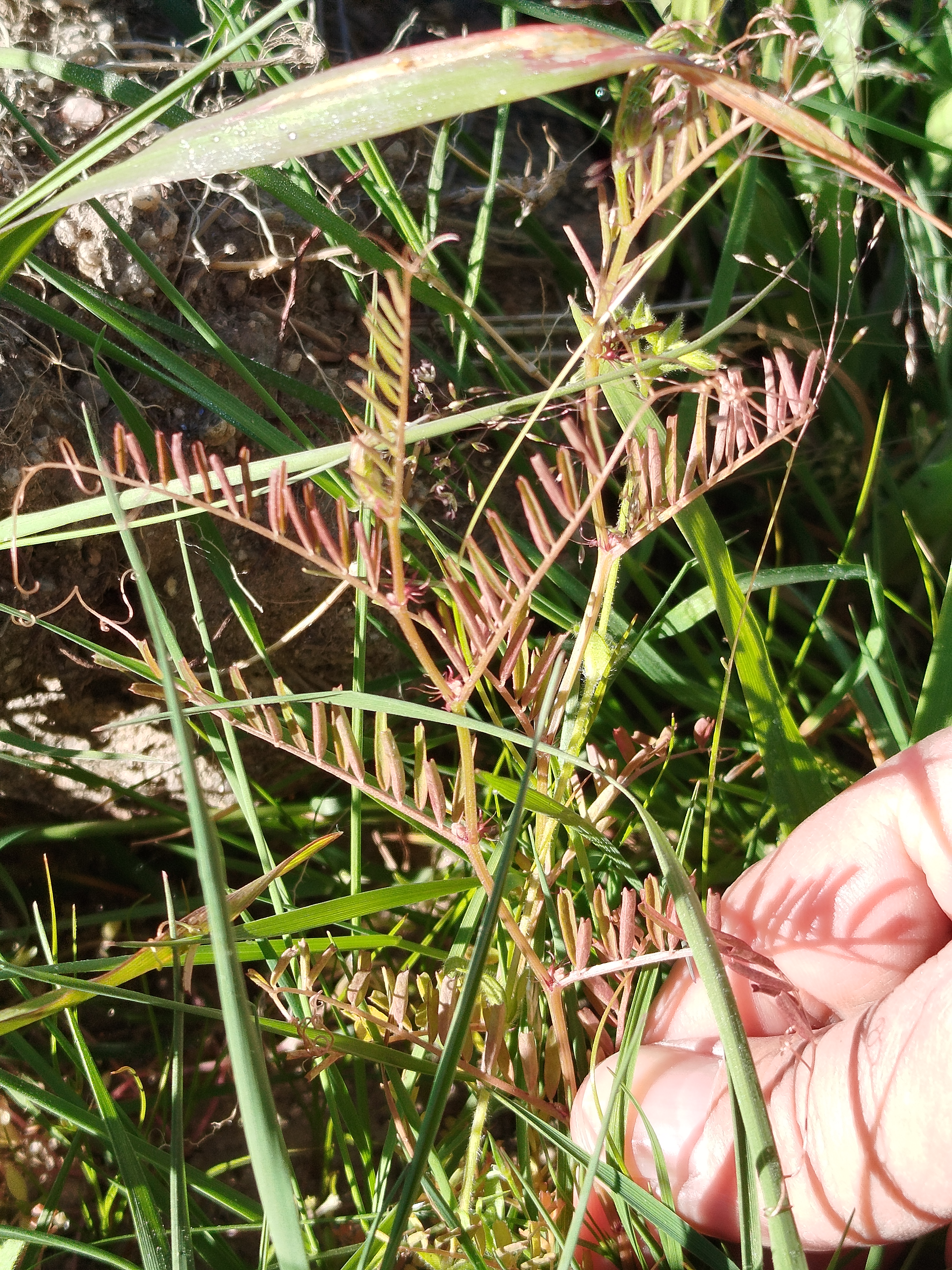
Crops were sown using local varieties of cereals and Leguminosae to promote extensive grazing and support wild prey species. Photo: Uliana de Castro/Palombar.
Participants in the field trip were also treated to the release back into the wild of a Griffon Vulture, which had been rehabilitated at the Gerês Wildlife Rehabilitation Centre after being found weakened in the Guimarães region.
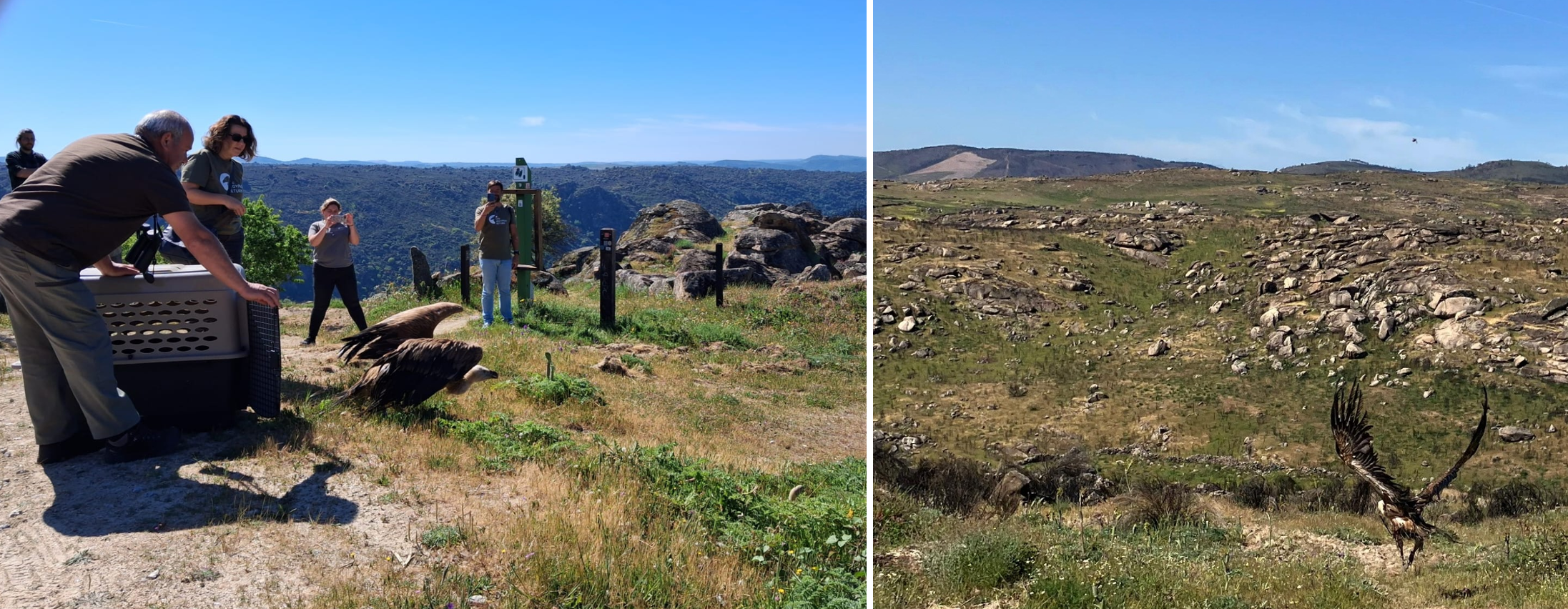
Griffon vulture rehabilitated at the ICNF’s Gerês Wildlife Rehabilitation Centre has been released back into the wild at the Carrascalinho Viewpoint, in the heart of the Douro International Natural Park. Photos: ANPC (left), LPN (right).
Acknowledgements
The partners of the LIFE Aegypius Return project would like to thank all individuals and entities involved in the works for their commitment to the project. Thanks are also due to the Lagoaça Parish Council and the Municipality of Freixo de Espada à Cinta for providing facilities and supporting the meeting's organisation, and to Associartecine for their support with the reception. A special thank you to the Gerês Wildlife Rehabilitation Centre, managed by the ICNF, for organising the release of the rehabilitated Griffon Vulture.
About the project
The LIFE Aegypius Return project is co-funded by the European Union’s LIFE programme. Its success depends on the involvement of all relevant stakeholders and the collaboration of the partners: the Vulture Conservation Foundation (VCF), the coordinating beneficiary, and the local partners Palombar – Nature and Rural Heritage Conservation, Herdade da Contenda, the Portuguese Society for the Study of Birds, the League for the Protection of Nature, Faia Brava – Nature Conservation Association, Fundación Naturaleza y Hombre, the National Republican Guard and the National Association of Rural Landowners for Game Management and Biodiversity.