


8 June 2026
“Friends of Montagu's Harrier”: a collaborative network launched to save this species from extinction
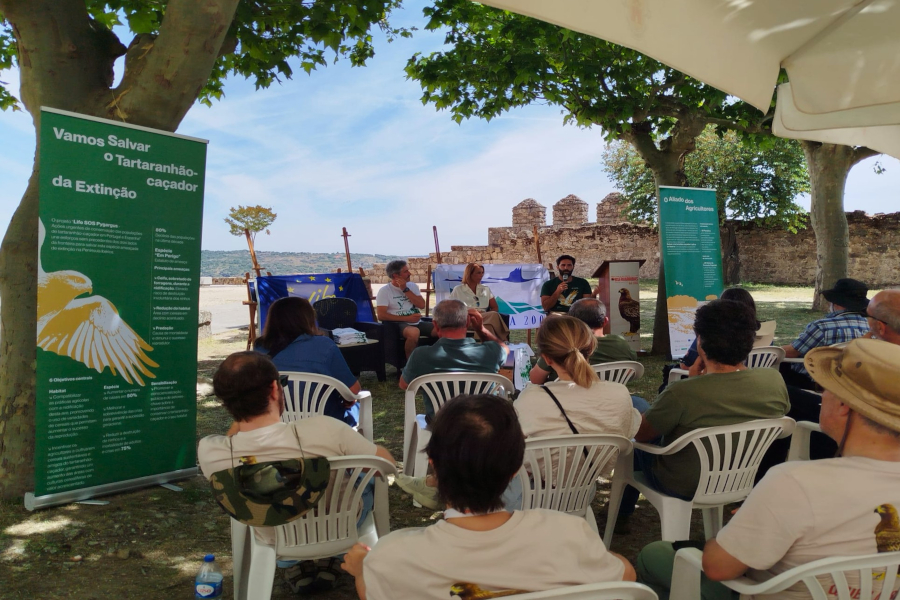
The network aims to bring everyone together in the mission to save the Montagu's harrier from extinction and to conserve the habitats that sustain it. Photo: Uliana Maria de Castro/Palombar.
The event kicked off with a presentation on the Network by Joaquim Teodósio, a nature conservation officer at Palombar and coordinator of the LIFE SOS Pygargus project. Joaquim Teodósio highlighted the importance of this collaborative initiative, which brings together the whole of society – citizens, farmers, forest managers, public bodies, companies, private organisations and other local stakeholders – in the protection and conservation of this migratory bird, which is at risk of extinction. He also highlighted the project’s actions, which promote and enhance everything from the biodiversity of the fields to the mountain ecosystems that bring life and balance to the landscape.
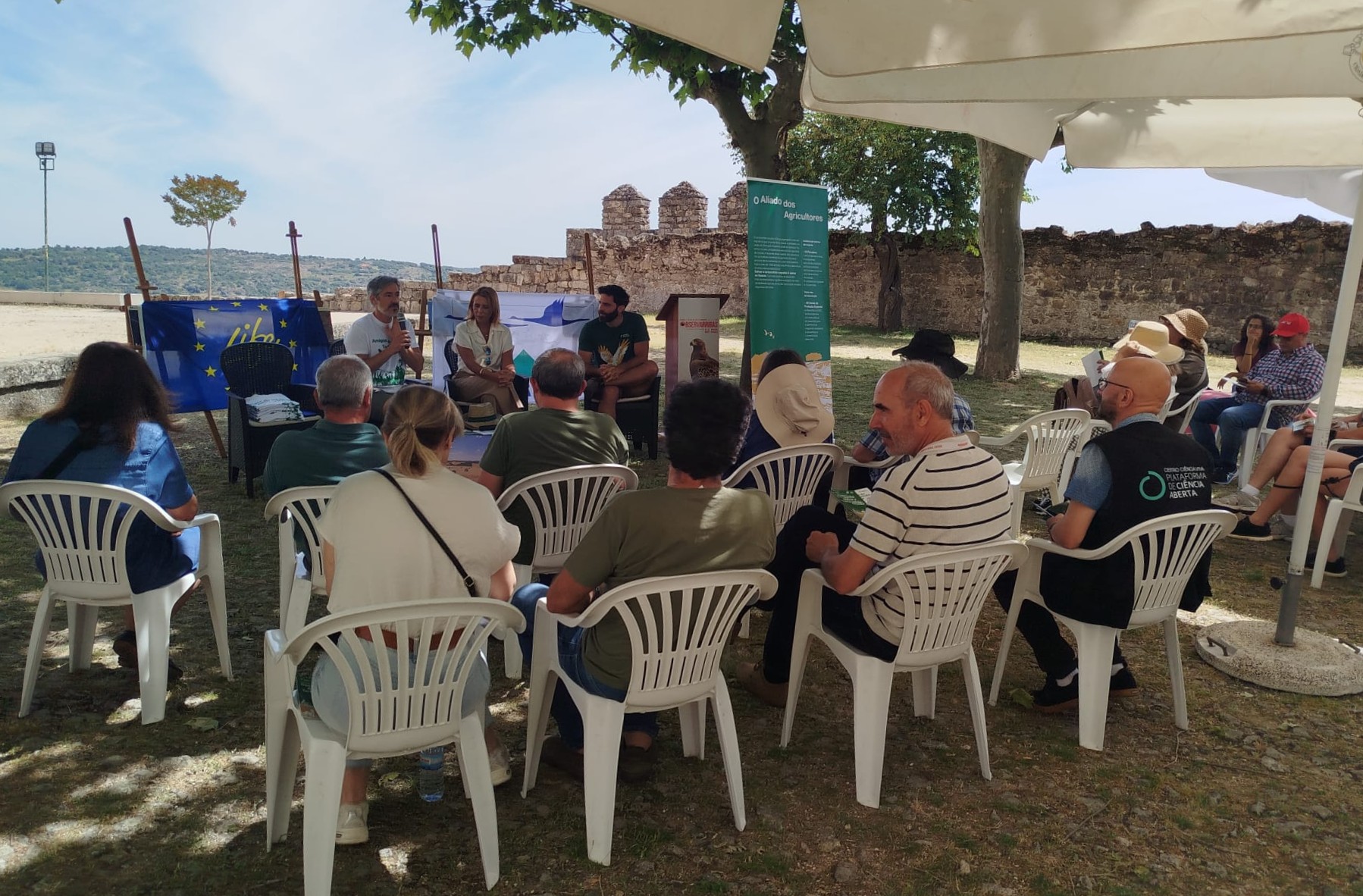
Joaquim Teodósio, the project coordinator, highlighted the initiatives that combine the conservation of this species with the development of agriculture, a vital sector that must also attract younger generations. Photo: Uliana Maria de Castro/Palombar.
Next, Sandra Sarmento, Regional Director for Nature Conservation and Forests in the North at the ICNF – the Institute for Nature Conservation and Forests – highlighted the central role of this project in safeguarding the Montagu’s harrier and in the sustainable development of local communities, creating synergies that combine biodiversity conservation with the promotion of agriculture, benefiting farmers and the local and regional economy.
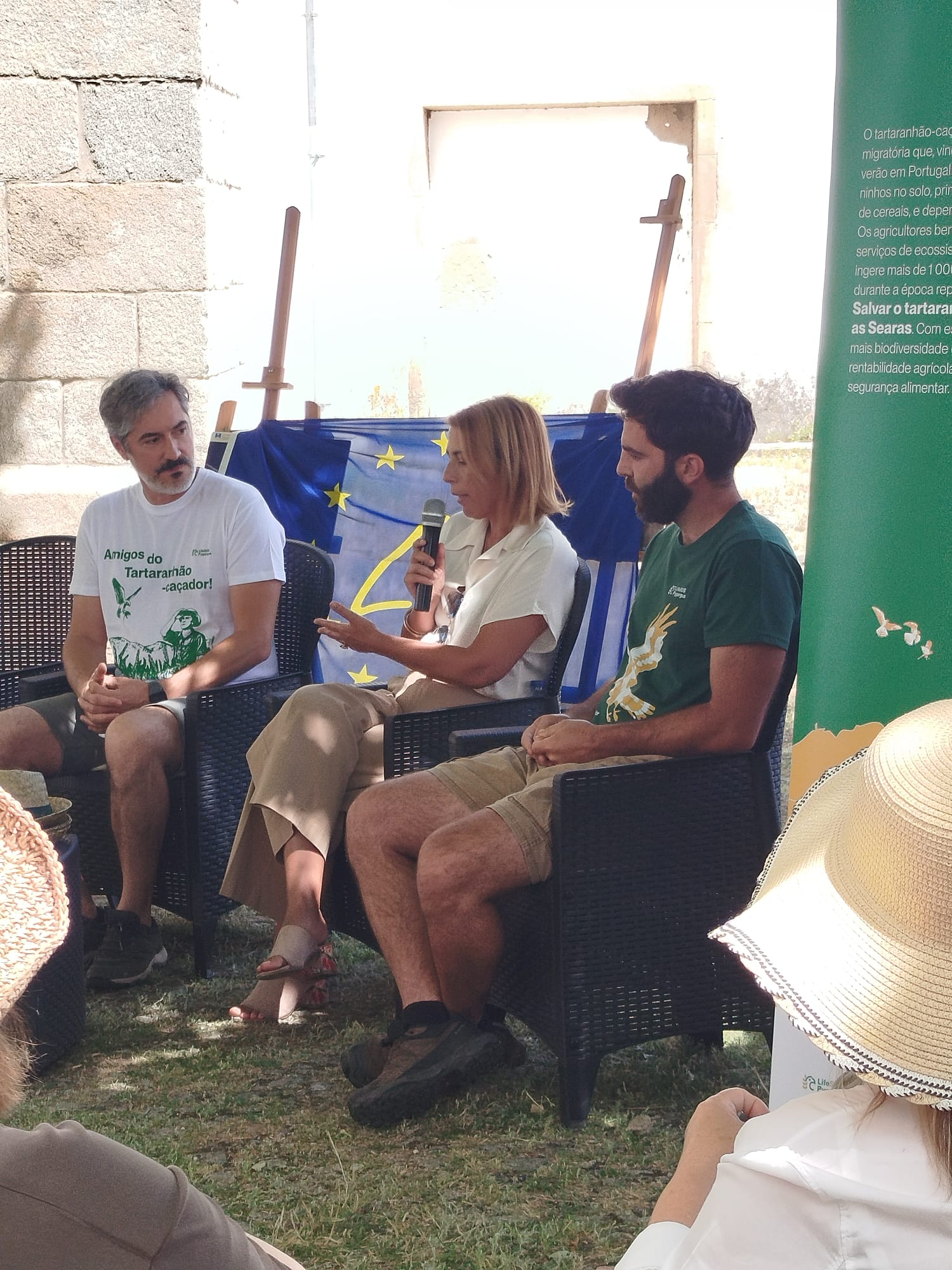
Sandra Sarmento, Regional Director of Nature Conservation and Forests for the North, considers this project to be vital as it has a very positive impact on the development of local communities and the conservation of biodiversity. Photo: Uliana Maria de Castro/Palombar.
Filippo Guidantoni, a nature conservation and biodiversity monitoring officer at Palombar, spoke about the vital role played by farmers during the “Save the Montagu's harrier” campaign and the need for them to be involved and made aware of the importance of conserving this species, which also benefits those who make their living from the land by providing essential ecosystem services such as the control of agricultural pests.
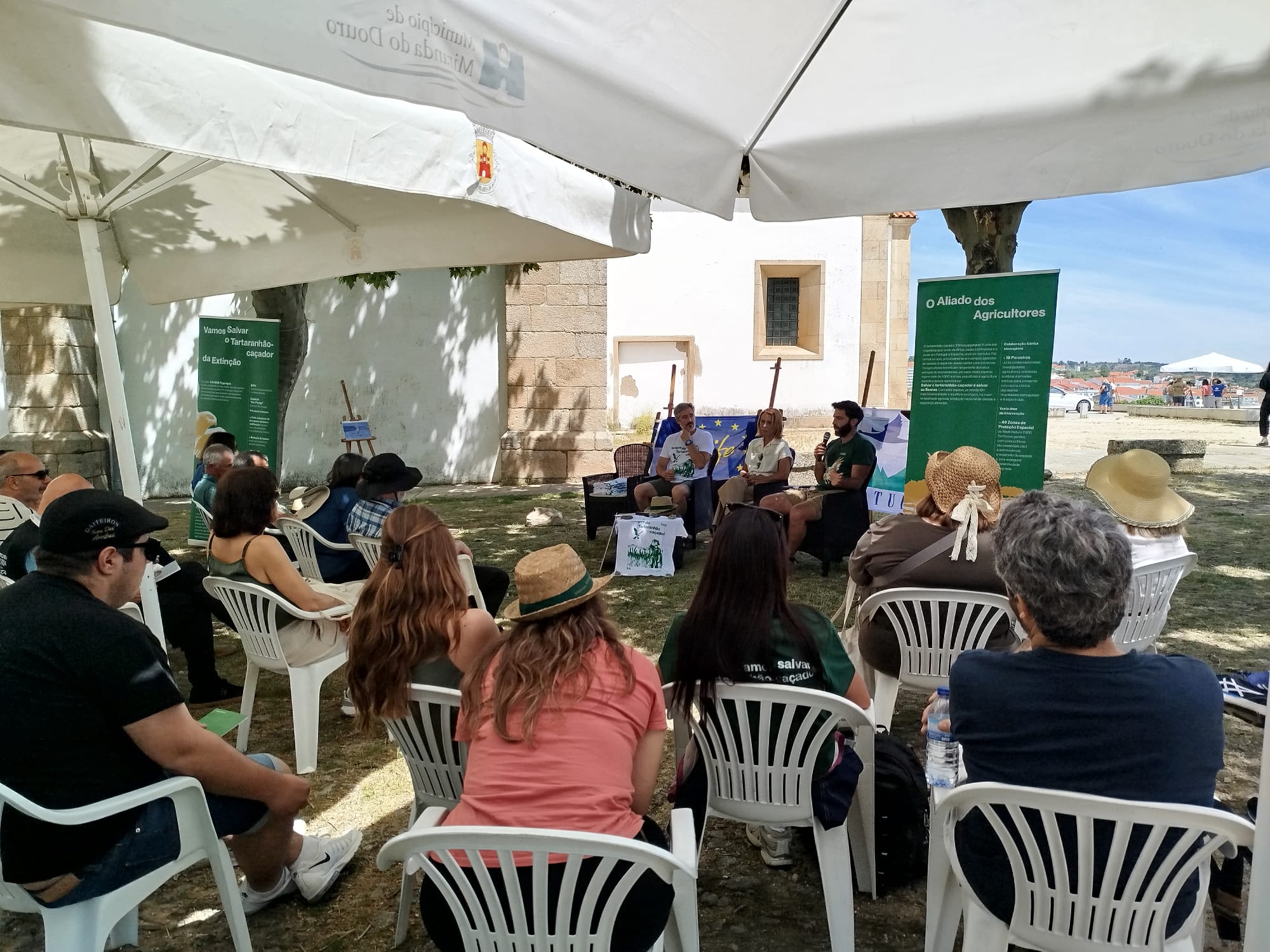
Filippo Guidantoni, a nature conservation officer at Palombar, highlighted the key role played by farmers in protecting the Montagu’s harrier. Photo: Uliana Maria de Castro/Palombar.
An example of how it is possible to combine agriculture with nature conservation
Filippo Guidantoni also mentioned the exemplary collaboration of farmer José Clemente Ramos with the project and the experts from Palombar, presenting it as a fine example of cooperation between agriculture and nature conservation, which proves that coexistence is not only possible but also beneficial for both sectors. Mr José Clemente owns farmland in the Mirandese Plateau, a historic area of vital importance to this bird. Ever since he learnt that, every year, Montagu’s harriers were nesting and breeding on his land, he has actively collaborated with the Palombar team to protect them. And he continues to do so.
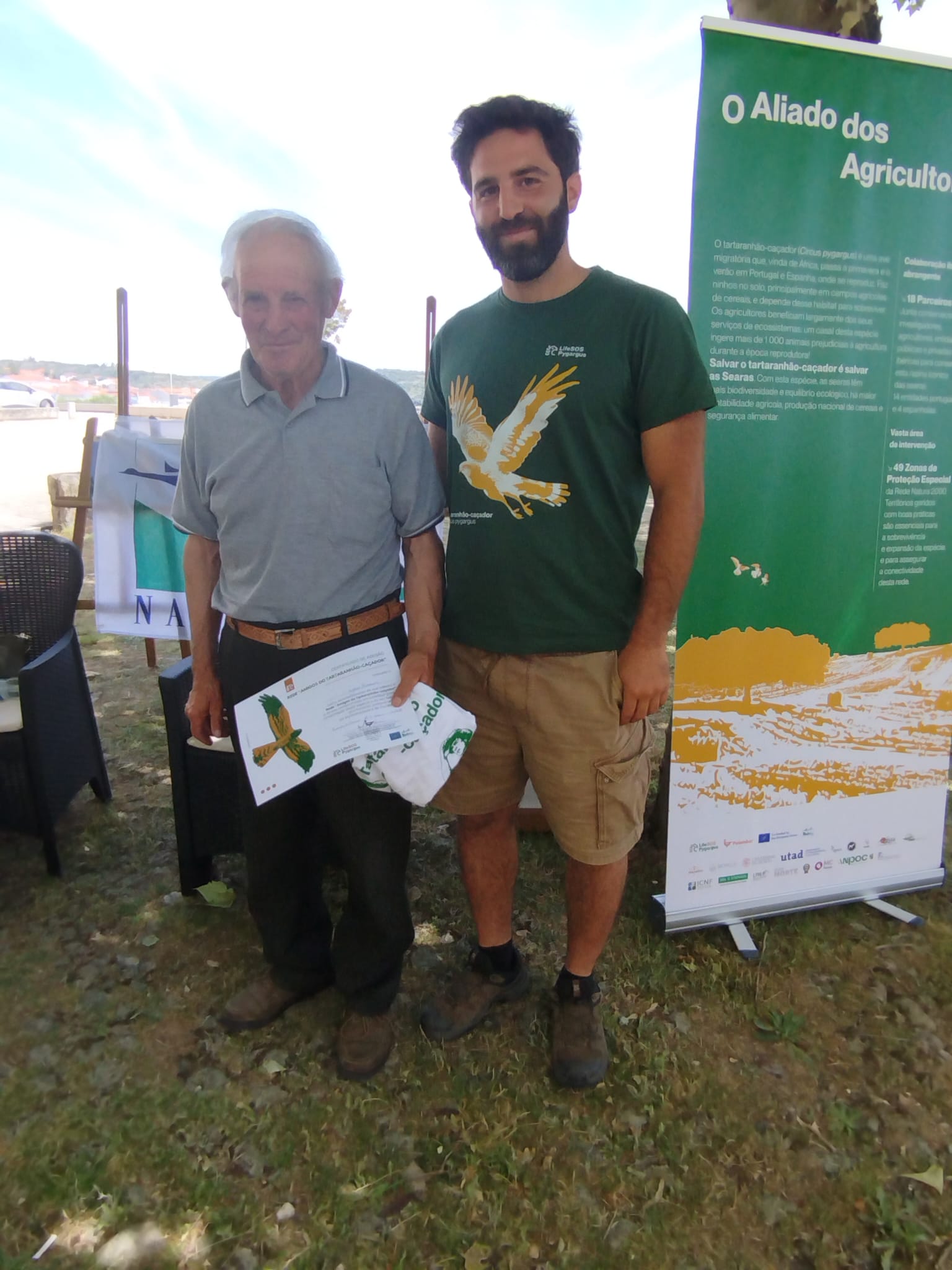
Farmer José Clemente Ramos, who plays an active role in protecting the Montagu’s harrier on his land, receives the Network Membership Certificate. The project has publicly recognised his important role. Photo: Uliana Maria de Castro/Palombar.
Miguel Nóvoa, from Palombar’s Board, concluded by highlighting that the LIFE SOS Pygargus project, with the vital contribution of all partners, has already succeeded in revitalising the cereal sector, boosting both the production of ‘biodiversity-friendly’ cereals and the consumption of flour and food products from agricultural fields that save endangered species, balance the landscape and boost the economic and social sectors throughout the supply chain.
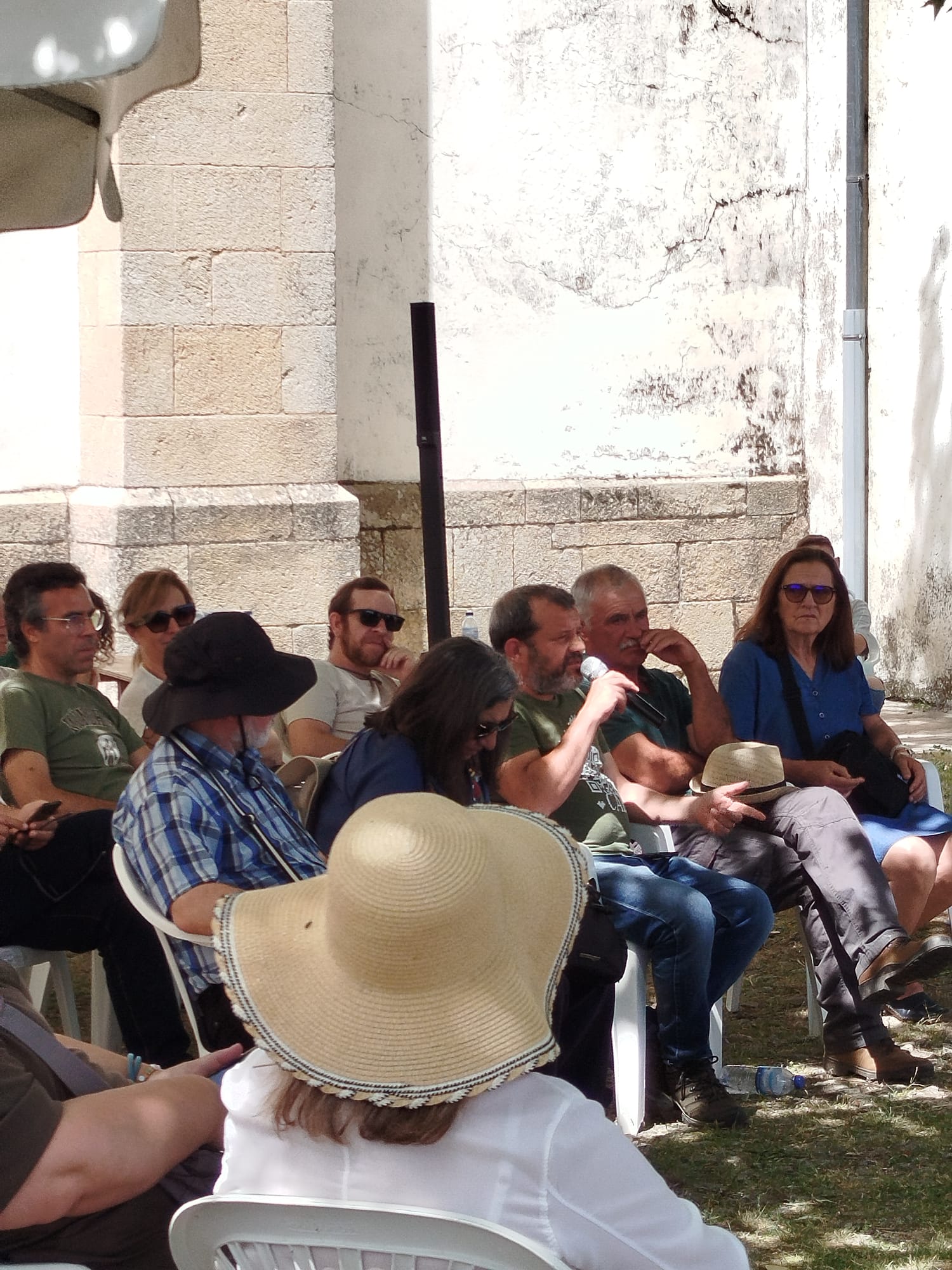
Miguel Nóvoa, a member of Palombar’s Board, highlighted the importance of promoting cereals that are ‘friendly to the Montagu’s harrier’ and the food products derived from these cereals. Photo: Uliana Maria de Castro/Palombar.
Presentation of Certificates to those making a real difference on the ground
The event concluded on a high note with the presentation of Network Membership Certificates to local farmers who are already actively collaborating, with commitment and consistency, in the conservation of this iconic bird of the cornfields and its habitat, contributing not only with relevant and decisive information, but also by authorising intervention on their land to protect nests, and even by postponing the harvest to avoid any disturbance to the birds
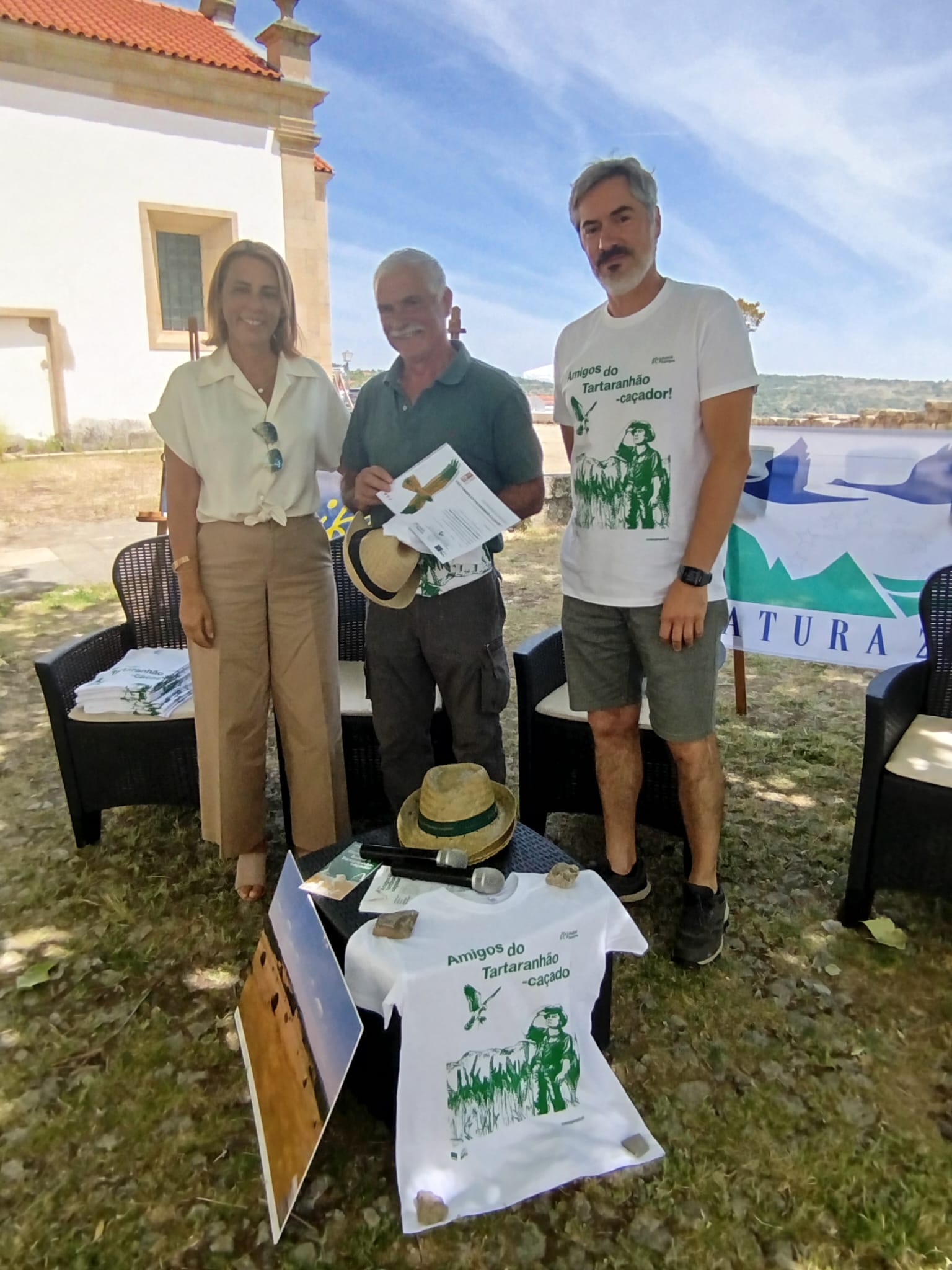
Farmer José Luiz Rodrigues also received a certificate of membership of the Network as a collective recognition of his commitment to the species. Photo: Uliana Maria de Castro/Palombar.
The Network that unites and saves: you can join too
In addition to farmers and other local stakeholders in the area, anyone who can contribute actively and directly to saving the Montagu’s harrier from extinction – whether through volunteering, providing content (such as photographs and videos), raising awareness, funding initiatives, etc. – is invited to join this Network. This community-based and collaborative initiative aims to create a connection and an effective commitment to the species, enabling the exchange of experiences and collaboration among its members, in order to ensure the continuity of best practices that guarantee the conservation of the Montagu’s harrier both now and in the post-project future.
Those who join this Network also reap benefits. By ensuring that this species remains in its historic territory, we can all enjoy the essential ecosystem services it provides; join a multidisciplinary network that fosters synergies; engage in environmental sponsorship and obtain tax benefits; receive a membership certificate and gain public recognition.
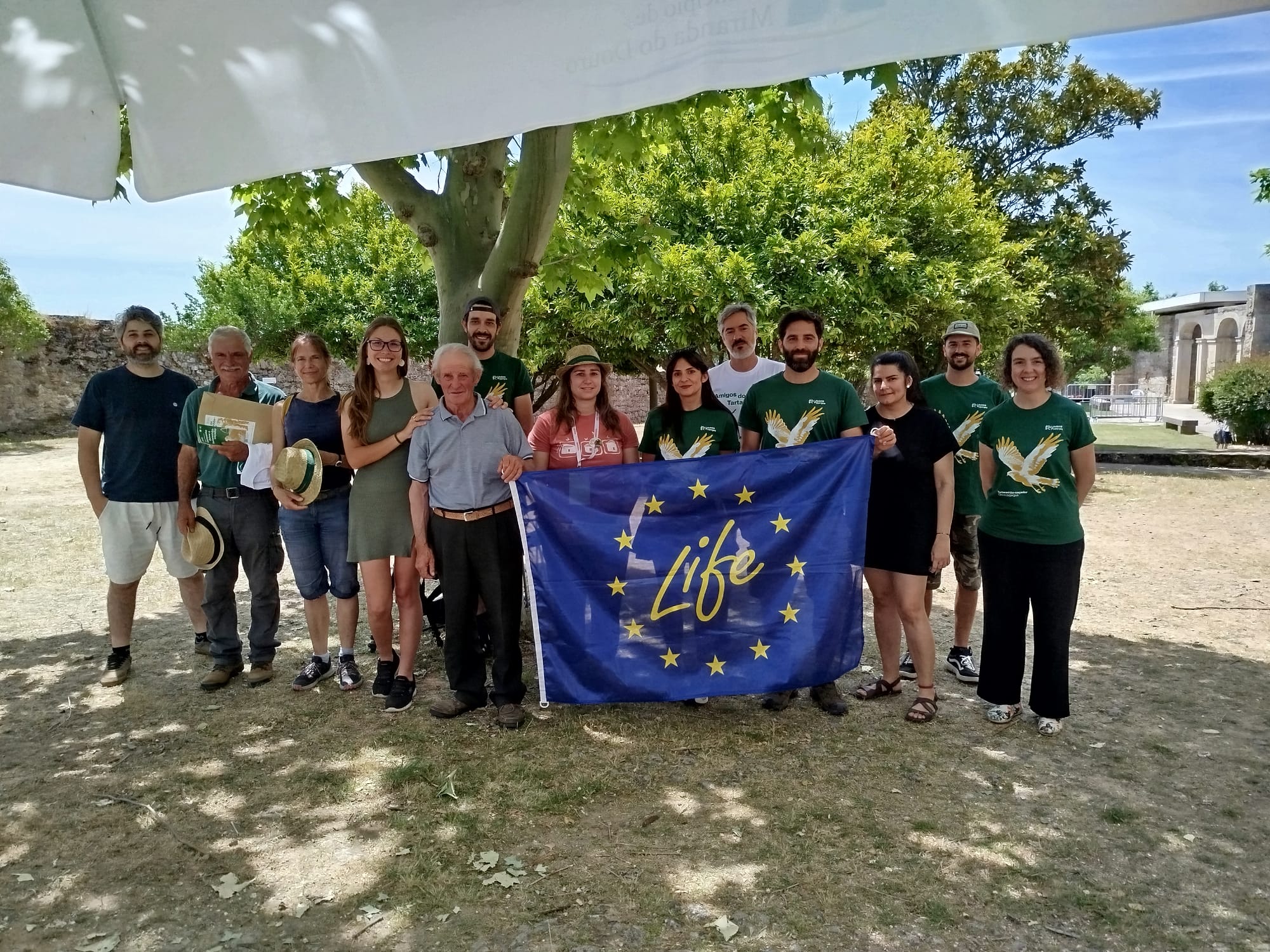
The LIFE SOS Pygargus project believes that multi-sector collaboration and the active involvement of local communities are vital to conserving the Montagu's harrier and ensuring a promising future for this species. Photo: Helena Raposeira/Palombar.
About the project
LIFE SOS Pygargus – Urgent conservation actions for Montagu’s harrier populations in Portugal and Spain is an Iberian project co-funded at 75% by the European Union’s LIFE Programme. It also receives co-funding from Viridia – Conservation in Action, Lightsource bp, the Portuguese Environmental Fund, and the Biodiversity Foundation of the Spanish Ministry for Ecological Transition and Demographic Challenge.
It is implemented by a consortium that includes Palombar – Nature and Rural Heritage Conservation (coordinating entity), BIOPOLIS-CIBIO Association, AEPGA – Association for the Study and Protection of Donkeys, ANPOC – National Association of Protein, Oilseed and Cereal Producers, CCDR-N – North Regional Coordination and Development Commission, EDIA – Alqueva Development and Infrastructure Company SA, ICNF – Institute for Nature Conservation and Forests, INIAV – National Institute for Agricultural and Veterinary Research, LPN – Nature Protection League, MC Shared Services SA, Modelo Continente Hipermercados SA, SPEA – Portuguese Society for the Study of Birds, UTAD – University of Trás-os-Montes and Alto Douro, Vita Nativa – Environmental Conservation, AMUS – Action for Wild World, the Department of Agriculture, Livestock and Sustainable Development of the Regional Government of Extremadura, GREFA – Group for the Rehabilitation of Native Fauna and its Habitat, and the University of Murcia.