


12 June 2026
The Linen Festival celebrated the bio-social culture of linen in the Serra da Estrela, with an eye to the future
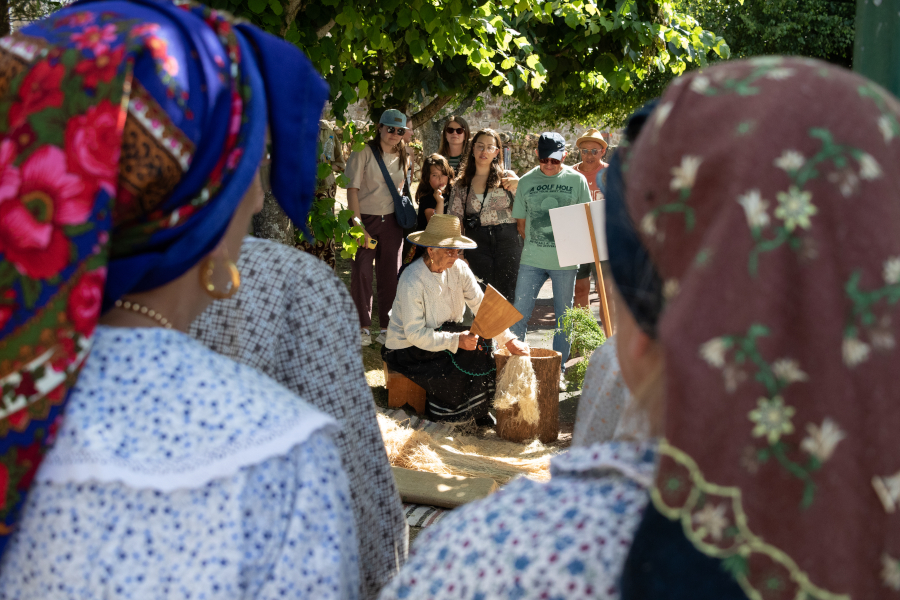
This is an event that we intend to continue holding both now and in the future, establishing strong roots in the local area. Photo: Pedro Alves/Palombar.
The event brought together the local population, visitors, artists, researchers, organisations, projects and cultural actors, promoting the appreciation of the tangible and intangible heritage associated with linen. This is an event intended to be sustained in the present and future, putting down solid roots in the region.
Over the course of three days, Linhares da Beira came alive with a diverse programme that blended tradition, contemporary creation and community participation. This initiative marked the launch of the "Linho a Fio" project.
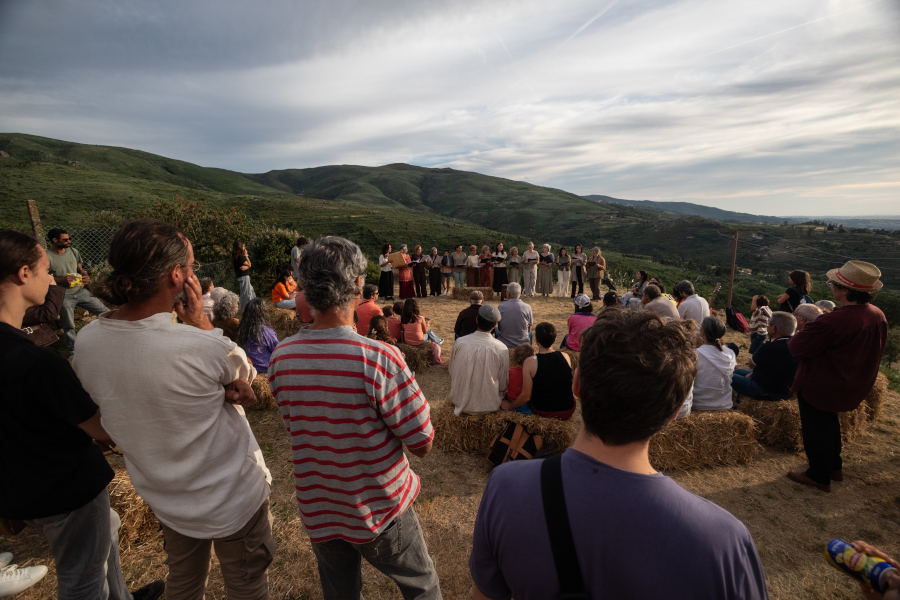
The festival blended tradition, contemporary creativity and community involvement. Photo: Pedro Alves/Palombar.
The event began on 5 June with the opening of the festival and the exhibition “Rural Women – Spinners of the Future”, organised by the "A Geradora" Cooperative, setting the tone for a gathering centred on the heritage of flax and new interpretations of it. In the afternoon, participants took an interpretive tour of Linhares da Beira, which concluded with a contemplative yoga session against the backdrop of the mountain views surrounding this medieval stone village. In the evening, there was a film screening followed by a short concert in a relaxed atmosphere, brought to life by the new communities.
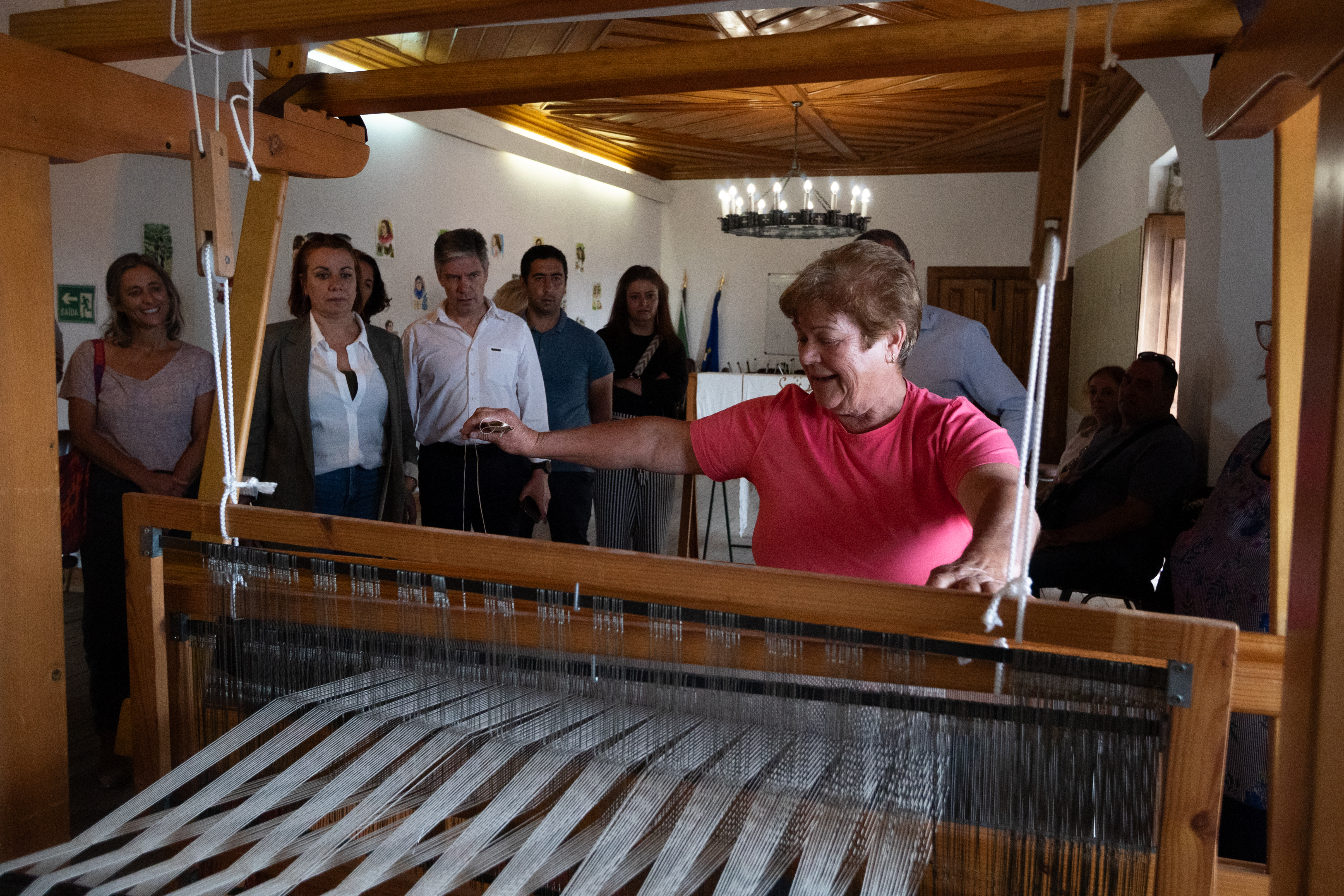
The exhibition “Rural Women – Spinners of the Future”: preserving knowledge, weaving the future. Photo: Pedro Alves/Palombar.
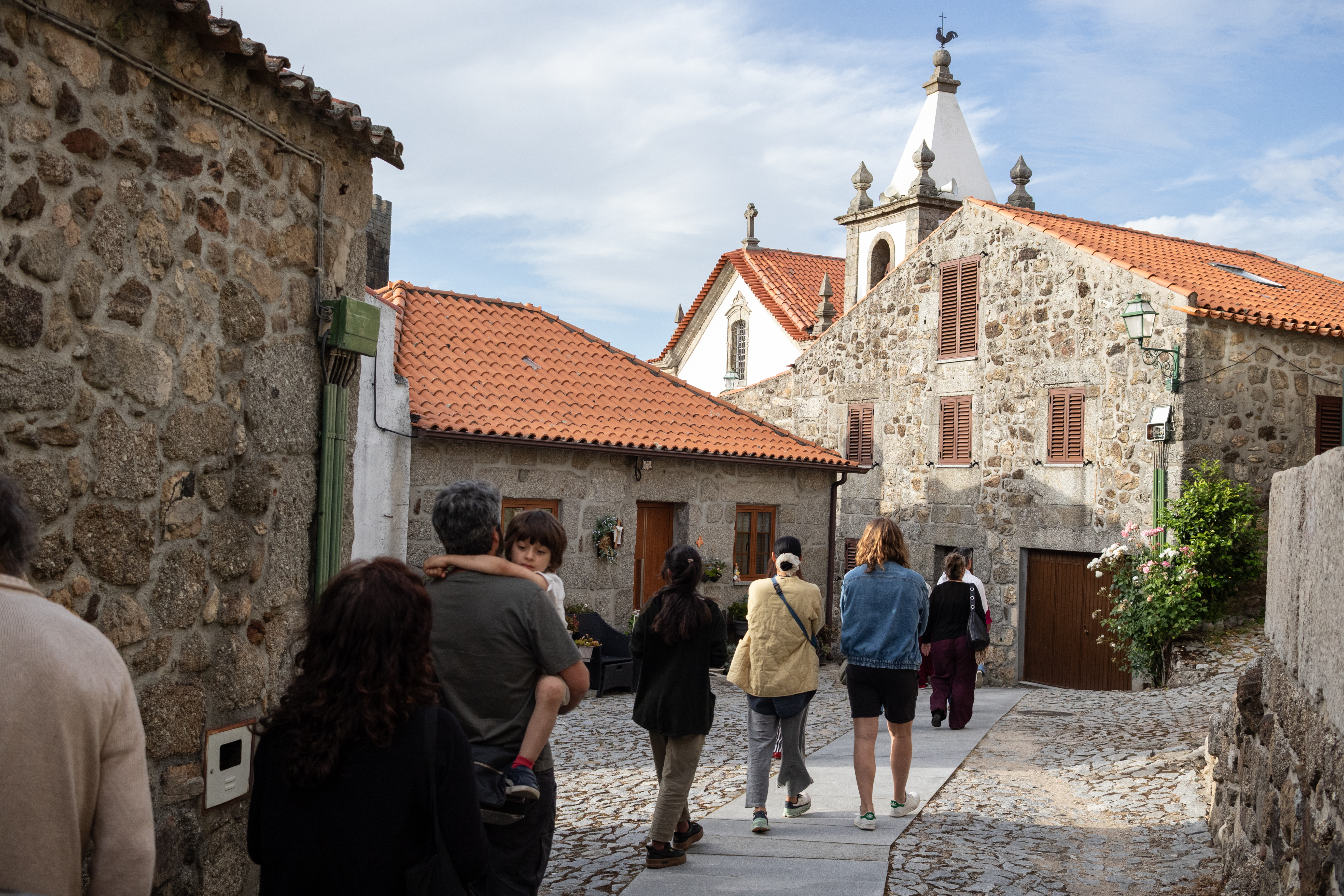
Surrounded by ancient stone buildings and a stunning landscape, the participants wandered through the narrow streets and discovered Linhares da Beira on an immersive tour. Photo: Pedro Alves/Palombar.
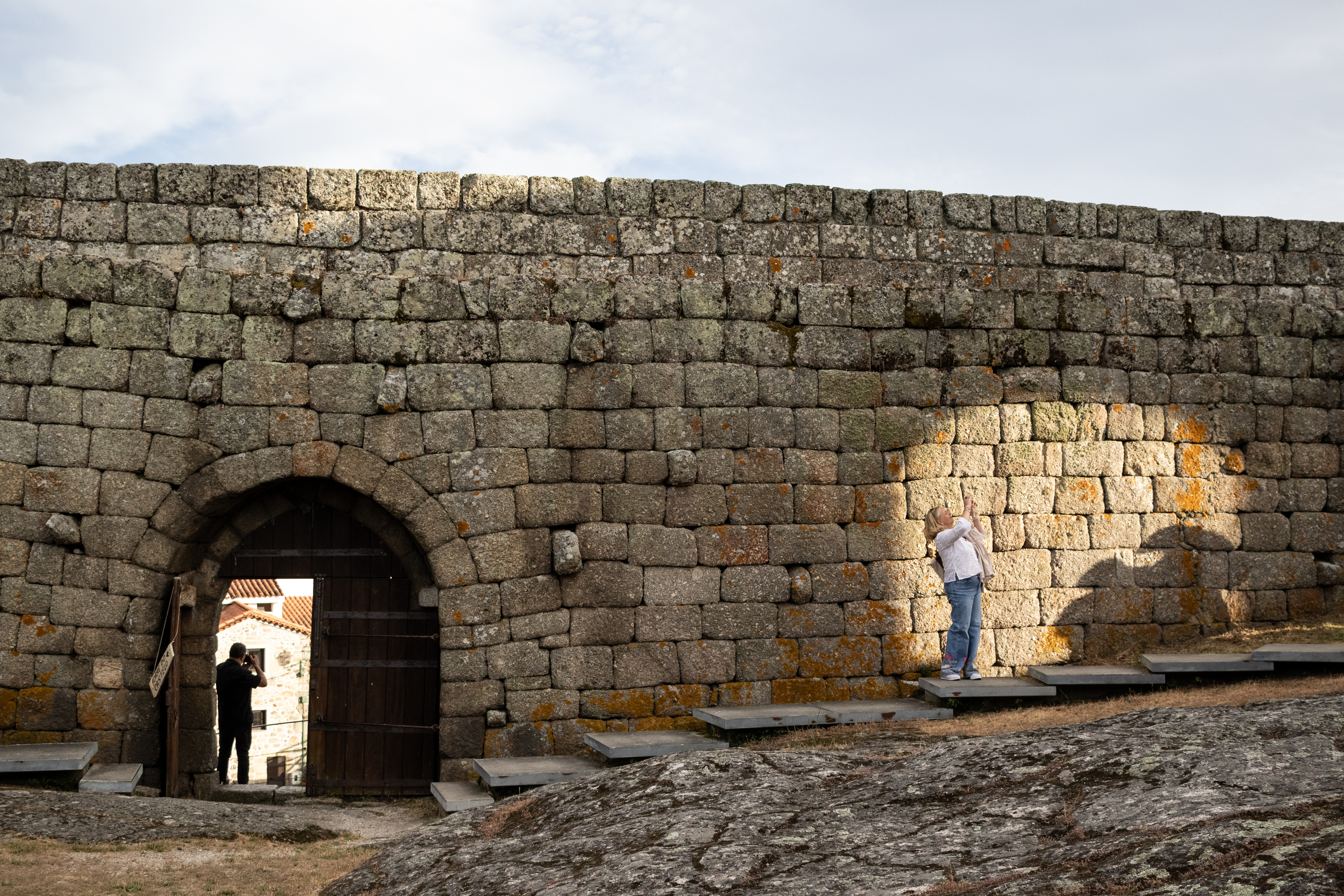
An inspiring place that reflects history and tradition. Photo: Pedro Alves/Palombar.
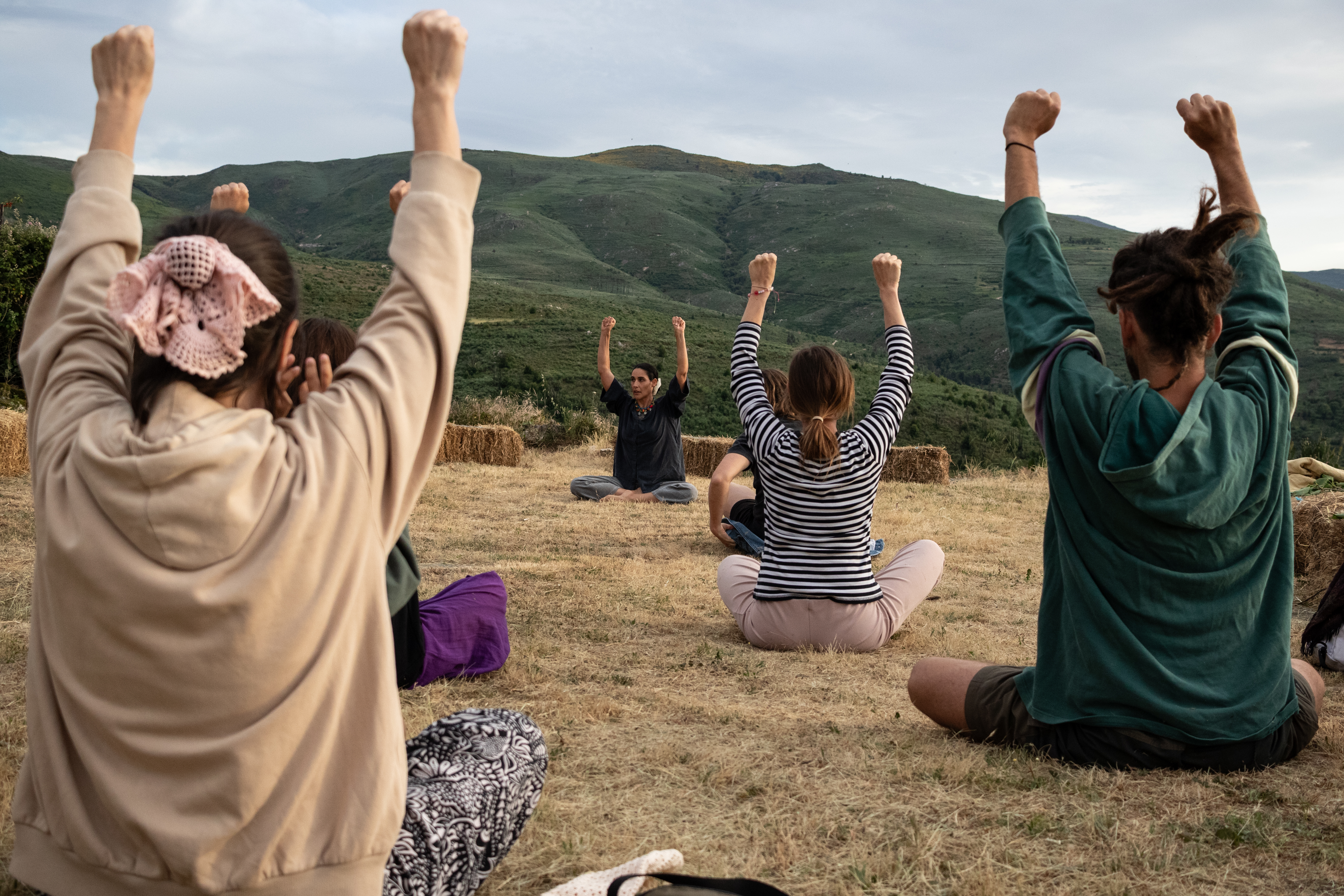
A contemplative sunset yoga session with Lita Sattva. Photo: Pedro Alves/Palombar.
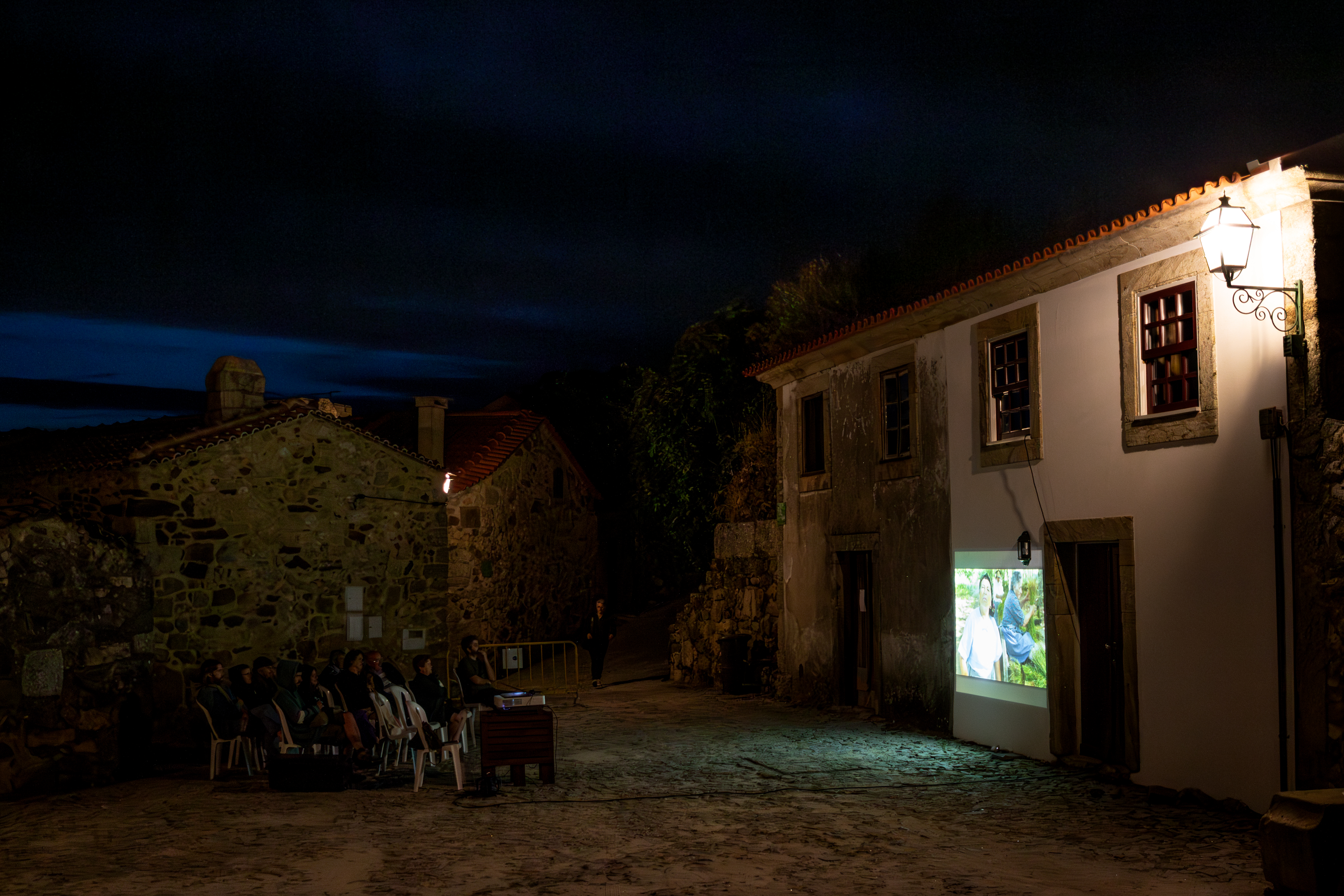
A community film screening drew a crowd to watch the documentary ‘Várzea de Calde: A Village Woven from Linen’. Photo: Pedro Alves/Palombar.
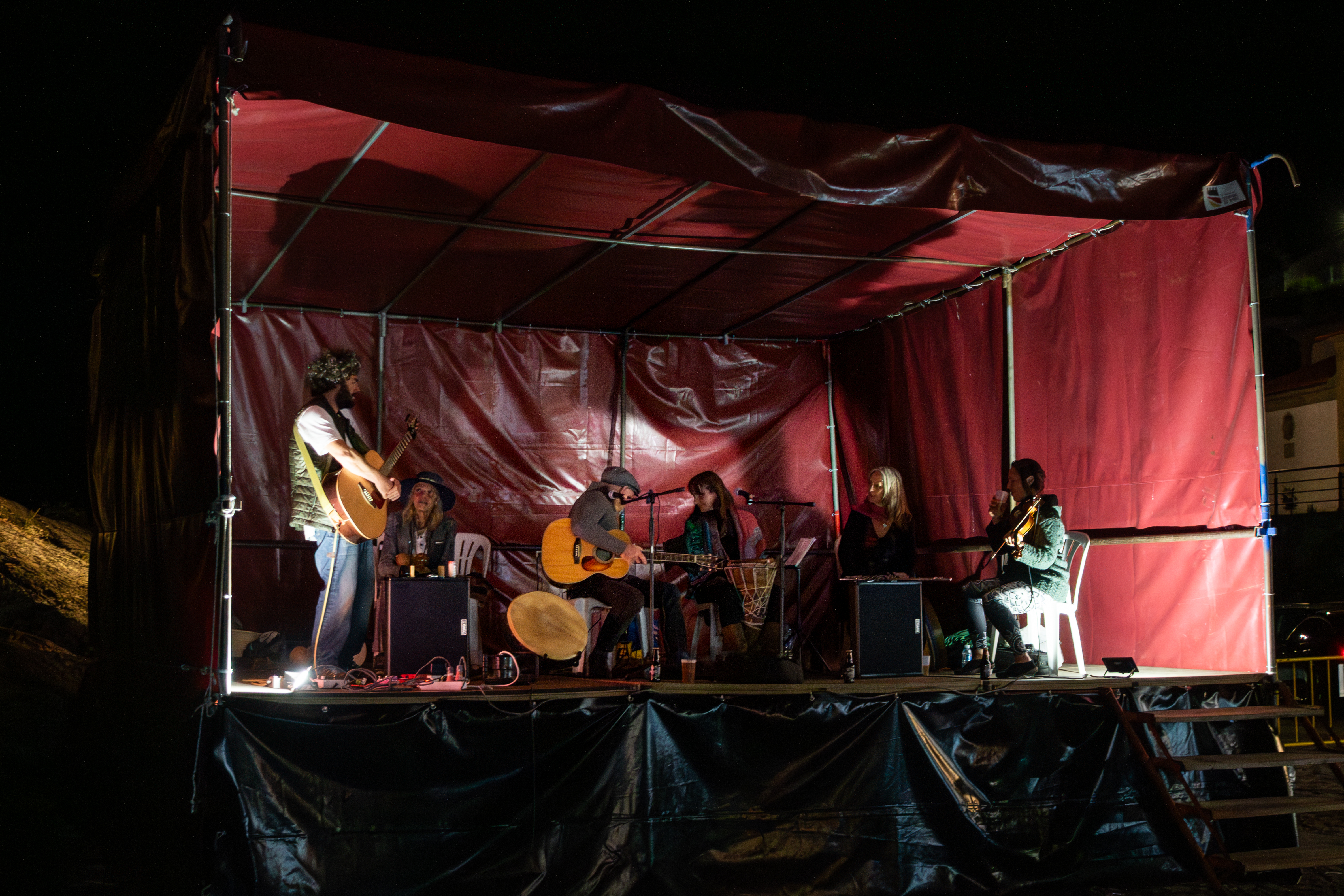
The first day ended with an intimate concert. Photo: Pedro Alves/Palombar.
On 6 June, the focus shifted to traditional skills. The “Sowing Linen” workshop, run by the "Linho a Fio" project, took centre stage in the morning, whilst the Eco-Market opened its doors, inviting visitors joining the festivities to sample local flavours and discover the region’s traditional crafts.
Later that morning, during a family-friendly session dedicated to the little ones, Story Time, led by Tia Dulce, a storyteller, sparked the imagination and revealed new dreams, centred on a world of imagination linked to rural life.
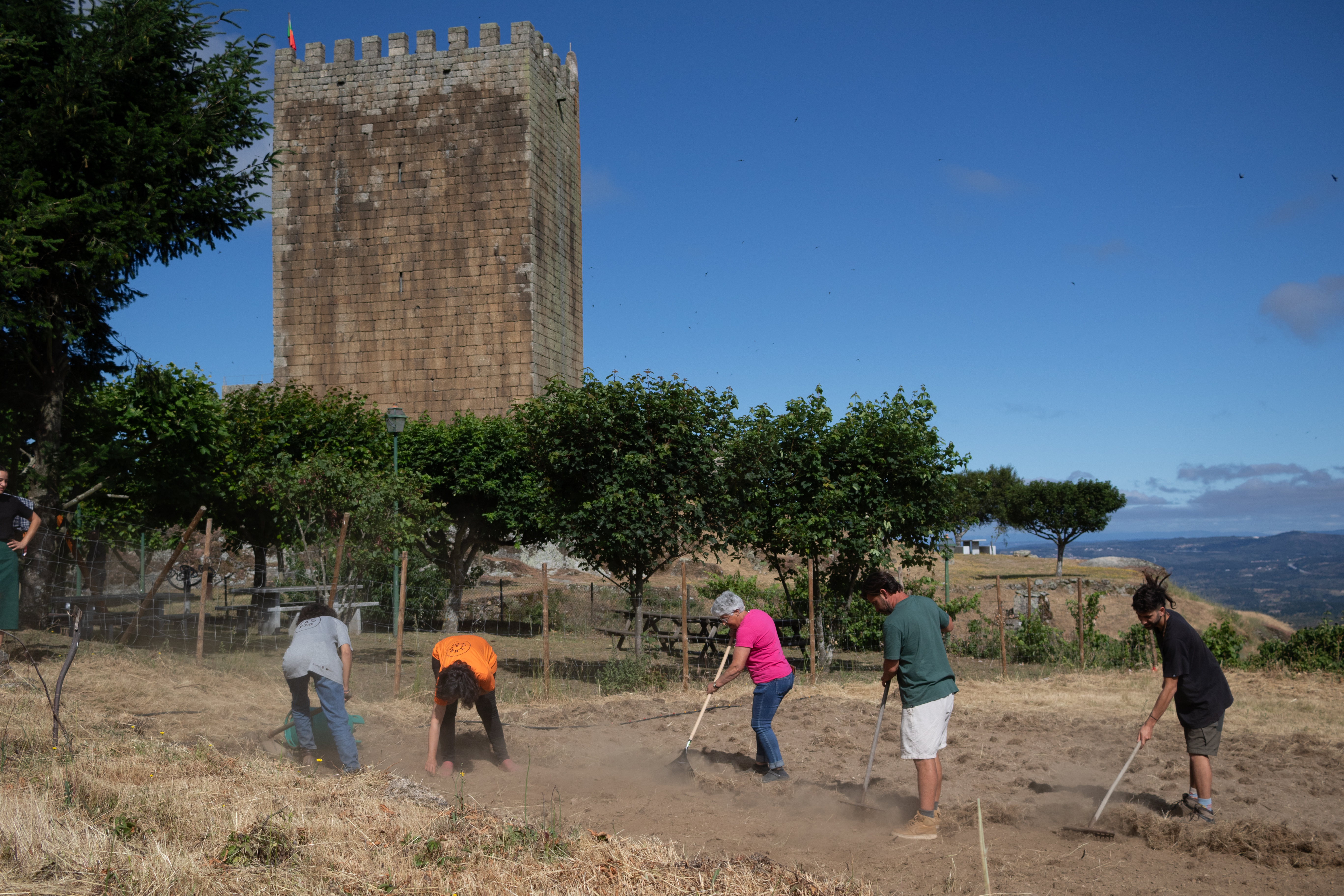
At the ‘Sowing Linen’ workshop, participants had the chance to sow the seeds for the future of the region’s linen-growing tradition. Photo: Pedro Alves/Palombar.
.jpg)
Seed by seed, we bring new life to the fields and to the linen on the loom. Photo: Pedro Alves/Palombar.
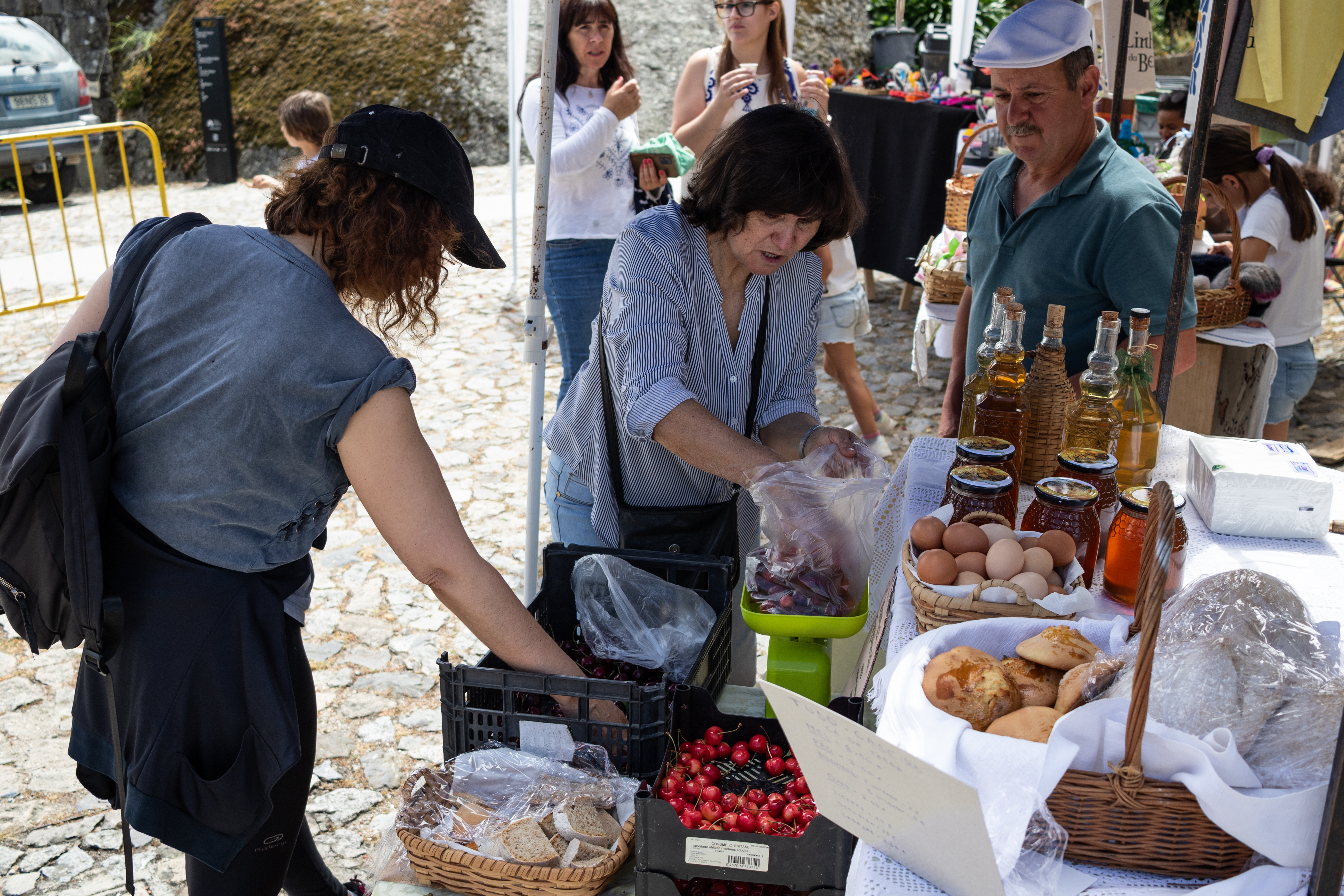
The Eco-Market gave visitors the chance to sample local flavours and discover the region’s traditional crafts. Photo: Pedro Alves/Palombar.
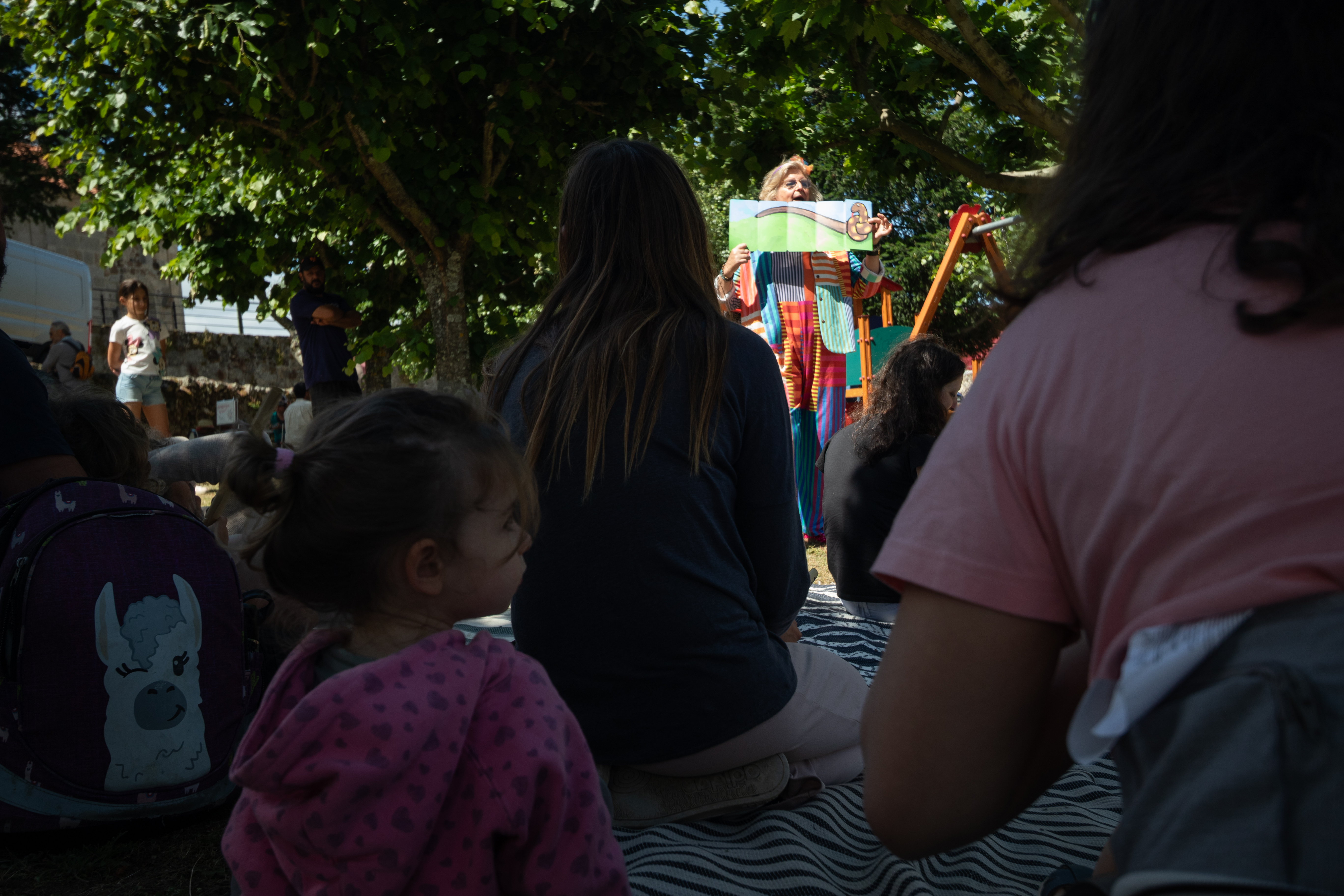
Tia Dulce, a storyteller, has entertained and brought together people of all generations. Photo: Pedro Alves/Palombar.
During the afternoon, the linen processing workshop continued to share knowledge about linen cultivation. Led by the Várzea de Calde Ethnographic Group, this session aimed to introduce the public to the traditional techniques associated with this ancient craft.
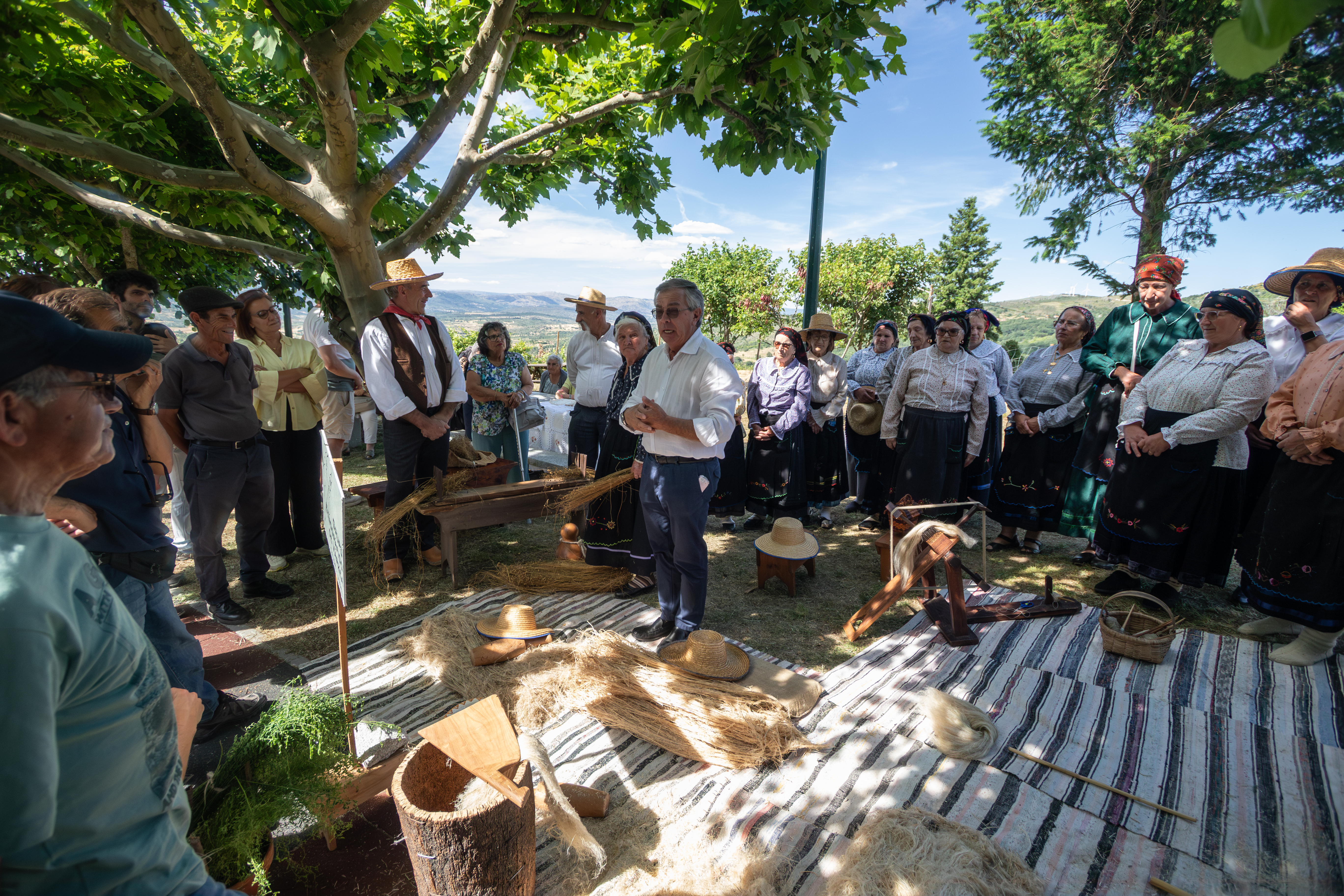
The Várzea de Calde Ethnographic Group demonstrated the linen processing process during a workshop. Photo: Pedro Alves/Palombar.
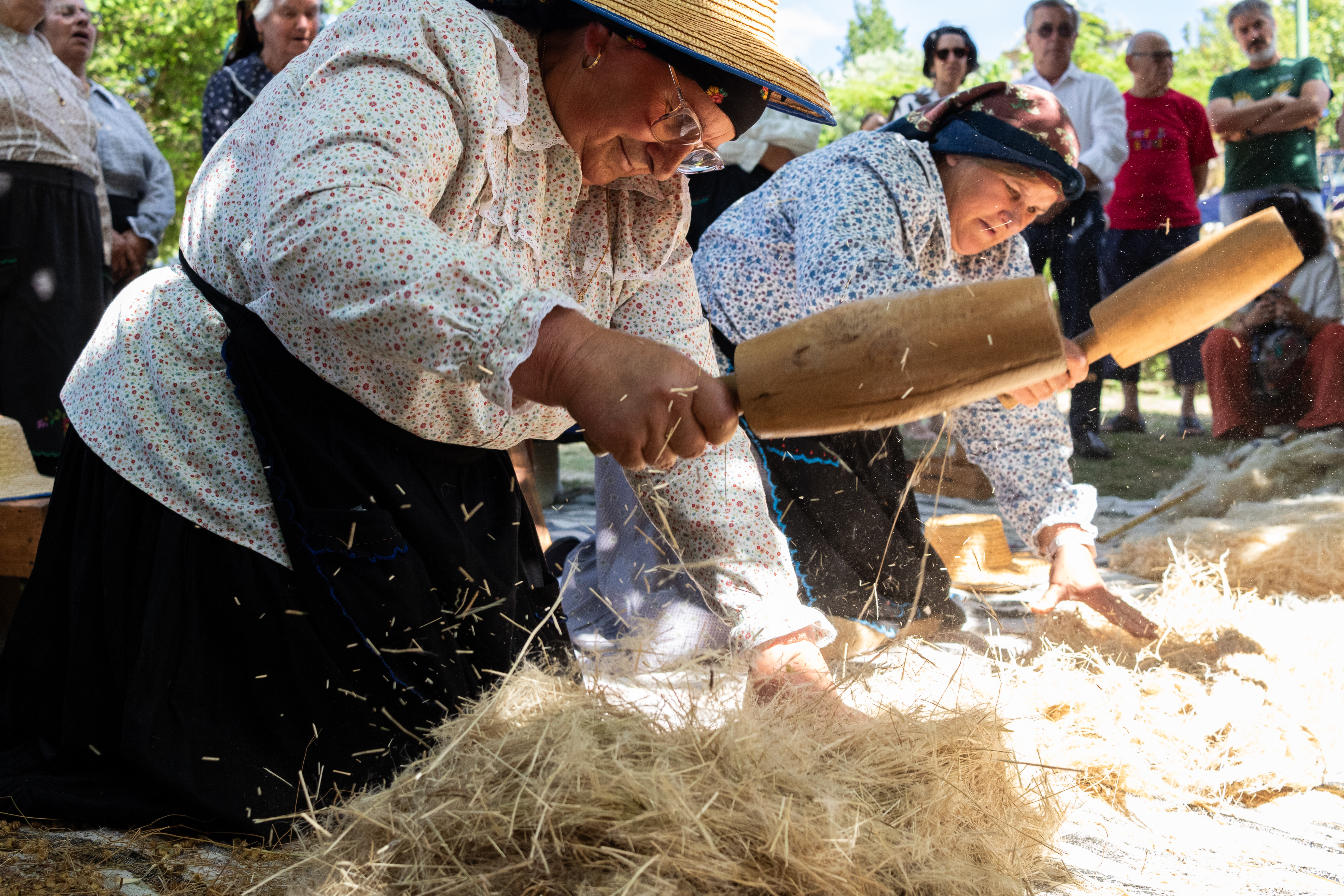
Women are the driving force that shapes linen and brings it to life. Photo: Pedro Alves/Palombar.
In one of the iconic towers of Linhares Castle, the discussion took place during the “Round Table: Regeneration of mountain territories and their resilience”, which brought together representatives from Palombar projects such as SerE+, LIFE SOS Pygargus, Linho a Fio, and the Municipality of Celorico da Beira, promoting dialogue between science, practice and the community. The round table was preceded by a screening of the documentary Re.Rural – Villages of the Future and the SISAL Project.
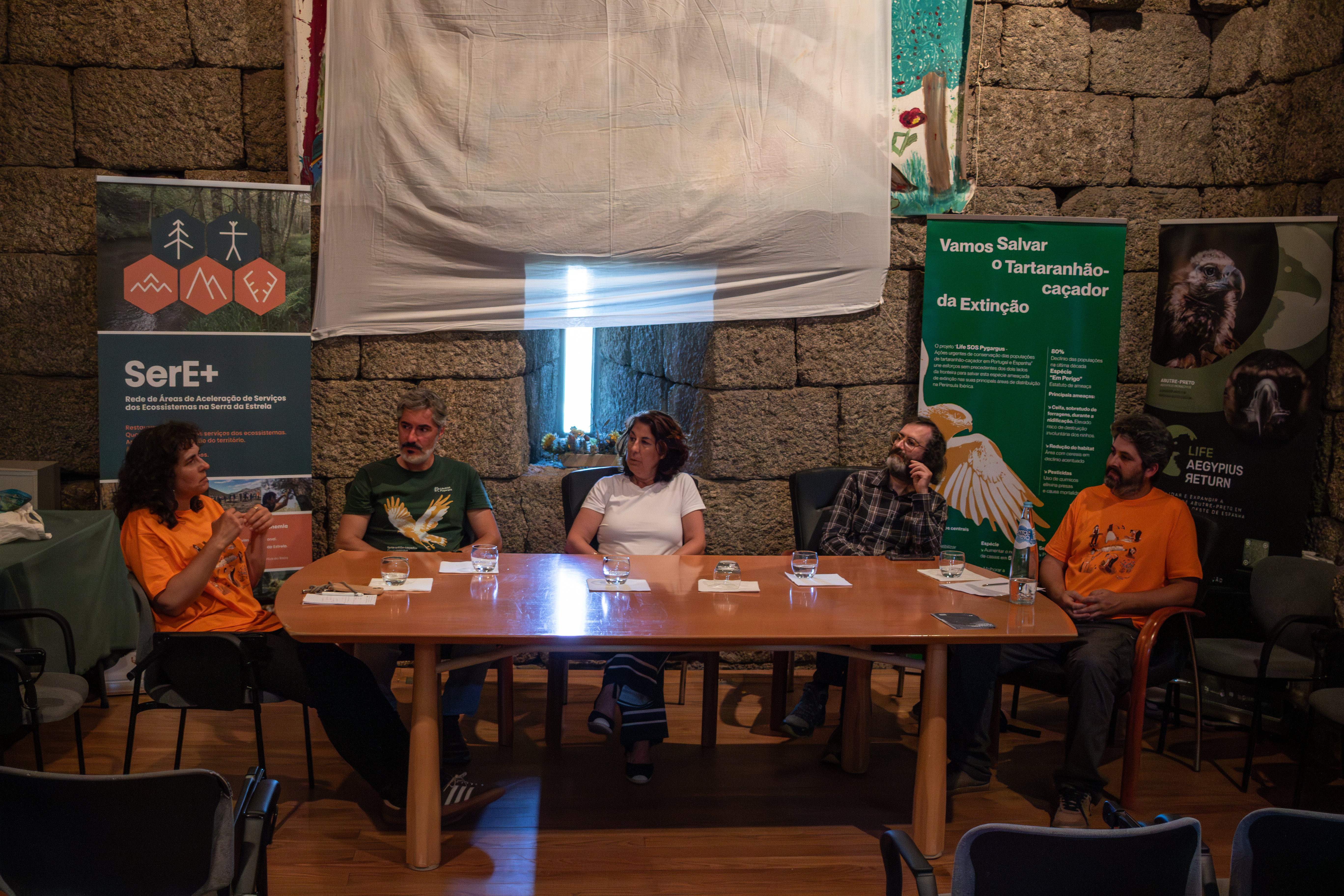
The “Round Table: Regeneration of Mountain Areas and Their Resilience” was an opportunity for reflection that explored projects implemented on the ground by Palombar, with strong links to local landscapes and communities. Photo: Pedro Alves/Palombar.
Throughout the day, the Eco-Market – a space for artisans, local producers and associations, as well as a social area with traditional games and a food court – attracted visitors who joined in the Linen Festival.
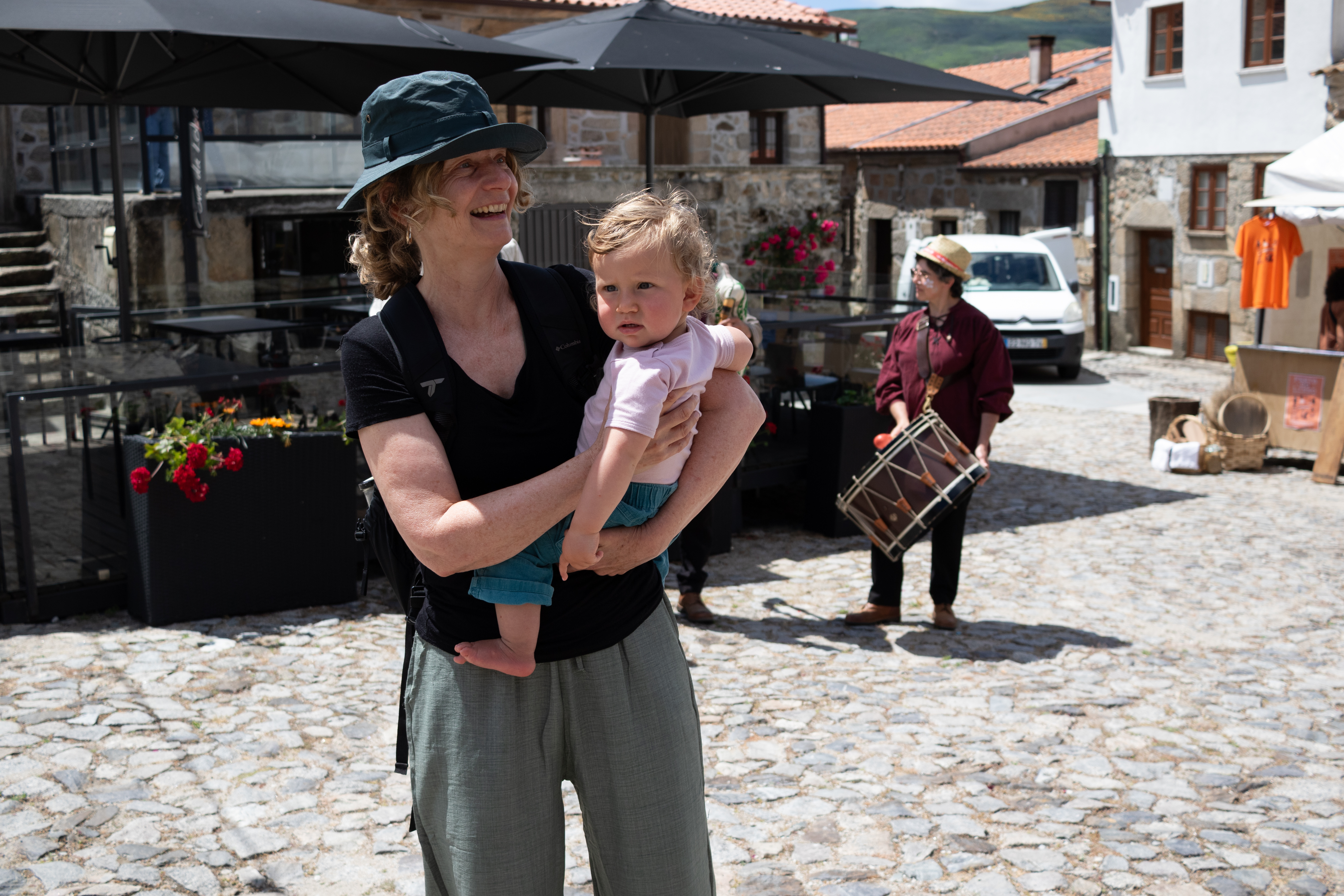
The Eco-Market was a place for sharing and socialising that brought generations together. Photo: Pedro Alves/Palombar.
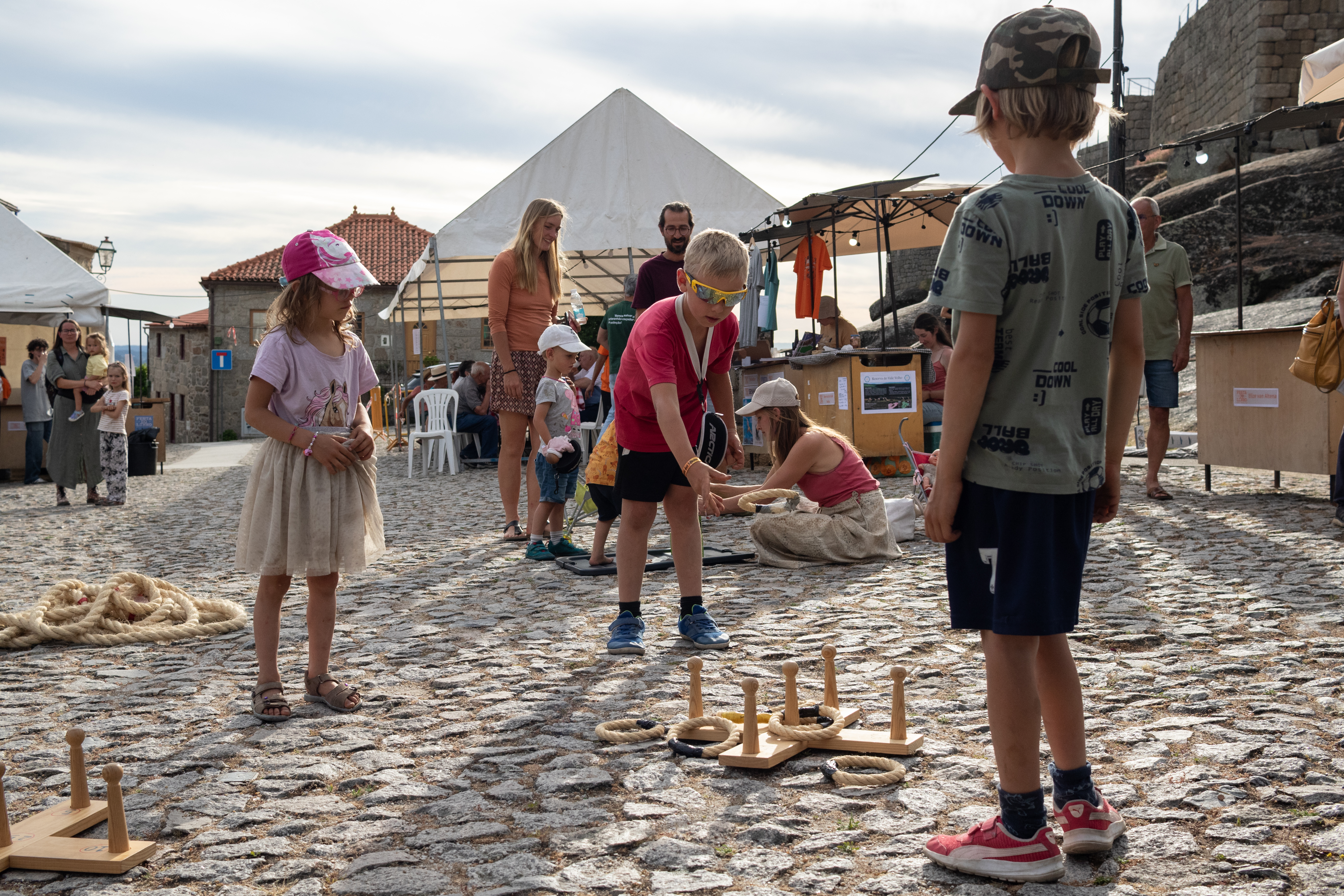
Traditional games also captivate the younger generations. Photo: Pedro Alves/Palombar.
The cultural programme also included the play "The Little Fish Who Discovered the Sea" by Pedro Giestas, aimed at children and families, and concluded with the "Concerto na Eira" concert, featuring Pedro Horta, Diana Caramelo, Julieta Silva and the Coro do Povo, celebrating music as a form of collective expression and a marker of identity. The evening concluded with a concert by the Manouchka Band, a renowned international gypsy-jazz band.
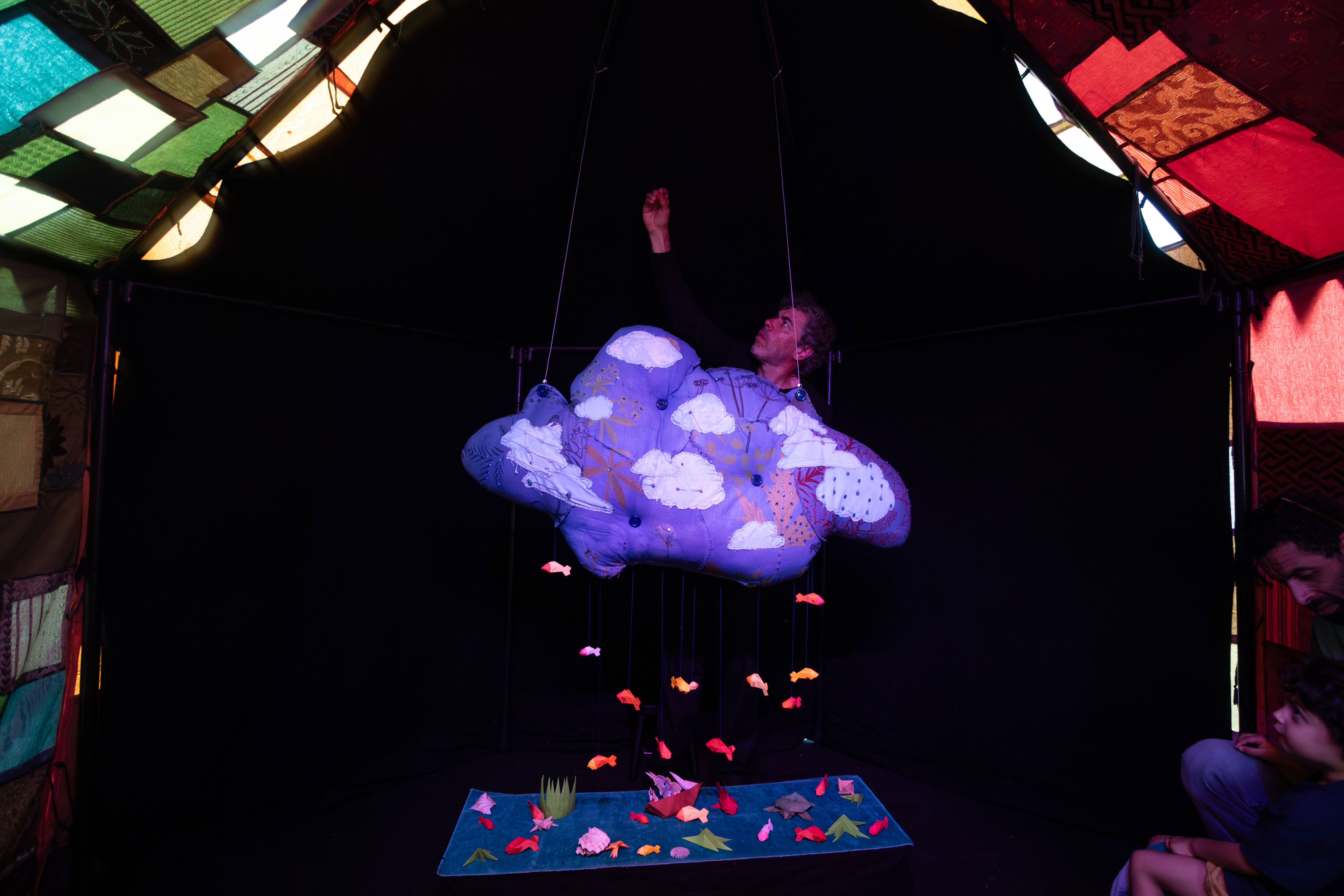
The children’s play “The Little Fish Who Discovered the Sea” took the youngest members of the audience on a journey into a magical and creative world. Photo: Pedro Alves/Palombar.
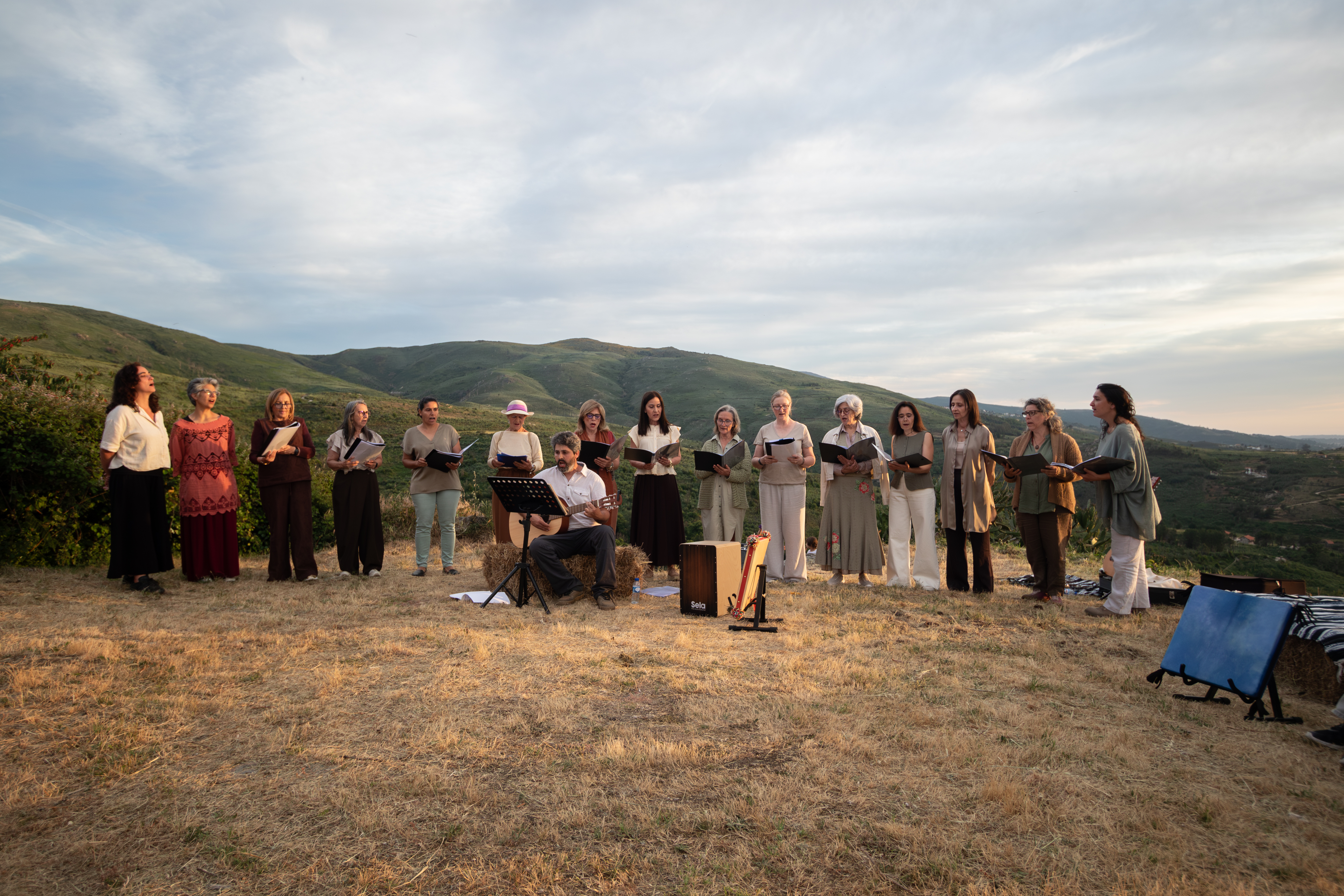
The "Concerto na Eira" concert celebrated music as a form of collective expression and a marker of identity. Photo: Pedro Alves/Palombar.
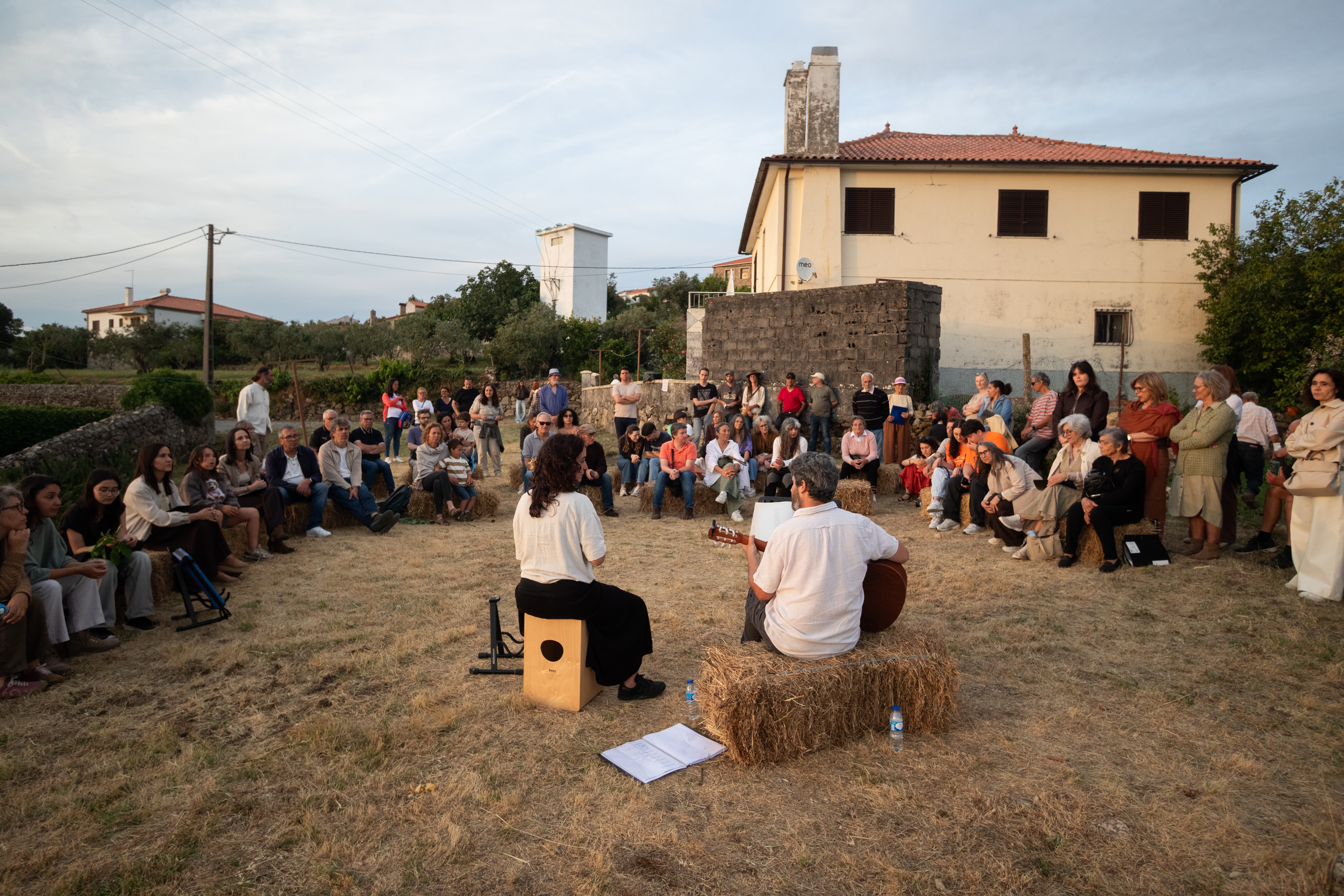
The open-air concert, set against the backdrop of the local landscape, immersed the audience in a unique atmosphere. Photo: Pedro Alver/Palombar.
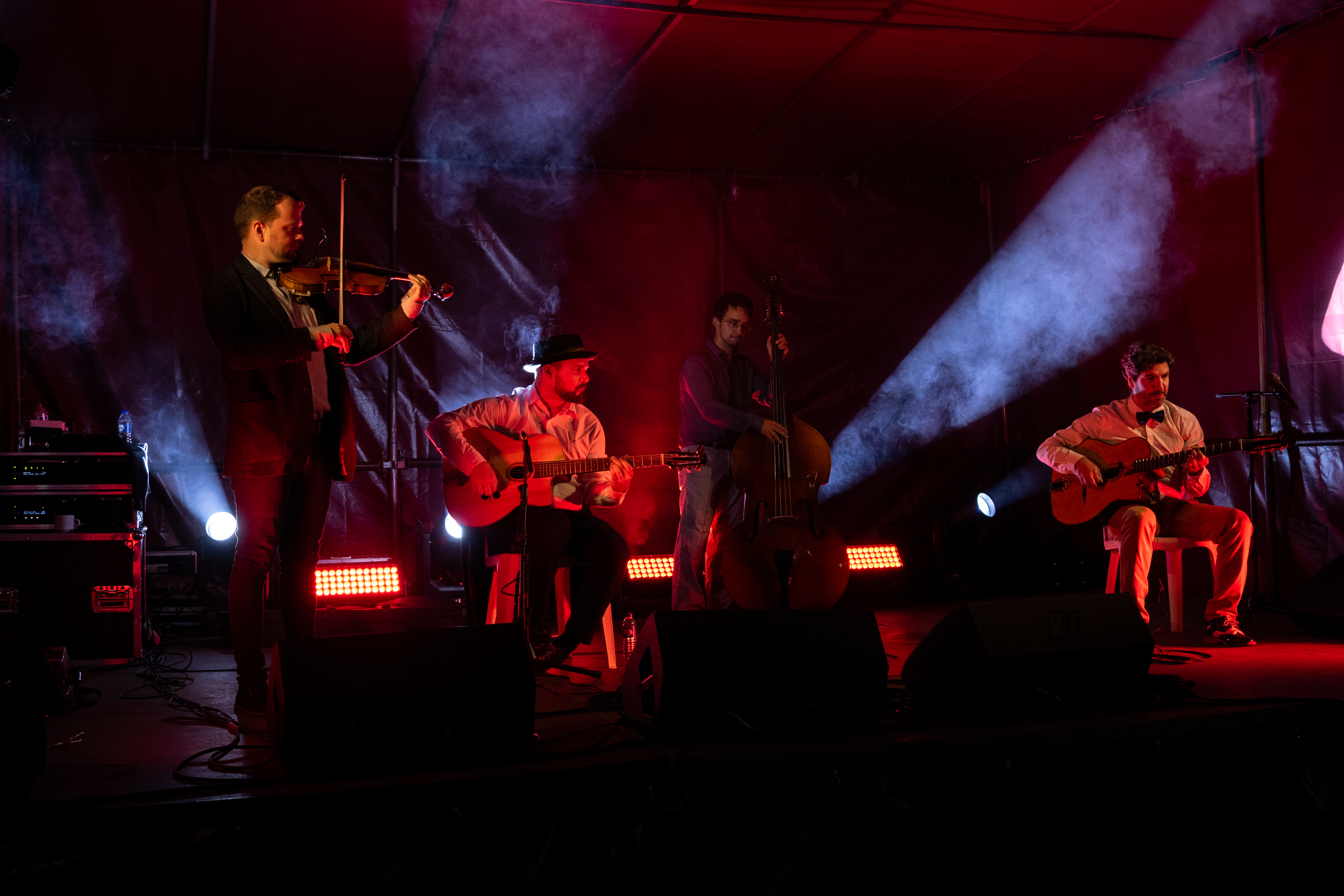
The 6th ended on a high note with a concert by the Manouchka Band. Photo: Pedro Alves/Palombar.
The final day was marked by direct contact with nature, through an interpretive trail dedicated to wild plants and their traditional uses, led by Alexandre Silva, a specialist from CISE – Municipality of Seia. The walk concluded with a communal picnic, a moment of togetherness that encapsulated the spirit of the festival: celebrating the local area, its knowledge and its people.
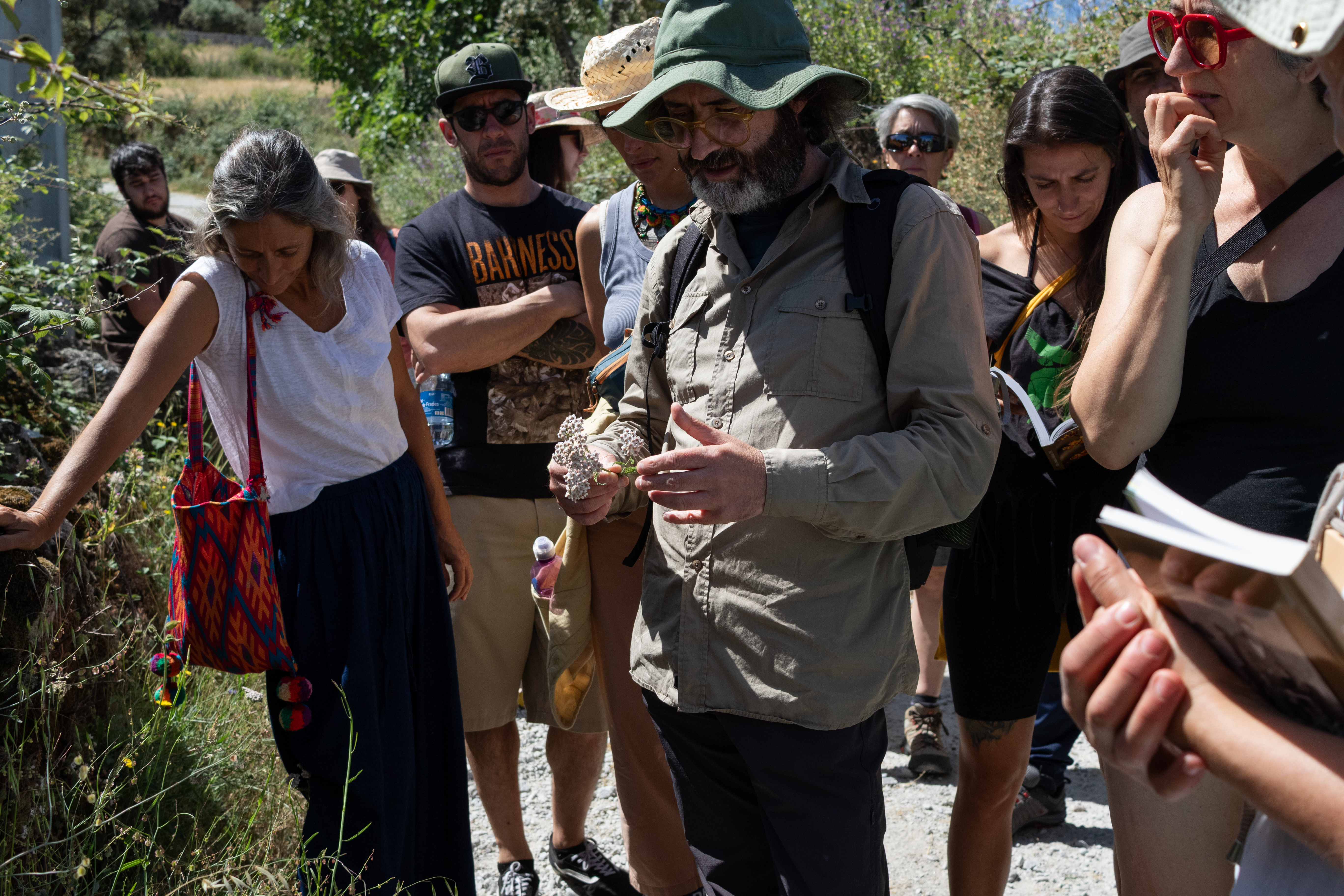
An interpretive trail brought the festival to a close, offering visitors the chance to explore the region’s landscape and biodiversity. Photo: Pedro Alves/Palombar.
The Linen Festival moves forward with an eye to the future. Photo: Pedro Alves/Palombar.
“Linho a Fio” Project
The “Linho a Fio” project aims to revitalise community-based linen cultivation and artisanal production in the Serra da Estrela, with direct action in Linhares da Beira (Celorico da Beira). Implemented between 2026 and 2027, it aims to position linen as a driver of ecological regeneration and local socio-economic revitalisation, promoting the creation of sustainable value chains and strengthening community cohesion.
Funded by the Regenerative Communities Fund (RCF), a European fund managed by ECOLISE – European Network for Community-Led Initiatives on Climate Change and Sustainability and co-funded by the European Union, the project follows a community-based and inclusive approach, being driven by a local group with the support of Palombar. In addition to practical workshops, training initiatives and celebratory events, such as the Linen Festival, the project’s activities also include the creation of a community processing centre and tools to support linen production.