


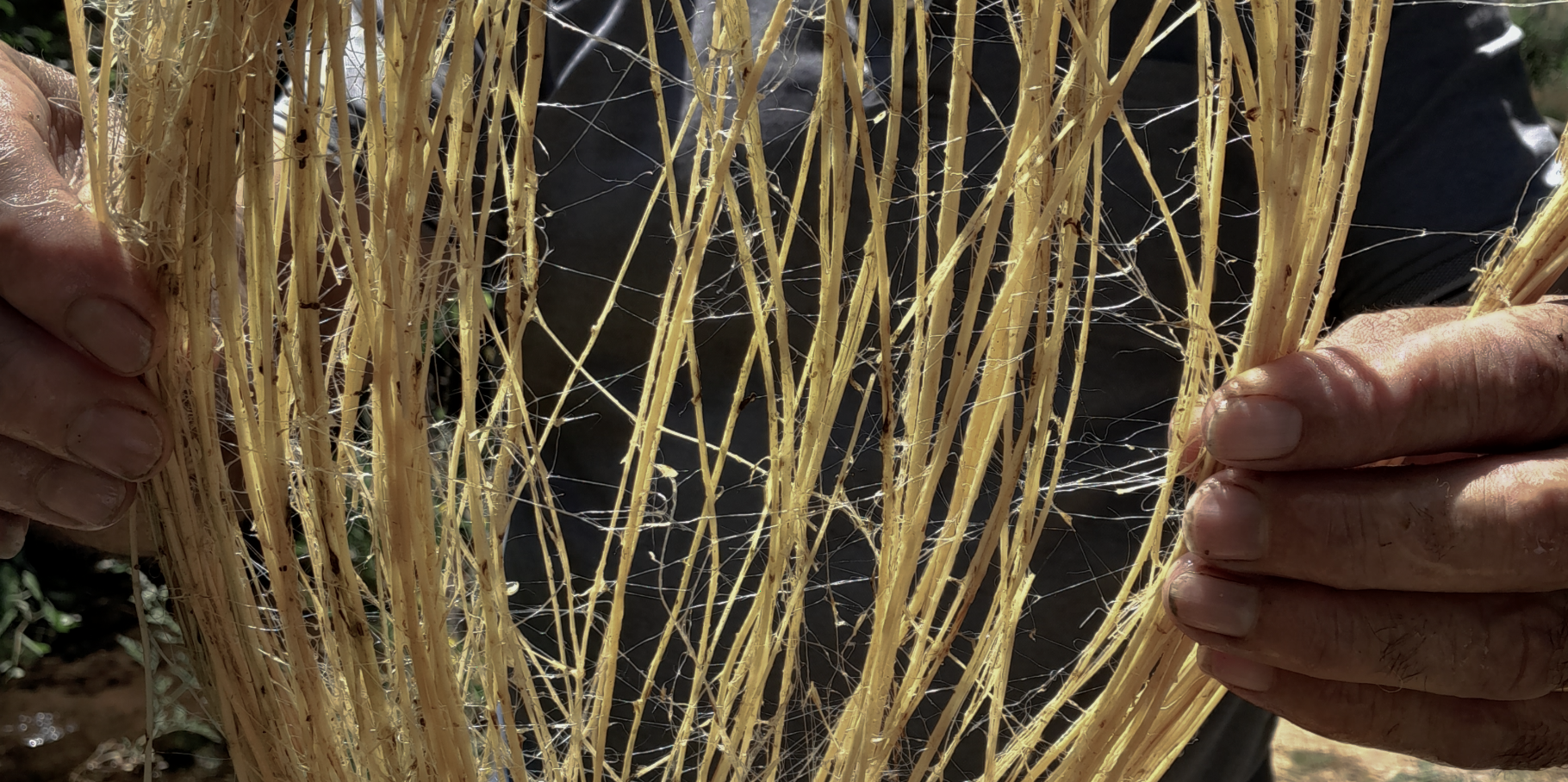
"Linho a Fio" (Linen yarn)
Community Revitalisation of Linen in Serra da Estrela

2026 - 2027
Linho a Fio
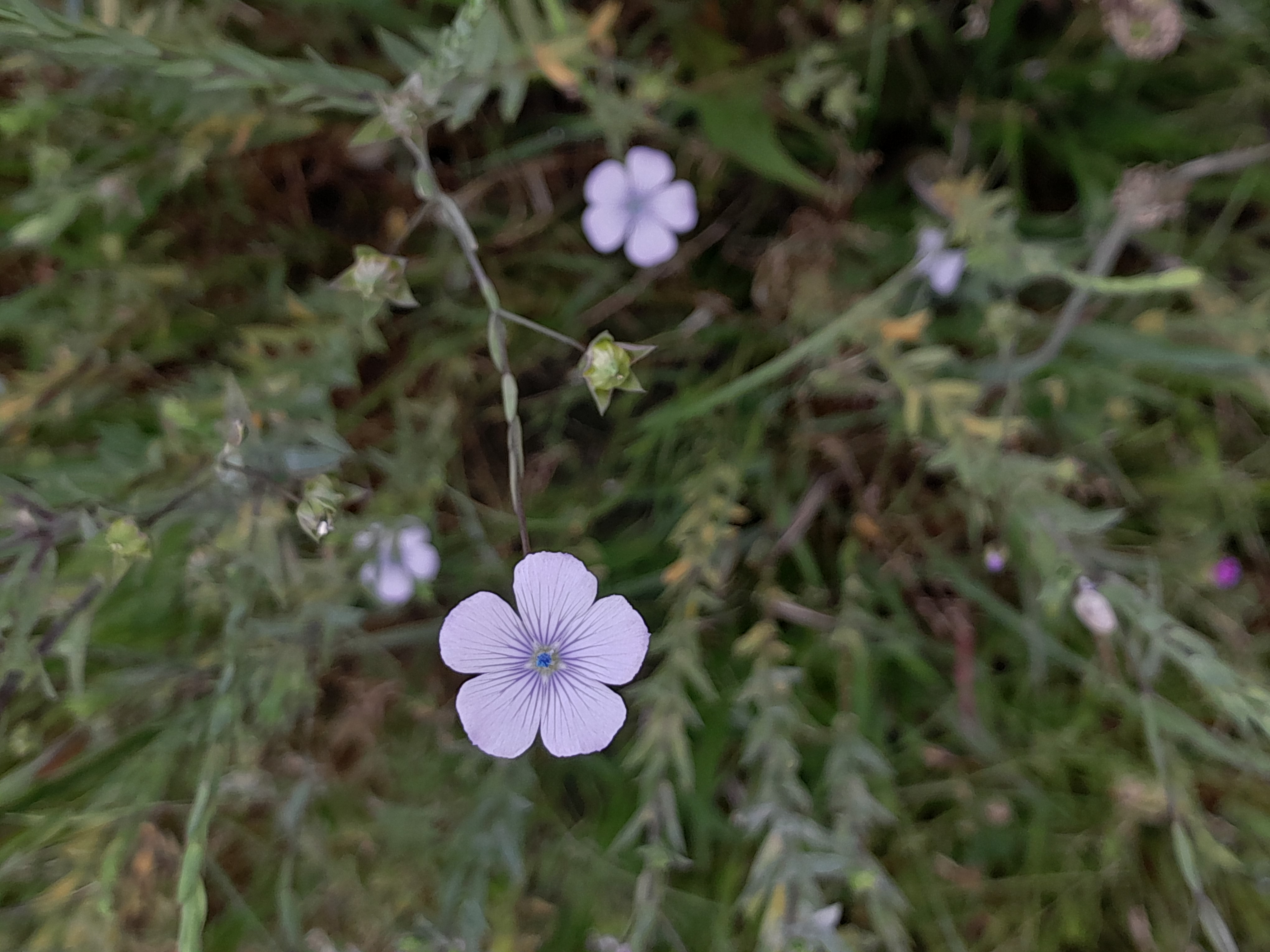
"Linho a Fio" is a community project based in Serra da Estrela, specifically in Linhares da Beira, in the municipality of Celorico da Beira, with the mission of revitalising linen cultivation and the production of artisanal linen as a driver of ecological, economic and social regeneration.
The project seeks to strengthen the autonomy and resilience of local communities through the revival of traditional knowledge, the creation of local and sustainable value chains, and the promotion of agroecological practices that contribute to more balanced and resilient landscapes.
It is being implemented in the period 2026–2027, based on a participatory and community-led approach, driven by an informal group of citizens with extensive experience at the intersection of ecology, ecosystem regeneration and community action, with the support of Palombar.
It is funded by the Regenerative Communities Fund (RCF), a European initiative launched in 2024 by ECOLISE – the European Network for Community-Led Initiatives on Climate Change and Sustainability – and co-financed by the European Union (EU), which aims to support community-led initiatives in the ecological and social transition.
The RCF model is based on a multi-level structure that promotes a European network of co-learning and mutual support among community initiatives, linking different scales of intervention. In 2025, five National Hubs (Croatia, Finland, France, Portugal and Spain) were selected, responsible for driving national and regional ecosystems. Subsequently, fifteen Demonstrators were chosen – including the REGiMont project – Centre for Mountain Landscape Regeneration, coordinated by Palombar. In 2026, fifty Pathfinder initiatives joined, including "Linho a Fio", representing emerging initiatives with strong local roots and transformative potential.
The main objectives of the project are:
Activities
Ancient practice, environmental balance
Artisanal linen production, once a central practice in family economies and local ways of life, was gradually abandoned throughout the 20th century as it was replaced by imported and synthetic fibres. The reintroduction of linen allows for the recovery of a regional fibre, adapted to local soils, climate and seasonal cycles, strengthening links between the land, the community and traditional practices.
As a low-impact agricultural crop integrated into small-scale systems, linen contributes to soil health, promotes agroecological diversification and encourages the creation of mosaic landscapes that are more resilient to climate change and carry a lower risk of fire – a serious problem that is increasingly affecting communities in the mountainous region.
The "Linho a Fio" project supports the development of short value chains, linking production, processing, craftsmanship and cultural heritage, addressing the challenges of rural depopulation, an ageing population and the loss of territorial identity. With activities currently underway in the area, this initiative has already mobilised five households to grow linen, with plans to expand to more participants by 2026 through direct production incentives.
Area of intervention: Serra da Estrela
Funding: Regenerative Communities Fund, managed by ECOLISE and co-financed by the EU
The project seeks to strengthen the autonomy and resilience of local communities through the revival of traditional knowledge, the creation of local and sustainable value chains, and the promotion of agroecological practices that contribute to more balanced and resilient landscapes.
It is being implemented in the period 2026–2027, based on a participatory and community-led approach, driven by an informal group of citizens with extensive experience at the intersection of ecology, ecosystem regeneration and community action, with the support of Palombar.
It is funded by the Regenerative Communities Fund (RCF), a European initiative launched in 2024 by ECOLISE – the European Network for Community-Led Initiatives on Climate Change and Sustainability – and co-financed by the European Union (EU), which aims to support community-led initiatives in the ecological and social transition.
The RCF model is based on a multi-level structure that promotes a European network of co-learning and mutual support among community initiatives, linking different scales of intervention. In 2025, five National Hubs (Croatia, Finland, France, Portugal and Spain) were selected, responsible for driving national and regional ecosystems. Subsequently, fifteen Demonstrators were chosen – including the REGiMont project – Centre for Mountain Landscape Regeneration, coordinated by Palombar. In 2026, fifty Pathfinder initiatives joined, including "Linho a Fio", representing emerging initiatives with strong local roots and transformative potential.
The main objectives of the project are:
- To consolidate and expand community-based linen cultivation through production incentives
- To develop craft skills and promote traditional knowledge
- To create local and regenerative value chains
- To promote social cohesion and community integration
- To strengthen ecological and territorial resilience
Activities
- Immersive launch event | Linhares da Beira | June 2026
- Practical workshops in four villages | Cultivation, retting and initial processing | 2026
- Sharing of knowledge and materials with Iberian linen initiatives | 2026–2027
- European Day of Sustainable Communities | September 2026
- Establishment of a community-based linen processing centre | 2026–2027
- Participatory evaluation and production of a practical handbook | 2027
Ancient practice, environmental balance
Artisanal linen production, once a central practice in family economies and local ways of life, was gradually abandoned throughout the 20th century as it was replaced by imported and synthetic fibres. The reintroduction of linen allows for the recovery of a regional fibre, adapted to local soils, climate and seasonal cycles, strengthening links between the land, the community and traditional practices.
As a low-impact agricultural crop integrated into small-scale systems, linen contributes to soil health, promotes agroecological diversification and encourages the creation of mosaic landscapes that are more resilient to climate change and carry a lower risk of fire – a serious problem that is increasingly affecting communities in the mountainous region.
The "Linho a Fio" project supports the development of short value chains, linking production, processing, craftsmanship and cultural heritage, addressing the challenges of rural depopulation, an ageing population and the loss of territorial identity. With activities currently underway in the area, this initiative has already mobilised five households to grow linen, with plans to expand to more participants by 2026 through direct production incentives.
Area of intervention: Serra da Estrela
Funding: Regenerative Communities Fund, managed by ECOLISE and co-financed by the EU