


18 August 2026
"Holidays in Uva" brought generations together to explore the village, relive the past and look to the future
17 children and young people took part in this initiative, which brought the village to life and left a lasting impression on those who have their roots here. Photo: Palombar.
For three days, the village came to life once more, and its streets and alleyways led the younger generations to discover the authenticity of its heritage, culture, nature, customs and traditions, through a variety of activities led by Palombar’s environmental education specialists, Sara Freire and Rita Wiecha. The aim was to provide children and young people with an immersive experience in the village where they have their roots. Palombar believes that getting to know a place is the best way to forge a sense of belonging to the place we come from and to which we always return, and to value the origins and identity of the place where we were born.
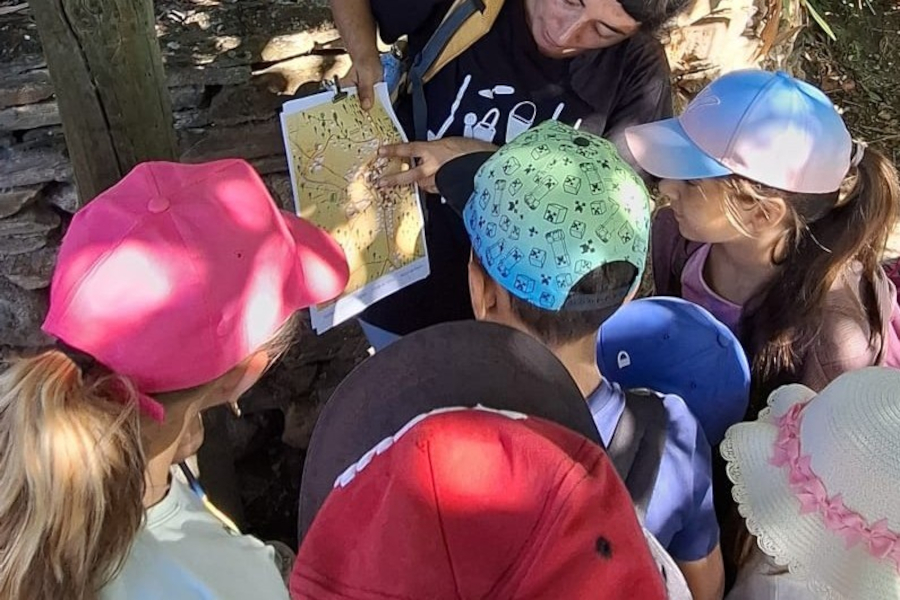
Getting to know a place and creating memories is the most effective way to forge a sense of belonging to the local area. Photo: Palombar.
Discovery, integration, creativity and science
The first day featured games designed to encourage the discovery of the rich local biodiversity and to help the group integrate into the village and the surrounding landscape.
Creativity and science workshops were also organised, using solar printing techniques and the analysis of pellets – an unusual term for children and young people, referring to the regurgitation by nocturnal birds of prey of food they cannot digest. And it is through the analysis of these regurgitations that we discover their diet, consisting mainly of small mammals, particularly rodents and small birds.
.jpeg)
Creative experiments using the solar printing technique were inspired by natural elements. Photo: Palombar.
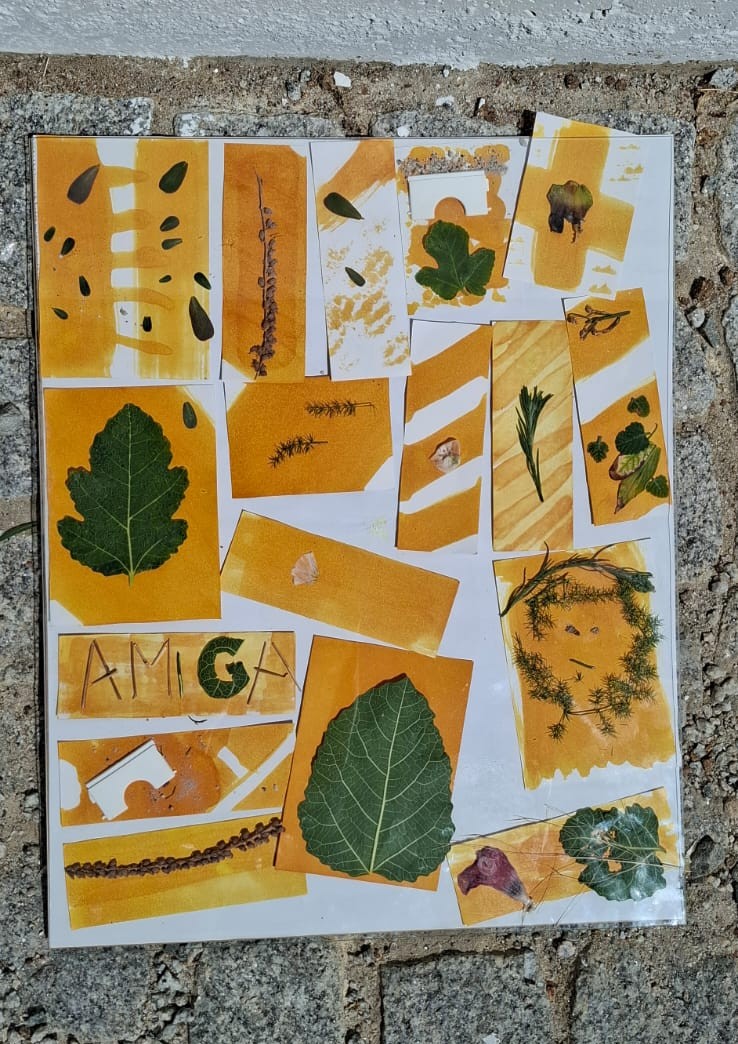
The result of a collaborative effort, in which nature took centre stage. Photo: Palombar.
On this day, the children and young people stepped into the shoes of scientists and, with keen curiosity and interest, uncovered the diet of these birds, learnt about and applied scientific techniques and methods used in the study of this group’s feeding habits.
.jpeg)
Crianças e jovens vestiram a pele de cientistas e analisaram egagrópilas de aves de rapina. Fotografia Palombar.
Exploring heritage, reliving the past and recording experiences through oral history and art
The second day of this adventure in the land of origins promoted the discovery of icons of the local built heritage:
The traditional dovecotes, an architectural and socio-ecological feature that defines the village’s identity, which were built over generations in harmony with the environment, through the artistry and ingenuity of those who work the land. They provided (and still provide) squabs, an additional source of protein for the diet; high-quality organic fertiliser, pigeon droppings, known as ‘pombinho’; and status – owning many was synonymous with wealth.
.jpeg)
Uva is the village of dovecotes, and Palombar has already restored all those that were in a state of partial ruin through a collective effort. Photo: Palombar.
The water wheel ("cegonho" in portuguese), whose usefulness endures to this day as it rises and falls towards the sky and the earth, ‘drawing’ water from the wells and easing the labour of those who water the crops grown from the soil.
The church, a sanctuary of the sacred that embodies the Christian faith and values which have shaped community life and spirit across the generations.
.jpeg)
‘Heritage Hunt’ led everyone to discover the village’s authentic buildings. Photo: Palombar.
The shoeing block, used to securely restrain working livestock (such as oxen, cows, horses or donkeys), enabling the blacksmith or farrier to fit horseshoes or hoof boots to the animals’ hooves without the risk of kicks or sudden movements.
And also the Fonte do Olmo, where life and memories still flow; the dry-stone walls, which divide in function but unite in tradition; and the iconic wooden gate, which welcomes visitors and beckons them into a bygone era that we wish to keep alive.
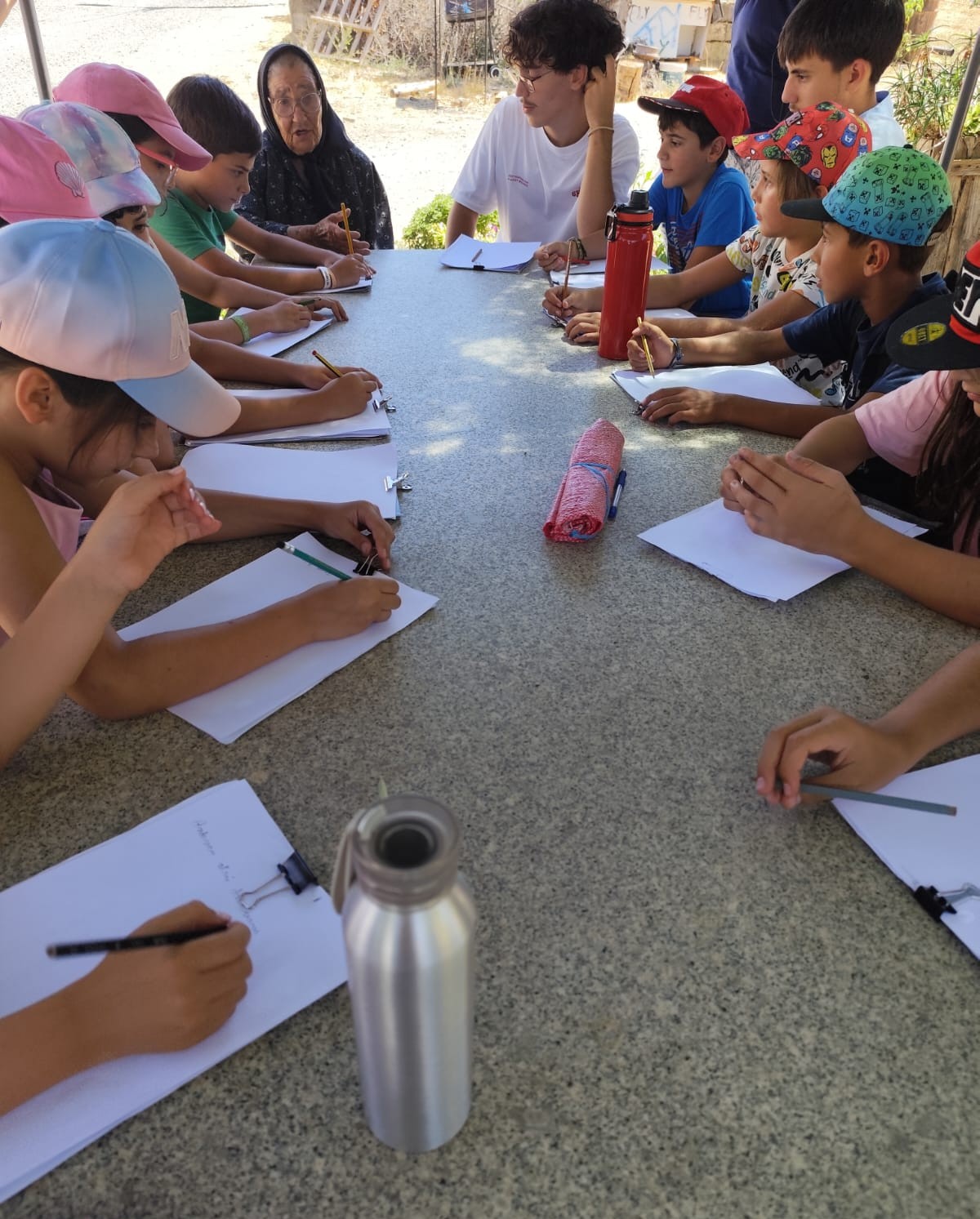
Listening to the voices of those who lived to tell. Photo: Palombar.
Listening attentively to those who have lived through the past and continue to live the present in the village fostered a unique and memorable intergenerational gathering that allowed us to discover stories and traditions from days gone by, enchanting the younger generation, who marvelled at the customs and realities of yesteryear: there were times when one could not dance between Carnival and Lent; when butter was made from lard and otters roamed the River Uva, right in the heart of the village.
The second day ended with the children and young people drawing their impressions of the village and their experiences of life in the countryside.
.jpeg)
A drawing by one of the children, inspired by elements that define Uva’s identity. Photo: Palombar.
A mural to capture elements of collective memory and define the identity of those who represent the present and the future
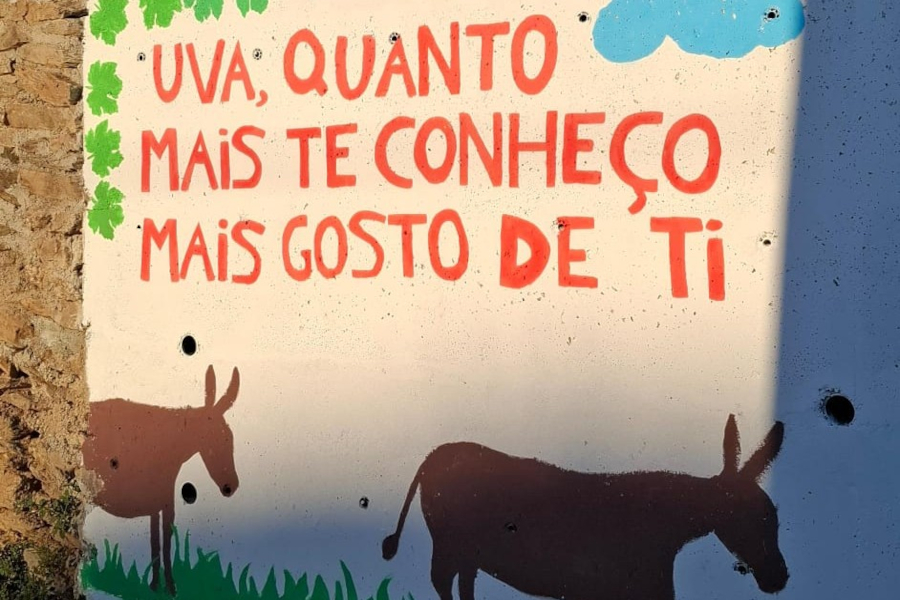
On the last day of the holiday programme, the group painted a mural in the village, depicting vivid elements from the collective memory of the past, present and future that define the local identity. Each person, in their own hand, left their mark on their homeland, the land they wish to see thrive in the future.
.jpeg)
A collaborative mural, where what has stood the test of time across generations has taken shape. Photo: Palombar.
(1).jpeg)
Children and young people took part enthusiastically in painting the mural. Photo: Palombar.
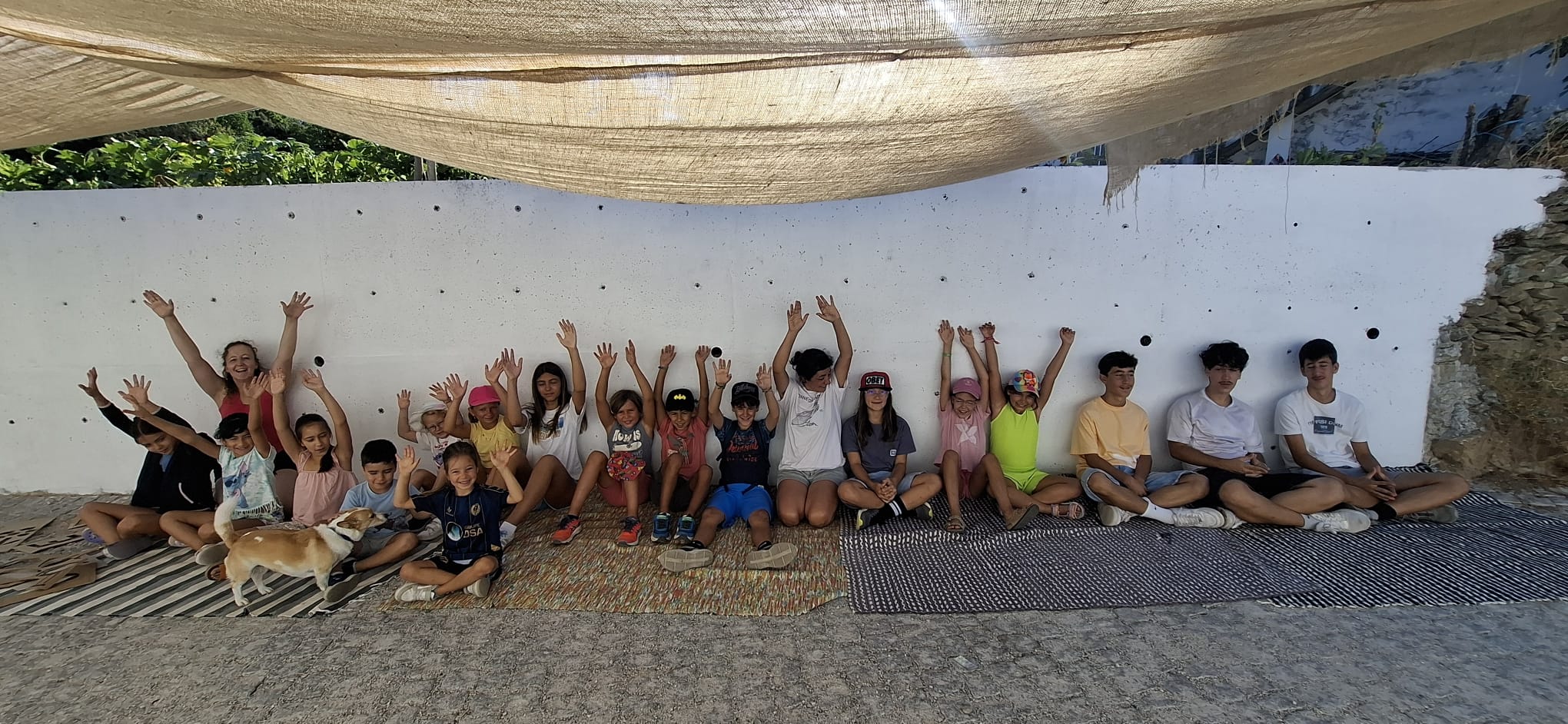
Sharing experiences in the village of our roots, telling stories on the wall of memory. Here, it is still blank. Photo: Palombar.
.jpeg)
More life and colour for those who stay and for those who always return. Photo: Palombar.
The mural and its artist continue to inspire, across time and within the community, a sense of wonder, joy, happiness and hope in living here (and carrying on).