


20 July 2026
Renewable Energy Acceleration Zones: environmental organisations call for stringent criteria and measures to protect nature and communities
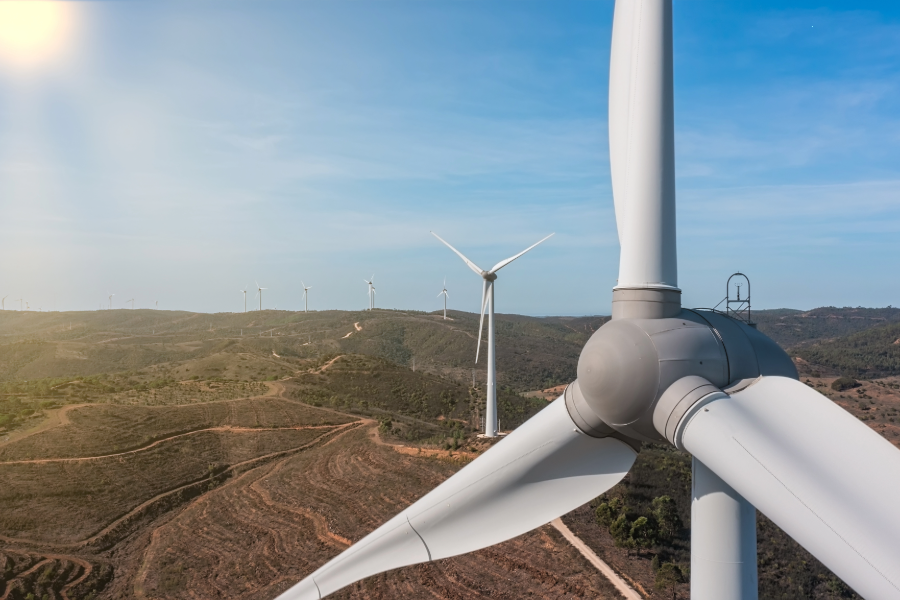
Potential benefits require further action.
JOINT STATEMENT
As part of the Sectoral Programme for Renewable Energy Acceleration Zones (PSZAER), which was open for public consultation until 15 July, the environmental non-governmental organisations Almargem – Association for the Defence of the Cultural and Environmental Heritage of the Algarve, FAPAS – Portuguese Association for the Conservation of Biodiversity, GEOTA – Group for the Study of Spatial Planning and the Environment, LPN – League for the Protection of Nature, Morcegos.PT, Palombar – Conservation of Nature and Rural Heritage, SPEA – Portuguese Society for the Study of Birds, VCF – Vulture Conservation Foundation, WWF Portugal and ZERO – Sustainable Earth System Association – recognise that the rapid expansion of renewable energy is essential to halt climate change, phase out fossil fuels, electrify the economy, strengthen energy self-sufficiency and meet climate neutrality targets by 2045 at the latest. However, for this expansion to be truly beneficial to all, it must be planned and carried out in an orderly manner, with an integrated view of its cumulative effects on biodiversity, the landscape, soil, water, heritage and local communities. For this reason, environmental organisations have always advocated for coherent planning and the carrying out of a strategic environmental assessment for renewable energy projects.
Potential benefits require further measures
In this context, the Renewable Energy Acceleration Zones (ZAERs), the designation of which is a requirement for all Member States under the European Union’s RED III Directive, represent a potentially decisive tool for spatial planning and accelerating the energy transition. Compared with the current situation – namely, the scattered development of projects under an ‘open-bar’ regime, without a strategic framework and with few environmental and social protection requirements – ZAERs offer greater guarantees for the protection of ecosystems, the landscape and heritage, as well as better conditions for ensuring tangible benefits for local communities, alongside faster licensing procedures. They also present an opportunity to reduce the risks of the haphazard expansion of centralised renewable energy production, such as that which has characterised recent years, with projects strongly opposed by local residents and environmental organisations, including the Sophia solar power station.
What we advocate: essential amendments
Following an analysis of the proposal for the Sectoral Programme for Renewable Energy Acceleration Zones (PSZAER), the environmental NGOs propose that it should only be approved with amendments that strengthen its environmental, legal, territorial and energy coherence, in particular by giving serious consideration to the removal of those National Ecological Reserve (REN) categories that have not been excluded from the ZAERs.
Among the essential amendments, the following stand out: the establishment of a binding hierarchy of siting priorities; the creation of priority ZAERs in artificialised and degraded areas; a graded classification of territorial sensitivity; cumulative assessment with warning thresholds; the mandatory requirement for Local Benefits Plans and for effective public participation and the timely and meaningful involvement of citizens, and the effective acceleration of collective self-consumption and energy communities, amongst other critical aspects. These changes do not delay the energy transition; on the contrary, they reduce litigation, increase social legitimacy, improve the ecological quality of decisions and ensure that the transition is accelerated where it is most needed, most efficient and least contentious.
In their assessment, the environmental NGOs also point out that the expansion of renewable energy does not depend solely on the location of solar power stations and wind farms. A lack of advance planning for grid connection infrastructure could shift additional impacts outside the ZAERs and exacerbate territorial conflicts associated with new high- and very-high-voltage power lines.
.png)
ZAER de apenas 1% por município aumentam os riscos para a biodiversidade e comprometem a neutralidade climática e a Estratégia Industrial Verde
Following the close of the public consultation period and contrary to the proposal put forward for public consultation, environmental NGOs were taken by surprise by the news that the Government was proposing an arbitrary cap of 1 per cent of ZAER per municipality, which would, after all, have complete freedom to define the areas.
As well as undermining all the technical and scientific work carried out by renowned academics to identify the ZAERs and the strategic environmental assessments they conducted, and failing to align with the spirit of the European RED III Directive, this measure could increase costs, hinder climate neutrality and exacerbate environmental and social conflicts.
An analysis of the municipal data from the Sectoral Plan for Renewable Energy Acceleration Zones (PSZAER) shows that there is scope to substantially reduce the proposed areas, whilst simultaneously enhancing their environmental and territorial quality. However, our preliminary calculations show that, if the combined area of ZAERs were limited to a maximum of 1 per cent of each municipality’s land area, the available national area would be reduced to around 61,000 hectares, of which 39,000 hectares would be for solar and 22,000 hectares for wind power – almost ten times less than that proposed in the PSZAER.
Paradoxically, such a significant reduction in ZAERs could also increase environmental pressure. If the available area is too small in relation to energy needs, any subsequent exclusion of habitats, species, ecological corridors, heritage features or sensitive areas will come to be seen as a loss of energy capacity.
The scarcity of space will tend to create pressure for the almost complete occupation of ZAERs, reducing the scope for preserving natural and landscape values and for implementing effective measures to offset impacts. At the same time, the insufficiency of planned areas may encourage the proliferation of projects outside ZAERs, precisely where environmental and territorial safeguards are weakest.
Based on conservative assumptions regarding the productivity of the sites, these limited ZAER areas – resulting from 1 per cent caps per municipality – would only generate around 35 TWh of renewable electricity per year. Given that the aim is to achieve a greater share of renewables in the long term, over the coming decades and not just in the next few years, this figure represents only a small fraction of the requirements for a climate-neutral Portugal, which will demand extensive electrification of industry, land transport, building heating and cooling, and the production of hydrogen for part of heavy industry, as well as synthetic fuels for aviation and maritime transport. Various scenarios point to electricity requirements exceeding 120–160 TWh per year by the middle of the century, and these could be even higher should the country proceed with a genuine Green Industrial Strategy.
Even when supplemented by offshore wind power, rooftop solar power and additional investment in storage and grids, a strict limit of 1 per cent per municipality, according to calculations carried out by ONGA, suggests that replacing just 30 TWh per year of onshore generation in the ZAER with these alternatives could increase the overall costs of the electricity system by around 1.2 to 1.7 billion euros per year, resulting in an increase in the average cost of electricity of between 16% and 23%. Such a development would reduce the competitiveness of the Portuguese economy, hinder the decarbonisation of the most challenging sectors and undermine some of the competitive advantages that a Green Industrial Strategy based on abundant, low-cost renewable electricity can provide.
.png)
Next phase of the process: key priorities
The Portuguese Environment Agency (APA) and the local authorities must, together with the DGEG – Directorate-General for Energy and Geology, play a decisive role in the management of the ZAERs: it is essential to ensure a gradual, careful process, accompanied by a new public consultation based on a more accurate map.
The signatory organisations advocate the following priorities for the next phase of the process:
Accelerating more effectively, not just faster
The choice facing Portugal is not between accelerating or protecting. The real choice is between an orderly, participatory, fair and environmentally responsible energy transition, or the continuation of an uncoordinated expansion of projects and infrastructure whose ecological, landscape, social and economic costs will inevitably be higher. The ZAERs must be the instrument that enables us to accelerate better, not just to accelerate faster.
As part of the Sectoral Programme for Renewable Energy Acceleration Zones (PSZAER), which was open for public consultation until 15 July, the environmental non-governmental organisations Almargem – Association for the Defence of the Cultural and Environmental Heritage of the Algarve, FAPAS – Portuguese Association for the Conservation of Biodiversity, GEOTA – Group for the Study of Spatial Planning and the Environment, LPN – League for the Protection of Nature, Morcegos.PT, Palombar – Conservation of Nature and Rural Heritage, SPEA – Portuguese Society for the Study of Birds, VCF – Vulture Conservation Foundation, WWF Portugal and ZERO – Sustainable Earth System Association – recognise that the rapid expansion of renewable energy is essential to halt climate change, phase out fossil fuels, electrify the economy, strengthen energy self-sufficiency and meet climate neutrality targets by 2045 at the latest. However, for this expansion to be truly beneficial to all, it must be planned and carried out in an orderly manner, with an integrated view of its cumulative effects on biodiversity, the landscape, soil, water, heritage and local communities. For this reason, environmental organisations have always advocated for coherent planning and the carrying out of a strategic environmental assessment for renewable energy projects.
Potential benefits require further measures
In this context, the Renewable Energy Acceleration Zones (ZAERs), the designation of which is a requirement for all Member States under the European Union’s RED III Directive, represent a potentially decisive tool for spatial planning and accelerating the energy transition. Compared with the current situation – namely, the scattered development of projects under an ‘open-bar’ regime, without a strategic framework and with few environmental and social protection requirements – ZAERs offer greater guarantees for the protection of ecosystems, the landscape and heritage, as well as better conditions for ensuring tangible benefits for local communities, alongside faster licensing procedures. They also present an opportunity to reduce the risks of the haphazard expansion of centralised renewable energy production, such as that which has characterised recent years, with projects strongly opposed by local residents and environmental organisations, including the Sophia solar power station.
What we advocate: essential amendments
Following an analysis of the proposal for the Sectoral Programme for Renewable Energy Acceleration Zones (PSZAER), the environmental NGOs propose that it should only be approved with amendments that strengthen its environmental, legal, territorial and energy coherence, in particular by giving serious consideration to the removal of those National Ecological Reserve (REN) categories that have not been excluded from the ZAERs.
Among the essential amendments, the following stand out: the establishment of a binding hierarchy of siting priorities; the creation of priority ZAERs in artificialised and degraded areas; a graded classification of territorial sensitivity; cumulative assessment with warning thresholds; the mandatory requirement for Local Benefits Plans and for effective public participation and the timely and meaningful involvement of citizens, and the effective acceleration of collective self-consumption and energy communities, amongst other critical aspects. These changes do not delay the energy transition; on the contrary, they reduce litigation, increase social legitimacy, improve the ecological quality of decisions and ensure that the transition is accelerated where it is most needed, most efficient and least contentious.
In their assessment, the environmental NGOs also point out that the expansion of renewable energy does not depend solely on the location of solar power stations and wind farms. A lack of advance planning for grid connection infrastructure could shift additional impacts outside the ZAERs and exacerbate territorial conflicts associated with new high- and very-high-voltage power lines.
Acceleration should be targeted where it is most needed, most efficient and least contentious.
ZAER de apenas 1% por município aumentam os riscos para a biodiversidade e comprometem a neutralidade climática e a Estratégia Industrial Verde
Following the close of the public consultation period and contrary to the proposal put forward for public consultation, environmental NGOs were taken by surprise by the news that the Government was proposing an arbitrary cap of 1 per cent of ZAER per municipality, which would, after all, have complete freedom to define the areas.
As well as undermining all the technical and scientific work carried out by renowned academics to identify the ZAERs and the strategic environmental assessments they conducted, and failing to align with the spirit of the European RED III Directive, this measure could increase costs, hinder climate neutrality and exacerbate environmental and social conflicts.
An analysis of the municipal data from the Sectoral Plan for Renewable Energy Acceleration Zones (PSZAER) shows that there is scope to substantially reduce the proposed areas, whilst simultaneously enhancing their environmental and territorial quality. However, our preliminary calculations show that, if the combined area of ZAERs were limited to a maximum of 1 per cent of each municipality’s land area, the available national area would be reduced to around 61,000 hectares, of which 39,000 hectares would be for solar and 22,000 hectares for wind power – almost ten times less than that proposed in the PSZAER.
Paradoxically, such a significant reduction in ZAERs could also increase environmental pressure. If the available area is too small in relation to energy needs, any subsequent exclusion of habitats, species, ecological corridors, heritage features or sensitive areas will come to be seen as a loss of energy capacity.
The scarcity of space will tend to create pressure for the almost complete occupation of ZAERs, reducing the scope for preserving natural and landscape values and for implementing effective measures to offset impacts. At the same time, the insufficiency of planned areas may encourage the proliferation of projects outside ZAERs, precisely where environmental and territorial safeguards are weakest.
Based on conservative assumptions regarding the productivity of the sites, these limited ZAER areas – resulting from 1 per cent caps per municipality – would only generate around 35 TWh of renewable electricity per year. Given that the aim is to achieve a greater share of renewables in the long term, over the coming decades and not just in the next few years, this figure represents only a small fraction of the requirements for a climate-neutral Portugal, which will demand extensive electrification of industry, land transport, building heating and cooling, and the production of hydrogen for part of heavy industry, as well as synthetic fuels for aviation and maritime transport. Various scenarios point to electricity requirements exceeding 120–160 TWh per year by the middle of the century, and these could be even higher should the country proceed with a genuine Green Industrial Strategy.
Even when supplemented by offshore wind power, rooftop solar power and additional investment in storage and grids, a strict limit of 1 per cent per municipality, according to calculations carried out by ONGA, suggests that replacing just 30 TWh per year of onshore generation in the ZAER with these alternatives could increase the overall costs of the electricity system by around 1.2 to 1.7 billion euros per year, resulting in an increase in the average cost of electricity of between 16% and 23%. Such a development would reduce the competitiveness of the Portuguese economy, hinder the decarbonisation of the most challenging sectors and undermine some of the competitive advantages that a Green Industrial Strategy based on abundant, low-cost renewable electricity can provide.
We want to accelerate better, not just faster.
Next phase of the process: key priorities
The Portuguese Environment Agency (APA) and the local authorities must, together with the DGEG – Directorate-General for Energy and Geology, play a decisive role in the management of the ZAERs: it is essential to ensure a gradual, careful process, accompanied by a new public consultation based on a more accurate map.
The signatory organisations advocate the following priorities for the next phase of the process:
- Review of the proposed areas in light of the results of the Strategic Environmental Assessment, based on scientific rather than arbitrary criteria;
- Precise demarcation, in consultation with local authorities, of a first generation of ZAERs linked to substations with available capacity and previously defined connection corridors;
- Conducting a new public consultation following this demarcation;
- Establishing a model of shared governance between the Portuguese Environment Agency (APA), the Regional Coordination and Development Commission (CCDR), the Directorate-General for Energy and Geology (DGEG) and the municipalities;
- Development of municipal renewable energy strategies in built-up areas, with support from the Energy Agency (ADENE);
- And prioritising the promotion of energy communities in urban and industrial areas.
Accelerating more effectively, not just faster
The choice facing Portugal is not between accelerating or protecting. The real choice is between an orderly, participatory, fair and environmentally responsible energy transition, or the continuation of an uncoordinated expansion of projects and infrastructure whose ecological, landscape, social and economic costs will inevitably be higher. The ZAERs must be the instrument that enables us to accelerate better, not just to accelerate faster.