


29 June 2026
Little Bustard: a species facing imminent extinction, in need of urgent salvation
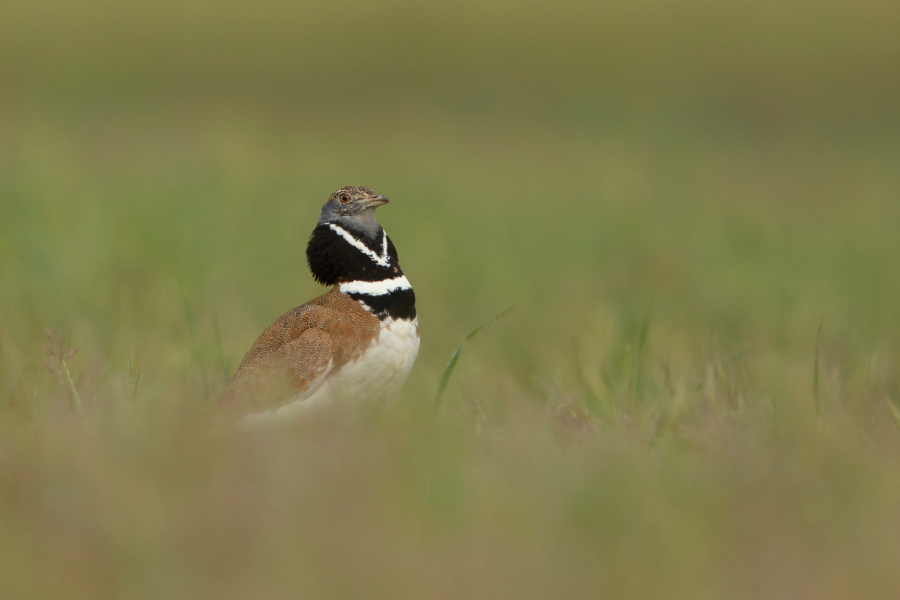
We advocate the creation of an emergency plan involving the State and various organisations.
The 4th Little Bustard National Census reveals a 90% decline in the population of this species over the last 20 years; we call for immediate conservation measures
The national population of the little bustard (Tetrax tetrax) is at imminent risk of extinction: it has fallen by 90 per cent over the last 20 years, according to the results of the 4th Little Bustard National Census, which have just been published. The environmental organisations SPEA – Portuguese Society for the Study of Birds, LPN – League for the Protection of Nature, Palombar – Conservation of Nature and Rural Heritage, WWF Portugal, FAPAS, GEOTA and ZERO are calling for the urgent adoption of emergency measures to prevent the extinction of this bird in Portugal.
“The results of this census are alarming, but, unfortunately, they come as no surprise. We are witnessing the disappearance of the little bustard before our very eyes in the short term. Given this evidence, it is incomprehensible that the Portuguese State continues to fail to implement effective conservation measures, clearly failing to meet its obligations under the European Union’s Birds Directive”, says Julieta Costa, coordinator of the Terrestrial Conservation Department at SPEA/BirdLife.
The species depends on extensive farming systems and open habitats, and changes in land use have jeopardised its survival
Once abundant on the plains of the Alentejo, the little bustard is now an increasingly rare bird that is difficult to spot. Dependent on extensive farming systems and open habitats, it nests on the ground, making it particularly vulnerable to agricultural intensification. The replacement of extensive cereal crops with intensive permanent crops, such as almond groves or olive groves, and the increase in grazing intensity, as well as the reduction in fallow land, also contribute to the degradation of nesting sites, which has led to the collapse of the little bustard population. Other priority steppe birds, the great bustard (Otis tarda) and the Montagu’s harrier (Circus pygargus), are also experiencing very sharp declines due to these threats. The increasing infrastructure development in rural areas, such as power lines, represents an additional source of mortality for the species.
.png)
"Not only is there no end in sight to the threats facing the little bustard and other steppe birds, but these threats have increased in both variety and intensity in recent years, despite all our efforts – and those of the many farmers with whom we collaborate – to minimise them. These are fragile birds, dependent on an agricultural ecosystem and the very community that sustains it, yet they are also subject to countless pressures that continue to be overlooked by the national authorities, who fail to give them the attention, concern, decision-making and action they deserve. If we are to halt the extinction of these species, we must act now”, argues Estrela Matilde, executive director of LPN.
4th Little Bustard National Census reveals that this species is facing imminent extinction
The results of the 4th Little Bustard National Census, coordinated by BIOPOLIS/CIBIO, with the participation of Palombar, estimate the population at just 1,736 males – a decline of around 90 per cent since 2006. “Since the 1st Little Bustard National Census in 2006, each edition has revealed a worsening of the species’ situation. As early as 2022, the conclusion was that the little bustard was at risk of extinction and was therefore classified as ‘Critically Endangered’. Four years on, the species continues to decline, even within the Special Protection Areas of the Natura 2000 network that were supposed to protect it,” says João Paulo Silva of BIOPOLIS/CIBIO, coordinator of the Little Bustard National Census.
The situation of species such as the little bustard has attracted the attention of environmentalists and even the European Union, which has co-funded projects such as LIFE Iberian Agrosteppes, LIFE SOS Pygargus, LIFE EUROBUSTARD and LIFE PowerLines4Birds. However, for actions on the ground to have the desired effect, systemic measures are needed that only the Government can regulate. The cereal-growing landscape itself is at risk.
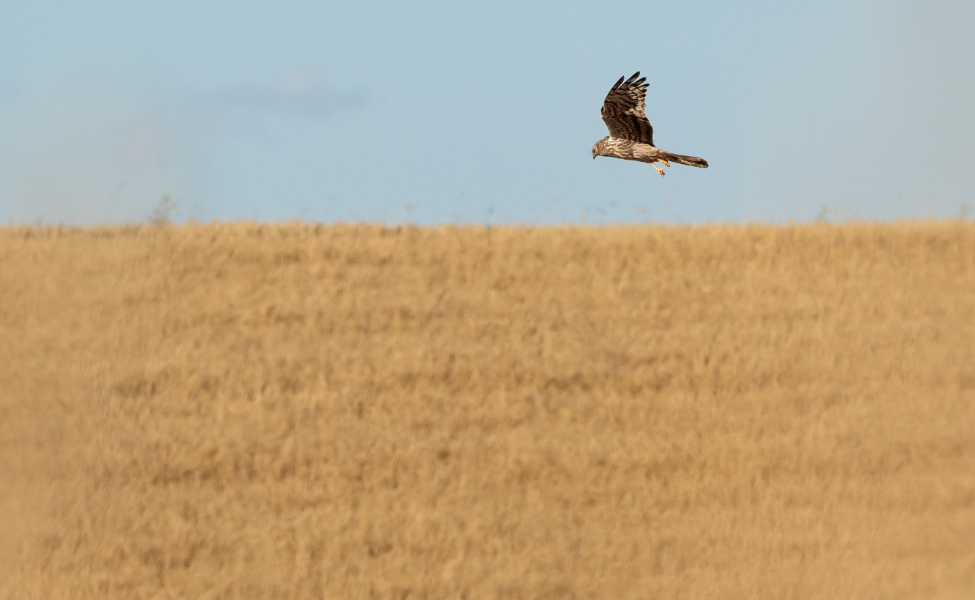
The LIFE SOS Pygargus project is focusing on the national cereal farming sector to save species that depend on agricultural habitats, such as the Montagu’s harrier
“In Portugal, there has been a loss of almost 80 per cent of cereal-growing land since the late 1980s, falling from around 900,000 hectares to approximately 190,000 hectares by 2023. The loss of cereal-growing land is also exacerbating dependence on imports for domestic consumption. This trend is accompanied by a marked ageing of the farmers who still grow cereals,” adds Joaquim Teodósio, coordinator of Palombar’s LIFE SOS Pygargus project, which is implementing urgent measures to save the Montagu’s harrier (Circus pygargus) from extinction.
Furthermore, the loss of cereal-growing landscapes also means the loss of the biodiversity associated with them and dependent on them, as is the case with endangered species such as the Montagu’s harrier and the little bustard. It is for this reason that the LIFE SOS Pygargus project is also strongly committed to national cereal production, through trials and the selection of cereal varieties best suited to the northern region and the life cycle of these birds, and by promoting a new organisation of cereal producers in this part of the country. The conservation of these species also enhances the value of cereal production, as they serve as indicators of good environmental practices that are increasingly valued and demanded by consumers in particular, and by society in general. To save these species, we must save their habitat, promote and enhance national agriculture, thereby generating environmental, social and economic benefits at both regional and national levels.
We call for the creation of an emergency plan to save the little bustard from extinction
Environmental organisations are calling for the urgent creation of an inter-ministerial emergency plan, involving environmental non-governmental organisations (ENGOs), farmers, universities and other local stakeholders, which should include the active protection of breeding areas, the promotion of cereal-growing areas and fallow land through improved agri-environmental measures and the enhancement of national production, the planning of energy infrastructure, restrictions on irrigation in critical areas, and the creation of a network of reserves and an ex-situ conservation programme (breeding in captivity for subsequent release back into the wild).
Without immediate action, the extinction of the little bustard in Portugal could become a reality in the short term.
The national population of the little bustard (Tetrax tetrax) is at imminent risk of extinction: it has fallen by 90 per cent over the last 20 years, according to the results of the 4th Little Bustard National Census, which have just been published. The environmental organisations SPEA – Portuguese Society for the Study of Birds, LPN – League for the Protection of Nature, Palombar – Conservation of Nature and Rural Heritage, WWF Portugal, FAPAS, GEOTA and ZERO are calling for the urgent adoption of emergency measures to prevent the extinction of this bird in Portugal.
“The results of this census are alarming, but, unfortunately, they come as no surprise. We are witnessing the disappearance of the little bustard before our very eyes in the short term. Given this evidence, it is incomprehensible that the Portuguese State continues to fail to implement effective conservation measures, clearly failing to meet its obligations under the European Union’s Birds Directive”, says Julieta Costa, coordinator of the Terrestrial Conservation Department at SPEA/BirdLife.
The species depends on extensive farming systems and open habitats, and changes in land use have jeopardised its survival
Once abundant on the plains of the Alentejo, the little bustard is now an increasingly rare bird that is difficult to spot. Dependent on extensive farming systems and open habitats, it nests on the ground, making it particularly vulnerable to agricultural intensification. The replacement of extensive cereal crops with intensive permanent crops, such as almond groves or olive groves, and the increase in grazing intensity, as well as the reduction in fallow land, also contribute to the degradation of nesting sites, which has led to the collapse of the little bustard population. Other priority steppe birds, the great bustard (Otis tarda) and the Montagu’s harrier (Circus pygargus), are also experiencing very sharp declines due to these threats. The increasing infrastructure development in rural areas, such as power lines, represents an additional source of mortality for the species.
This bird, emblematic of the Alentejo landscape, is becoming increasingly rare to spot.
"Not only is there no end in sight to the threats facing the little bustard and other steppe birds, but these threats have increased in both variety and intensity in recent years, despite all our efforts – and those of the many farmers with whom we collaborate – to minimise them. These are fragile birds, dependent on an agricultural ecosystem and the very community that sustains it, yet they are also subject to countless pressures that continue to be overlooked by the national authorities, who fail to give them the attention, concern, decision-making and action they deserve. If we are to halt the extinction of these species, we must act now”, argues Estrela Matilde, executive director of LPN.
4th Little Bustard National Census reveals that this species is facing imminent extinction
The results of the 4th Little Bustard National Census, coordinated by BIOPOLIS/CIBIO, with the participation of Palombar, estimate the population at just 1,736 males – a decline of around 90 per cent since 2006. “Since the 1st Little Bustard National Census in 2006, each edition has revealed a worsening of the species’ situation. As early as 2022, the conclusion was that the little bustard was at risk of extinction and was therefore classified as ‘Critically Endangered’. Four years on, the species continues to decline, even within the Special Protection Areas of the Natura 2000 network that were supposed to protect it,” says João Paulo Silva of BIOPOLIS/CIBIO, coordinator of the Little Bustard National Census.
The situation of species such as the little bustard has attracted the attention of environmentalists and even the European Union, which has co-funded projects such as LIFE Iberian Agrosteppes, LIFE SOS Pygargus, LIFE EUROBUSTARD and LIFE PowerLines4Birds. However, for actions on the ground to have the desired effect, systemic measures are needed that only the Government can regulate. The cereal-growing landscape itself is at risk.
The LIFE SOS Pygargus project is focusing on the national cereal farming sector to save species that depend on agricultural habitats, such as the Montagu’s harrier
“In Portugal, there has been a loss of almost 80 per cent of cereal-growing land since the late 1980s, falling from around 900,000 hectares to approximately 190,000 hectares by 2023. The loss of cereal-growing land is also exacerbating dependence on imports for domestic consumption. This trend is accompanied by a marked ageing of the farmers who still grow cereals,” adds Joaquim Teodósio, coordinator of Palombar’s LIFE SOS Pygargus project, which is implementing urgent measures to save the Montagu’s harrier (Circus pygargus) from extinction.
Furthermore, the loss of cereal-growing landscapes also means the loss of the biodiversity associated with them and dependent on them, as is the case with endangered species such as the Montagu’s harrier and the little bustard. It is for this reason that the LIFE SOS Pygargus project is also strongly committed to national cereal production, through trials and the selection of cereal varieties best suited to the northern region and the life cycle of these birds, and by promoting a new organisation of cereal producers in this part of the country. The conservation of these species also enhances the value of cereal production, as they serve as indicators of good environmental practices that are increasingly valued and demanded by consumers in particular, and by society in general. To save these species, we must save their habitat, promote and enhance national agriculture, thereby generating environmental, social and economic benefits at both regional and national levels.
The LIFE SOS Pygargus project is conducting trials on cereal varieties to select those best suited to the life cycle of the Montagu’s harrier and to the northern region. Photo: Pedro Alves/Palombar.
We call for the creation of an emergency plan to save the little bustard from extinction
Environmental organisations are calling for the urgent creation of an inter-ministerial emergency plan, involving environmental non-governmental organisations (ENGOs), farmers, universities and other local stakeholders, which should include the active protection of breeding areas, the promotion of cereal-growing areas and fallow land through improved agri-environmental measures and the enhancement of national production, the planning of energy infrastructure, restrictions on irrigation in critical areas, and the creation of a network of reserves and an ex-situ conservation programme (breeding in captivity for subsequent release back into the wild).
Without immediate action, the extinction of the little bustard in Portugal could become a reality in the short term.