


9 February 2026
When nature loses, we all lose: sign the petition against the deregulation of environmental laws in the EU
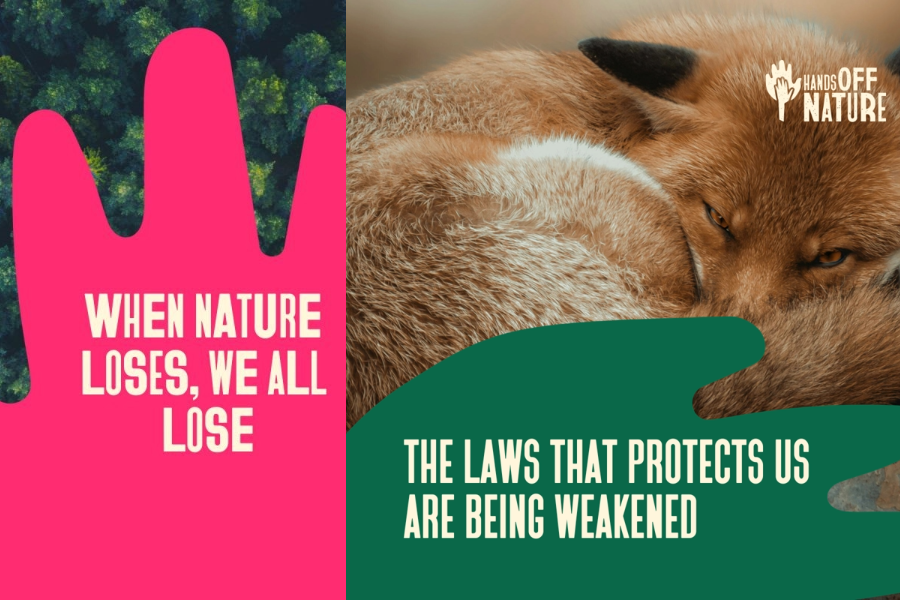
An unprecedented attempt is underway to deregulate and weaken key laws protecting nature and people in the European Union (EU), under the promise of ‘simplifying’ the EU legal system. But in reality, these changes will only benefit large economic and financial groups, while putting our lives and those of future generations at risk.
The strategy is not to make a single ‘move’ by repealing all these laws, but to gradually undermine one key law at a time. If it goes ahead, this strategy, which threatens nature and people, could jeopardise decades of collective struggle and the development of legal instruments that guarantee the protection of the environment, biodiversity and society. Once lost, these protections rarely return.
The European Environmental Bureau (EEB), of which Palombar is a member, BirdLife International, ClientEarth and WWF International have launched the #HandsOffNature campaign, which aims to alert, inform and take action against this attempt at large-scale deregulation. There is also a collective petition to sign and fight for the protection of nature and people. Know more here.
The laws that protect nature and people and are currently at risk of being changed and weakened are:
• Birds and Habitats Directives
The EU Birds Directive protects all wild birds – especially endangered and migratory birds – by prohibiting harmful activities and creating protected areas. The Habitats Directive safeguards more than 1,000 species and 230 types of habitats, requiring strict controls and assessments of economic activities to maintain a favourable conservation status.
• Nitrates Directive
The Nitrates Directive is a pillar of EU environmental and water policy. Its aim is to prevent nitrate pollution from agriculture (fertilisers and manure) and promote good agricultural practices, mainly by setting a limit of 170 kg of nitrogen per hectare per year for the application of animal manure. This limit acts as a safeguard, indirectly restricting animal density (the number of animals per unit area) in intensive farming systems.
• REACH Regulation - Registration, Evaluation, Authorisation and Restriction of Chemicals
Proposed in June 2025, the Omnibus Directive on chemical compounds suggests weakening chemical protection by: ending the mandatory notification of hazardous substances in products (e.g. toys, furniture, electronics); abolishing the SCIP database - Substances of Concern In articles as such or in complex objects (Products), which informs consumers and waste managers about the possible presence of hazardous chemicals; reducing safety standards for cosmetics, allowing exceptions for chemicals linked to cancer or infertility and removing minimum legibility rules for labels. The upcoming revision of REACH also risks prioritising ‘simplification’ over safety, potentially weakening the oversight of chemicals.
• Environmental Impact Assessment Directive
The Environmental Impact Assessment (EIA) Directive ensures that large public and private projects – such as those involving energy, transport, waste and infrastructure – are assessed for their environmental and health impacts before approval. It promotes: transparency and public participation; evidence-based decision-making; protection of biodiversity, water, air, soil, climate, cultural heritage and health. High-impact projects must undergo comprehensive assessments, while others are assessed to support sustainable development and safeguard people and nature.
• Net-Zero Industry Act
The Net-Zero Industry Act (NZIA) aims to boost clean production and industrial competitiveness in the EU. It sets production targets, simplifies the licensing process, grants ‘priority status’ to strategic projects, and updates the rules for procurement, auctions, and financing. The NZIA supports a range of zero-emission technologies, some widely supported, such as solar, wind, batteries and electricity grids, and others more controversial and harmful, such as nuclear energy, CCUS (Carbon Capture, Utilisation and Storage), biomethane, transport and CO2 utilisation.
• Water Framework Directive
The Water Framework Directive (WFD) is a crucial piece of legislation, and the related directives on priority water pollutants form the backbone of EU water policy. The WFD, in particular, protects and restores inland, coastal and groundwater ecosystems, while ensuring clean and safe water for people. Its aim is to prevent water deterioration and achieve “good status” for all waters by reducing pollution and restoring our degraded rivers, lakes and wetlands. River Basin Management Plans are the main tool for balancing water use for both nature and communities.
• EU Deforestation Regulation
The EU Deforestation Regulation (EUDR) is the world's first law aimed at preventing global deforestation. It prevents the import or sale of products linked to deforestation in the EU and requires companies to ensure that their supply chains are deforestation-free. This regulation is key to the EU meeting its climate and biodiversity commitments.
Faced with the current triple crisis – climate change, biodiversity loss and pollution – we have no choice but to ensure that environmental laws, our greatest collective safety net, remain strong.
What is at stake?
The air we breathe, the water we drink, the food we eat, the safety of our homes – all depend on strong environmental laws. Right now, these protections are at risk. Damage to nature will ultimately affect us, as we live in interdependent relationships in a shared ‘home’.
• Polluted water
Relaxing controls on pollution from industrial sites, factories and products could ultimately contaminate our rivers, groundwater and food, meaning greater health risks.
• Air we shouldn't breathe
Continued deforestation, coupled with weaker limits on harmful chemicals and emissions, results in more air pollution, allergens and toxins in the air, which can affect our lungs, heart and overall health.
• Taxes used to mitigate damage from major polluters
If big polluters are not forced to control or prevent the pollution they cause, the “bill” for mitigating the impacts will fall on us, society as a whole.
• Increasingly severe climate impact
The destruction of natural barriers such as wetlands, forests and dunes removes natural defences against floods, heatwaves and storms, harming society as a whole.
• We may lose the nature that gives us life
Once our forests, rivers and habitats are destroyed, they can never be replaced. The green and safe spaces where we recharge our batteries, reconnect and enjoy quality of life will disappear.
What we are asking EU decision-makers is urgent and vital:
Keep current environmental safeguards fully intact
Existing environmental laws that protect nature and people are delivering proven results. They do not need adjustments, only the political will to fully implement and enforce them. Leave them intact!
Reject any attempt to water down environmental protections
These regulations are essential to prevent irreversible damage and safeguard the public interest and nature. Any weakening would jeopardise not only our ecosystems, but also our health, well-being and, ultimately, our future!
Respect scientific evidence and the voice of citizens
Environmental laws are based on decades of research and scientific evidence and have delivered measurable and proven results. They are the result of democratic processes and public demand. European citizens demand stricter protection of nature, not greater exposure to damage!
When nature loses, we all lose. We must act. For nature, for our collective life!
The strategy is not to make a single ‘move’ by repealing all these laws, but to gradually undermine one key law at a time. If it goes ahead, this strategy, which threatens nature and people, could jeopardise decades of collective struggle and the development of legal instruments that guarantee the protection of the environment, biodiversity and society. Once lost, these protections rarely return.
The European Environmental Bureau (EEB), of which Palombar is a member, BirdLife International, ClientEarth and WWF International have launched the #HandsOffNature campaign, which aims to alert, inform and take action against this attempt at large-scale deregulation. There is also a collective petition to sign and fight for the protection of nature and people. Know more here.
What are the main laws under threat?
The laws that protect nature and people and are currently at risk of being changed and weakened are:
• Birds and Habitats Directives
The EU Birds Directive protects all wild birds – especially endangered and migratory birds – by prohibiting harmful activities and creating protected areas. The Habitats Directive safeguards more than 1,000 species and 230 types of habitats, requiring strict controls and assessments of economic activities to maintain a favourable conservation status.
• Nitrates Directive
The Nitrates Directive is a pillar of EU environmental and water policy. Its aim is to prevent nitrate pollution from agriculture (fertilisers and manure) and promote good agricultural practices, mainly by setting a limit of 170 kg of nitrogen per hectare per year for the application of animal manure. This limit acts as a safeguard, indirectly restricting animal density (the number of animals per unit area) in intensive farming systems.
• REACH Regulation - Registration, Evaluation, Authorisation and Restriction of Chemicals
Proposed in June 2025, the Omnibus Directive on chemical compounds suggests weakening chemical protection by: ending the mandatory notification of hazardous substances in products (e.g. toys, furniture, electronics); abolishing the SCIP database - Substances of Concern In articles as such or in complex objects (Products), which informs consumers and waste managers about the possible presence of hazardous chemicals; reducing safety standards for cosmetics, allowing exceptions for chemicals linked to cancer or infertility and removing minimum legibility rules for labels. The upcoming revision of REACH also risks prioritising ‘simplification’ over safety, potentially weakening the oversight of chemicals.
• Environmental Impact Assessment Directive
The Environmental Impact Assessment (EIA) Directive ensures that large public and private projects – such as those involving energy, transport, waste and infrastructure – are assessed for their environmental and health impacts before approval. It promotes: transparency and public participation; evidence-based decision-making; protection of biodiversity, water, air, soil, climate, cultural heritage and health. High-impact projects must undergo comprehensive assessments, while others are assessed to support sustainable development and safeguard people and nature.
• Net-Zero Industry Act
The Net-Zero Industry Act (NZIA) aims to boost clean production and industrial competitiveness in the EU. It sets production targets, simplifies the licensing process, grants ‘priority status’ to strategic projects, and updates the rules for procurement, auctions, and financing. The NZIA supports a range of zero-emission technologies, some widely supported, such as solar, wind, batteries and electricity grids, and others more controversial and harmful, such as nuclear energy, CCUS (Carbon Capture, Utilisation and Storage), biomethane, transport and CO2 utilisation.
• Water Framework Directive
The Water Framework Directive (WFD) is a crucial piece of legislation, and the related directives on priority water pollutants form the backbone of EU water policy. The WFD, in particular, protects and restores inland, coastal and groundwater ecosystems, while ensuring clean and safe water for people. Its aim is to prevent water deterioration and achieve “good status” for all waters by reducing pollution and restoring our degraded rivers, lakes and wetlands. River Basin Management Plans are the main tool for balancing water use for both nature and communities.
• EU Deforestation Regulation
The EU Deforestation Regulation (EUDR) is the world's first law aimed at preventing global deforestation. It prevents the import or sale of products linked to deforestation in the EU and requires companies to ensure that their supply chains are deforestation-free. This regulation is key to the EU meeting its climate and biodiversity commitments.
A triple crisis threatening nature and human life
Faced with the current triple crisis – climate change, biodiversity loss and pollution – we have no choice but to ensure that environmental laws, our greatest collective safety net, remain strong.
What is at stake?
The air we breathe, the water we drink, the food we eat, the safety of our homes – all depend on strong environmental laws. Right now, these protections are at risk. Damage to nature will ultimately affect us, as we live in interdependent relationships in a shared ‘home’.
• Polluted water
Relaxing controls on pollution from industrial sites, factories and products could ultimately contaminate our rivers, groundwater and food, meaning greater health risks.
• Air we shouldn't breathe
Continued deforestation, coupled with weaker limits on harmful chemicals and emissions, results in more air pollution, allergens and toxins in the air, which can affect our lungs, heart and overall health.
• Taxes used to mitigate damage from major polluters
If big polluters are not forced to control or prevent the pollution they cause, the “bill” for mitigating the impacts will fall on us, society as a whole.
• Increasingly severe climate impact
The destruction of natural barriers such as wetlands, forests and dunes removes natural defences against floods, heatwaves and storms, harming society as a whole.
• We may lose the nature that gives us life
Once our forests, rivers and habitats are destroyed, they can never be replaced. The green and safe spaces where we recharge our batteries, reconnect and enjoy quality of life will disappear.
What are we calling for?
What we are asking EU decision-makers is urgent and vital:
Keep current environmental safeguards fully intact
Existing environmental laws that protect nature and people are delivering proven results. They do not need adjustments, only the political will to fully implement and enforce them. Leave them intact!
Reject any attempt to water down environmental protections
These regulations are essential to prevent irreversible damage and safeguard the public interest and nature. Any weakening would jeopardise not only our ecosystems, but also our health, well-being and, ultimately, our future!
Respect scientific evidence and the voice of citizens
Environmental laws are based on decades of research and scientific evidence and have delivered measurable and proven results. They are the result of democratic processes and public demand. European citizens demand stricter protection of nature, not greater exposure to damage!
When nature loses, we all lose. We must act. For nature, for our collective life!