


8 October 2026
The SerE+ project presents its initial findings at the 3rd Collaborative Workshop, which is open to the community
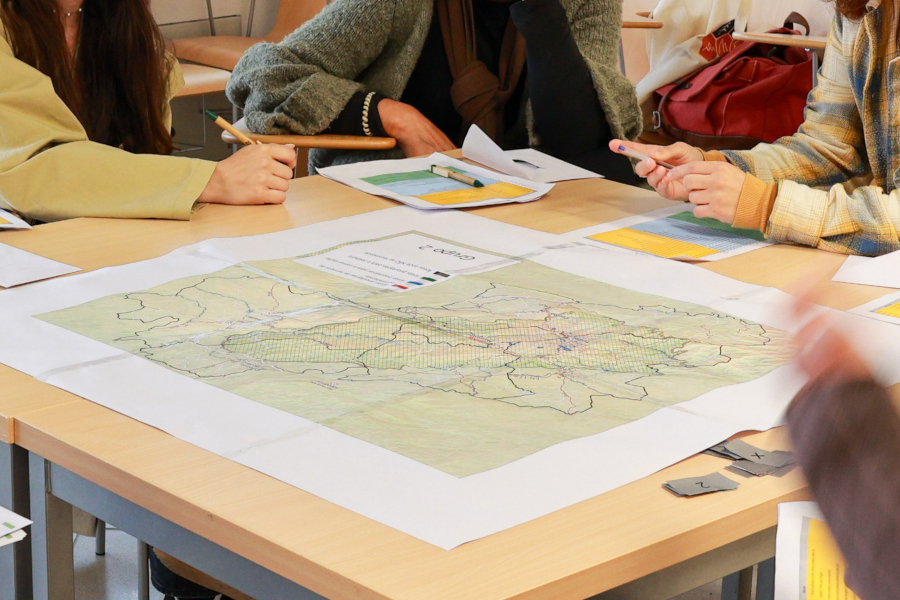
Participation in the 3rd Collaborative Workshop is free, but registration is required. Photo: Palombar.
The workshop will be held on 14 October focusing on the mapping and validation of areas to enhance ecosystem services in the Serra da Estrela
The SerE+ project – Network of Areas for the Acceleration of Ecosystem Services in Serra da Estrela – is organising its third and final Collaborative Workshop on 14 October. This event, open to the community, marks the conclusion of the project’s participatory cycle and invites citizens, organisations and other local stakeholders to discuss and validate the results achieved by the project to date.
The session will take place at CISE – the Serra da Estrela Interpretation Centre, in Seia – bringing together participants from previous workshops, experts, researchers, representatives of public institutions, civil society organisations and others with an interest in the conservation and enhancement of the region.
“Initially, we gathered the views of local communities and stakeholders. We carried out a preliminary analysis and developed models for prioritising conservation and restoration areas, as well as maps quantifying ecosystem services based on land use. Now, we want to share these results with the public and understand to what extent they reflect the reality of the Serra da Estrela. This third workshop is a crucial opportunity to bring science, the local area and decision-making closer together, ensuring that the project’s results meet the needs and expectations of local communities,” says Pedro Horta, a biologist at Palombar – Nature and Rural Heritage Conservation and coordinator of the SerE+ project.
Validating scientific knowledge with local knowledge
The main objective of the 3rd Collaborative Workshop will be to present and discuss the project’s initial findings, fostering a space for dialogue between science and the local community.
The preliminary maps produced as part of the project will be presented, along with the results of the workshops and surveys, enabling feedback and suggestions to be gathered that will contribute to their validation. The results of the Scientific Fieldwork, which took place in the project’s pilot area - Mata do Desterro in São Romão - will also be presented.
Envisioning the future of Serra da Estrela
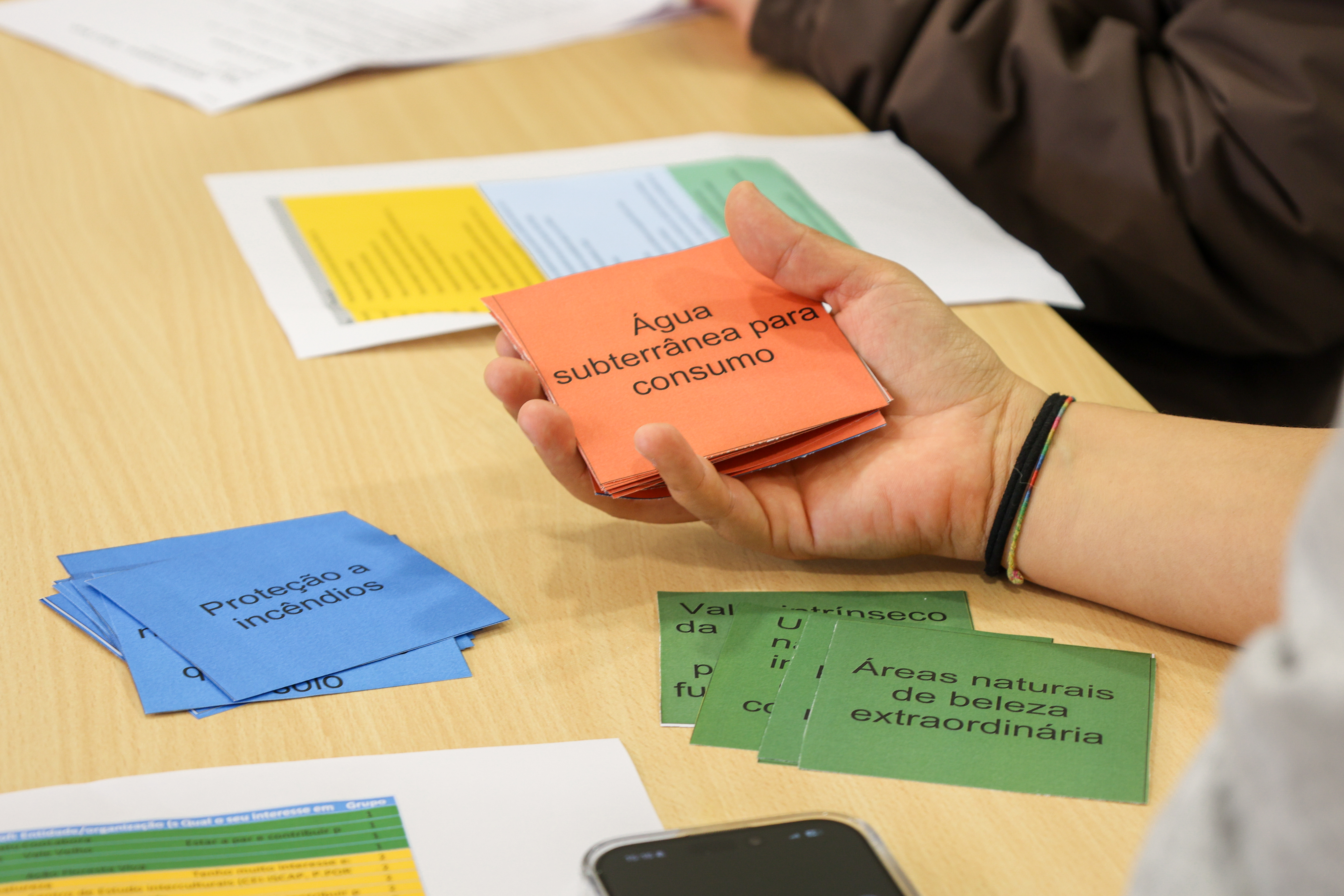
The workshop will also include a participatory exercise focused on identifying potential sites for the implementation of future Ecosystem Services Acceleration Areas, one of the project’s core components.
Based on the maps and analyses produced, participants will be invited to reflect on opportunities for conservation, ecological restoration and the enhancement of the benefits that ecosystems provide to the communities of Serra da Estrela.
Participation is free of charge, but subject to prior registration via this form.
From participation to results
The 1st Collaborative Workshop, held in April this year, identified the ecosystem services considered most relevant to Serra da Estrela, as well as the main threats and priorities for action. The 2nd Workshop, held in June, was dedicated to assessing the importance of these services across the different types of landscape and land use in the region. Finally, various funding mechanisms, incentives and opportunities for the maintenance, enhancement and remuneration of ecosystem services at a regional level were assessed.
At the same time, an online questionnaire was made available, which enabled participation to be extended to a wider audience and strengthened the representativeness of the contributions gathered.
Participants’ views are being incorporated into the project’s technical and scientific work, supporting the development of the first maps of ecosystem services and prioritisation for conservation and ecological restoration.
.jpg)
About the project
The SerE+ project – Network of Ecosystem Services Acceleration Areas in Serra da Estrela – aims to create inclusive and locally adapted tools capable of supporting the restoration and conservation of ecosystem services in the mountainous region, by identifying the sites with the greatest potential for conserving and enhancing these services, promoting a balance with socio-economic activities, and proposing concrete conservation and restoration measures for the area.
It is implemented by a consortium coordinated by Palombar – Conservation of Nature and Rural Heritage, involving three further organisations: the CE3C – Centre for Ecology, Evolution and Environmental Change at the Faculty of Sciences, University of Lisbon; the Municipality of Seia, through CISE – Serra da Estrela Interpretation Centre; and the Spanish State Agency Consejo Superior de Investigaciones Científicas M.P. (CSIC), through the Doñana Biological Station in Spain. The project also benefits from technical and scientific support from CESOP – Centre for Studies and Opinion Polls at the Portuguese Catholic University – and from the Invasoras.PT project, developed by CEF – Centre for Functional Ecology – and CERNAS – Centre for Natural Resources, Environment and Society – at the University of Coimbra and the Coimbra Higher Agricultural School.
The three-year SerE+ project is supported by the “la Caixa” Foundation’s Promove Programme, in collaboration with BPI and the Foundation for Science and Technology (FCT). The project covers the entire area of the six municipalities that make up the Serra da Estrela Natural Park.
The SerE+ project – Network of Areas for the Acceleration of Ecosystem Services in Serra da Estrela – is organising its third and final Collaborative Workshop on 14 October. This event, open to the community, marks the conclusion of the project’s participatory cycle and invites citizens, organisations and other local stakeholders to discuss and validate the results achieved by the project to date.
The session will take place at CISE – the Serra da Estrela Interpretation Centre, in Seia – bringing together participants from previous workshops, experts, researchers, representatives of public institutions, civil society organisations and others with an interest in the conservation and enhancement of the region.
“Initially, we gathered the views of local communities and stakeholders. We carried out a preliminary analysis and developed models for prioritising conservation and restoration areas, as well as maps quantifying ecosystem services based on land use. Now, we want to share these results with the public and understand to what extent they reflect the reality of the Serra da Estrela. This third workshop is a crucial opportunity to bring science, the local area and decision-making closer together, ensuring that the project’s results meet the needs and expectations of local communities,” says Pedro Horta, a biologist at Palombar – Nature and Rural Heritage Conservation and coordinator of the SerE+ project.
Validating scientific knowledge with local knowledge
The main objective of the 3rd Collaborative Workshop will be to present and discuss the project’s initial findings, fostering a space for dialogue between science and the local community.
The preliminary maps produced as part of the project will be presented, along with the results of the workshops and surveys, enabling feedback and suggestions to be gathered that will contribute to their validation. The results of the Scientific Fieldwork, which took place in the project’s pilot area - Mata do Desterro in São Romão - will also be presented.
The SerE+ project aims to enhance ecosystem services in Serra da Estrela, generating environmental, social and economic benefits for the region. Photo: Palombar.
Envisioning the future of Serra da Estrela
The workshop will also include a participatory exercise focused on identifying potential sites for the implementation of future Ecosystem Services Acceleration Areas, one of the project’s core components.
Based on the maps and analyses produced, participants will be invited to reflect on opportunities for conservation, ecological restoration and the enhancement of the benefits that ecosystems provide to the communities of Serra da Estrela.
Participation is free of charge, but subject to prior registration via this form.
From participation to results
The 1st Collaborative Workshop, held in April this year, identified the ecosystem services considered most relevant to Serra da Estrela, as well as the main threats and priorities for action. The 2nd Workshop, held in June, was dedicated to assessing the importance of these services across the different types of landscape and land use in the region. Finally, various funding mechanisms, incentives and opportunities for the maintenance, enhancement and remuneration of ecosystem services at a regional level were assessed.
At the same time, an online questionnaire was made available, which enabled participation to be extended to a wider audience and strengthened the representativeness of the contributions gathered.
Participants’ views are being incorporated into the project’s technical and scientific work, supporting the development of the first maps of ecosystem services and prioritisation for conservation and ecological restoration.
The project brings together science, communities and participatory governance to ensure a more sustainable, regenerative and promising present and future for all. Photo: Helena Raposeira/Palombar.
About the project
The SerE+ project – Network of Ecosystem Services Acceleration Areas in Serra da Estrela – aims to create inclusive and locally adapted tools capable of supporting the restoration and conservation of ecosystem services in the mountainous region, by identifying the sites with the greatest potential for conserving and enhancing these services, promoting a balance with socio-economic activities, and proposing concrete conservation and restoration measures for the area.
It is implemented by a consortium coordinated by Palombar – Conservation of Nature and Rural Heritage, involving three further organisations: the CE3C – Centre for Ecology, Evolution and Environmental Change at the Faculty of Sciences, University of Lisbon; the Municipality of Seia, through CISE – Serra da Estrela Interpretation Centre; and the Spanish State Agency Consejo Superior de Investigaciones Científicas M.P. (CSIC), through the Doñana Biological Station in Spain. The project also benefits from technical and scientific support from CESOP – Centre for Studies and Opinion Polls at the Portuguese Catholic University – and from the Invasoras.PT project, developed by CEF – Centre for Functional Ecology – and CERNAS – Centre for Natural Resources, Environment and Society – at the University of Coimbra and the Coimbra Higher Agricultural School.
The three-year SerE+ project is supported by the “la Caixa” Foundation’s Promove Programme, in collaboration with BPI and the Foundation for Science and Technology (FCT). The project covers the entire area of the six municipalities that make up the Serra da Estrela Natural Park.