


27 October 2026
Photovoltaic project in the Serra do Marão receives an unfavourable opinion following an assessment of the public consultation, in which Palombar took part
The project does not safeguard the natural values of the Alvão/Marão Special Conservation Area and has not been approved by the local communities.
APA considered that the project has negative impacts on biodiversity and local communities
The Photovoltaic Hybridisation Project at the Penedo Ruivo Wind Farm, in the Serra do Marão, received an unfavourable opinion from the Portuguese Environment Agency (APA), which considered that this project, despite being focused on the production of electricity from renewable sources, would cause significant ecological, landscape, territorial and cumulative impacts in the region.
The APA’s opinion follows an assessment of the 666 submissions received during the public consultation on this project, including the submission made by Palombar – Nature and Rural Heritage Conservation, which highlighted the incompatibility of the proposed location for this project with the conservation objectives of the Alvão/Marão Special Area of Conservation (SAC) within the Natura 2000 network.
We emphasised the importance of preserving the protected habitats and species with an unfavourable conservation status present in the area that could be affected by the project in question, on the understanding that, if it were to go ahead, it would contravene current environmental and climate legislation, given that the study area is located entirely within that SAC and intersects the Serra da Aboboreira Regional Protected Landscape.
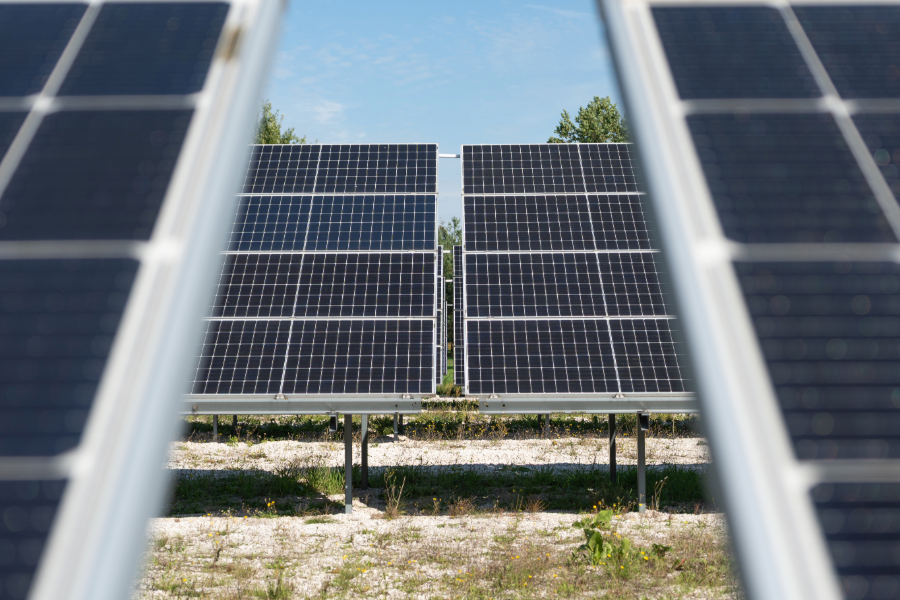
The Penedo Ruivo Wind Farm Photovoltaic Hybridisation Project was proposed by the company EnergieKontor - Energia Eólica, Lda. and envisaged the installation of 25,038 photovoltaic modules and associated infrastructure across 21 hectares of fenced-off land, utilising the existing electrical infrastructure due to the presence of the existing Penedo Ruivo Wind Farm.
.png)
The APA justified its decision on the grounds that the project was incompatible with the protection of the region’s natural values and faced opposition from local communities
The APA’s unfavourable Environmental Impact Statement (EIS) was justified on the grounds that the project was incompatible with the protection of the region’s natural values, given that: the ecological impacts would be significant and could not be minimised; there was incompatibility with the objectives of the Alvão/Marão Special Area of Conservation (SAC) and with land-use management instruments; the landscape impacts would be significant; there were cumulative impacts in an area already under heavy pressure from energy infrastructure, and there was also strong opposition to the project from institutions, organisations and the public.
Renewable energy, yes – but not like this
Palombar believes that an energy transition ensuring the replacement of fossil fuels with renewable sources is essential to tackle the climate, biodiversity, and social and economic crises at regional, national and global levels. However, this transition cannot be implemented by jeopardising biodiversity and going against the collective will.
We advocate a fair, balanced and participatory energy transition that helps us move forward on the right path, in defence of people and the environment; not one that takes us backwards, undermining decades of collective national and European achievements that safeguard the right
The Photovoltaic Hybridisation Project at the Penedo Ruivo Wind Farm, in the Serra do Marão, received an unfavourable opinion from the Portuguese Environment Agency (APA), which considered that this project, despite being focused on the production of electricity from renewable sources, would cause significant ecological, landscape, territorial and cumulative impacts in the region.
The APA’s opinion follows an assessment of the 666 submissions received during the public consultation on this project, including the submission made by Palombar – Nature and Rural Heritage Conservation, which highlighted the incompatibility of the proposed location for this project with the conservation objectives of the Alvão/Marão Special Area of Conservation (SAC) within the Natura 2000 network.
We emphasised the importance of preserving the protected habitats and species with an unfavourable conservation status present in the area that could be affected by the project in question, on the understanding that, if it were to go ahead, it would contravene current environmental and climate legislation, given that the study area is located entirely within that SAC and intersects the Serra da Aboboreira Regional Protected Landscape.
The Penedo Ruivo Wind Farm Photovoltaic Hybridisation Project was proposed by the company EnergieKontor - Energia Eólica, Lda. and envisaged the installation of 25,038 photovoltaic modules and associated infrastructure across 21 hectares of fenced-off land, utilising the existing electrical infrastructure due to the presence of the existing Penedo Ruivo Wind Farm.
The project would have fallen entirely within the Alvão/Marão Special Area of Conservation (SAC) of the Natura 2000 network..
The APA justified its decision on the grounds that the project was incompatible with the protection of the region’s natural values and faced opposition from local communities
The APA’s unfavourable Environmental Impact Statement (EIS) was justified on the grounds that the project was incompatible with the protection of the region’s natural values, given that: the ecological impacts would be significant and could not be minimised; there was incompatibility with the objectives of the Alvão/Marão Special Area of Conservation (SAC) and with land-use management instruments; the landscape impacts would be significant; there were cumulative impacts in an area already under heavy pressure from energy infrastructure, and there was also strong opposition to the project from institutions, organisations and the public.
Renewable energy, yes – but not like this
Palombar believes that an energy transition ensuring the replacement of fossil fuels with renewable sources is essential to tackle the climate, biodiversity, and social and economic crises at regional, national and global levels. However, this transition cannot be implemented by jeopardising biodiversity and going against the collective will.
We advocate a fair, balanced and participatory energy transition that helps us move forward on the right path, in defence of people and the environment; not one that takes us backwards, undermining decades of collective national and European achievements that safeguard the right