


21 July 2026
Palombar publishes the first field guide to Portugal’s pond turtles
The online version is free – download it.
A guide, the first of its kind in the country, combines scientific knowledge with active conservation of these species
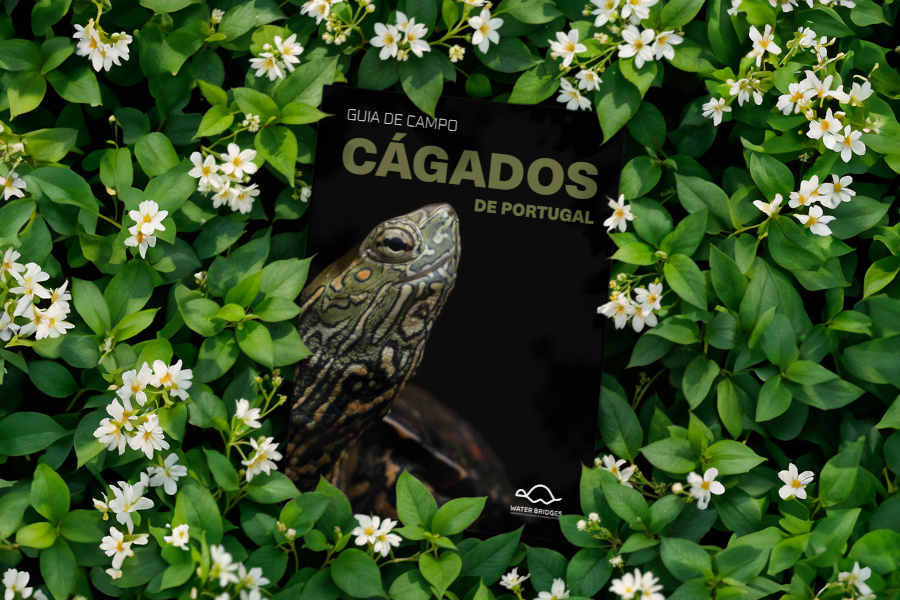
The environmental non-governmental organisation Palombar – Conservation of Nature and Rural Heritage has just publicly launched the “Field Guide to the Pond Turtles of Portugal”, the first of its kind in the country dedicated to these species. Produced as part of the “Water Bridges – Conservation of the European pond turtle” project, this guide combines scientific knowledge with active conservation work on the ground for Portugal’s native tortoise species. This is a vital, multifaceted tool that will not only guide and inform, but also inspire all those who study and admire these unique creatures with a history stretching back millennia, which continue to inhabit our aquatic ecosystems. The guide is available free of charge in its online version; download it here. The printed version of the guide will be used solely for Palombar’s environmental education activities and is not currently available for sale.
A comprehensive guide that informs and inspires discovery
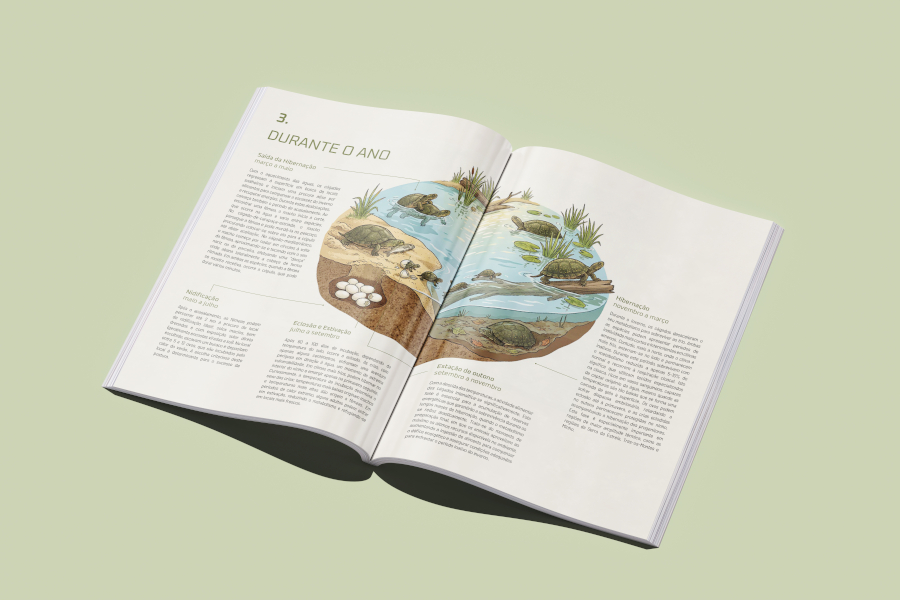
The “Field Guide to the Pond Turtles of Portugal” has been designed to cover the various aspects of scientific knowledge and discovery relating to these reptiles, focusing on the two species of pond turtle found in Portugal, the European pond turtle (Emys orbicularis), one of the most endangered and iconic species in Portugal’s aquatic ecosystems, which is classified as ‘Endangered’, and the Mediterranean pond turtle (Mauremys leprosa), but not limited to these. As well as covering these species and their life cycles, habitats, ecosystems and threats to their conservation, it also includes chapters dedicated to invasive alien species and observation practices, as well as other original content.
“This guide represents an important milestone for the conservation of pond turtles in Portugal. It is the first publication dedicated exclusively to the pond turtles found in our country and arose from a desire to make scientific knowledge about these species accessible to all audiences,” says biologist Pedro Alves da Palombar, one of the guide’s authors, who coordinated the fieldwork on the conservation of the European pond turtle in Portugal as part of the Water Bridges project.
“The publication of this guide is the result of an environmental education project that brought us very close to the senior community in the Douro International Natural Park, enabling active awareness-raising and the release of native species back into their natural habitat. Many of the occasions when native pond turtles were handed over to the Palombar team for subsequent release into the wild were truly memorable moments. The stories we gathered along the way were enriching, moving and inspiring. They showed us that nature conservation is most effective when it is built in partnership with people, valuing their knowledge, their experiences and their connection to the land,” emphasises Sara Freire, head of Environmental Education at Palombar and coordinator of the Water Bridges project in Portugal.
First dichotomous key for identifying pond turtles found in Portugal
The guide also includes a section featuring the first dichotomous key created for the identification of pond turtles in Portugal, which provides a simple and practical way of identifying both native and introduced species. This is a unique tool that facilitates identification in the field and may be useful for researchers and specialists, as well as for teachers and the general public. The publication also features a glossary that explains the more technical terms and other vocabulary, ensuring it is an inclusive and easily understandable resource for everyone.
“From the beginning, we wanted to create an accessible tool that could be used by experts as well as students, teachers, naturalists and anyone with a curiosity about nature. We have maintained scientific rigour, but opted for simpler language that is more accessible to the reader,” explains Pedro Alves.
Illustrated poster with a comparative table of all tortoise species found in the country
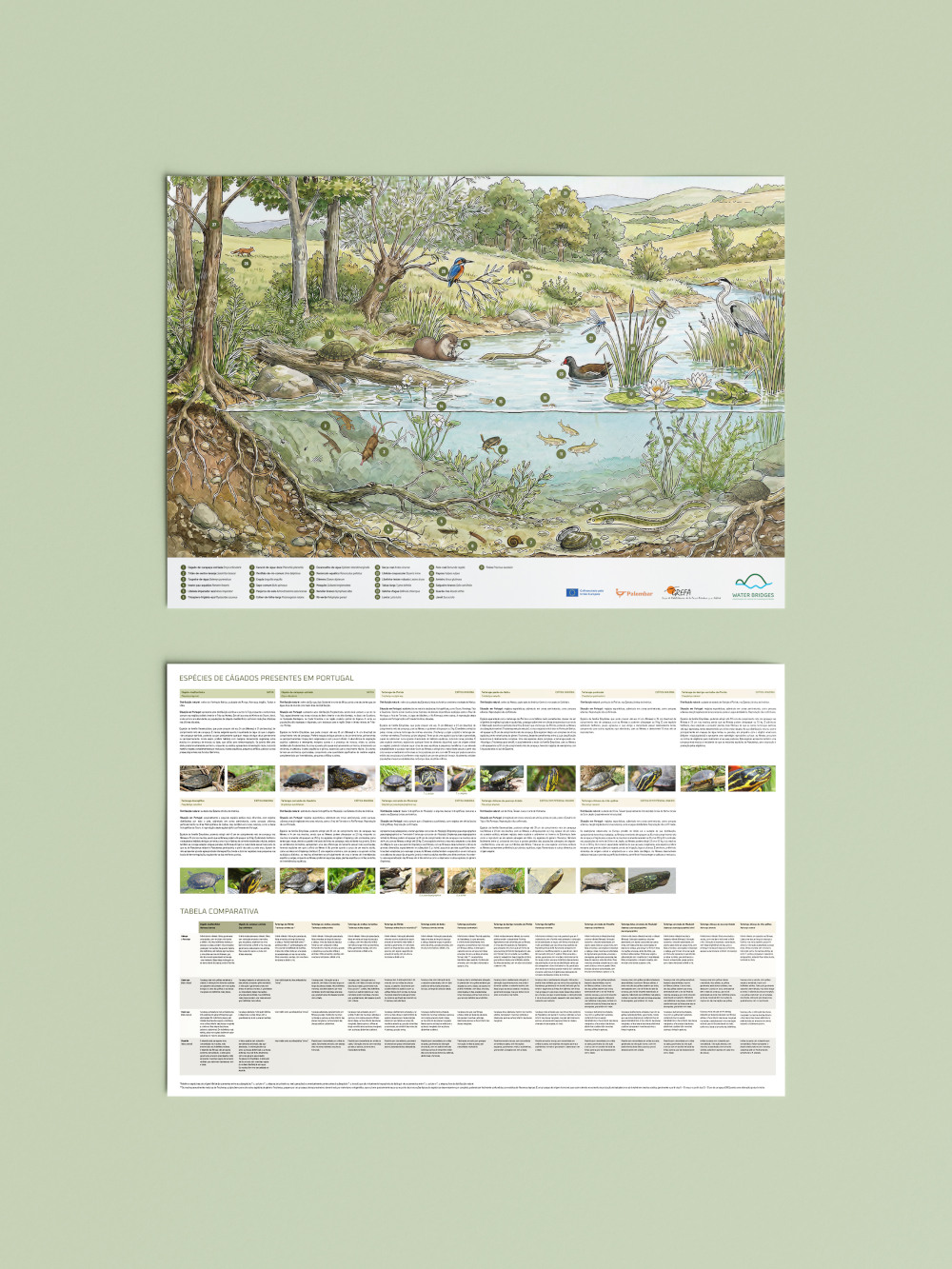
The guide also includes an illustrated poster (download it for free here) featuring a comparative table of all pond turtles species found in Portugal, both native and non-native, providing a quick and handy reference to the key identifying characteristics of each species.
“We hope this guide will inspire more people to learn about, appreciate and protect pond turtles and Portugal’s aquatic ecosystems, thereby contributing to the conservation of unique elements of our natural heritage,” concludes Pedro Aves.
The “Field Guide to the Pond Turtles of Portugal” was written by Palombar biologists Pedro Alves, Leonor de Carvalho and Sandra Fernandes, who have been or are currently involved in various wildlife conservation projects, including those focusing on native pond turtles, with a strong emphasis on science communication, as well as by biologist Luís Lourenço, who has participated in several projects focusing on the conservation of native pond turtles and the control of invasive alien species in Portugal.
The design, illustrations and layout of the guide were carried out by the communication and environmental education agency Beagle, which brought this guide to life, ensuring the publication’s practical functionality and a visually appealing design.
About the Water Bridges project
Water Bridges – Conservation of the European pond turtle is an innovative educational and citizen science project focused on the conservation of the European pond turtle (Emys orbicularis), a species native to the Iberian Peninsula that is in decline and highly vulnerable to climate change. It was implemented in 2025–2026 and funded by the European Union’s (EU) Erasmus+ programme. This Iberian project was coordinated by GREFA – Grupo de Rehabilitación de la Fauna Autóctona y su Hábitat, from Spain, with Palombar – Nature and Rural Heritage Conservation as its partner in Portugal.
The environmental non-governmental organisation Palombar – Conservation of Nature and Rural Heritage has just publicly launched the “Field Guide to the Pond Turtles of Portugal”, the first of its kind in the country dedicated to these species. Produced as part of the “Water Bridges – Conservation of the European pond turtle” project, this guide combines scientific knowledge with active conservation work on the ground for Portugal’s native tortoise species. This is a vital, multifaceted tool that will not only guide and inform, but also inspire all those who study and admire these unique creatures with a history stretching back millennia, which continue to inhabit our aquatic ecosystems. The guide is available free of charge in its online version; download it here. The printed version of the guide will be used solely for Palombar’s environmental education activities and is not currently available for sale.
A comprehensive guide that informs and inspires discovery
The “Field Guide to the Pond Turtles of Portugal” has been designed to cover the various aspects of scientific knowledge and discovery relating to these reptiles, focusing on the two species of pond turtle found in Portugal, the European pond turtle (Emys orbicularis), one of the most endangered and iconic species in Portugal’s aquatic ecosystems, which is classified as ‘Endangered’, and the Mediterranean pond turtle (Mauremys leprosa), but not limited to these. As well as covering these species and their life cycles, habitats, ecosystems and threats to their conservation, it also includes chapters dedicated to invasive alien species and observation practices, as well as other original content.
This comprehensive guide covers the life cycle, habitat, ecosystems and threats to the conservation of native pond turtles.
“This guide represents an important milestone for the conservation of pond turtles in Portugal. It is the first publication dedicated exclusively to the pond turtles found in our country and arose from a desire to make scientific knowledge about these species accessible to all audiences,” says biologist Pedro Alves da Palombar, one of the guide’s authors, who coordinated the fieldwork on the conservation of the European pond turtle in Portugal as part of the Water Bridges project.
“The publication of this guide is the result of an environmental education project that brought us very close to the senior community in the Douro International Natural Park, enabling active awareness-raising and the release of native species back into their natural habitat. Many of the occasions when native pond turtles were handed over to the Palombar team for subsequent release into the wild were truly memorable moments. The stories we gathered along the way were enriching, moving and inspiring. They showed us that nature conservation is most effective when it is built in partnership with people, valuing their knowledge, their experiences and their connection to the land,” emphasises Sara Freire, head of Environmental Education at Palombar and coordinator of the Water Bridges project in Portugal.
First dichotomous key for identifying pond turtles found in Portugal
The guide also includes a section featuring the first dichotomous key created for the identification of pond turtles in Portugal, which provides a simple and practical way of identifying both native and introduced species. This is a unique tool that facilitates identification in the field and may be useful for researchers and specialists, as well as for teachers and the general public. The publication also features a glossary that explains the more technical terms and other vocabulary, ensuring it is an inclusive and easily understandable resource for everyone.
“From the beginning, we wanted to create an accessible tool that could be used by experts as well as students, teachers, naturalists and anyone with a curiosity about nature. We have maintained scientific rigour, but opted for simpler language that is more accessible to the reader,” explains Pedro Alves.
Illustrated poster with a comparative table of all tortoise species found in the country
The guide also includes an illustrated poster (download it for free here) featuring a comparative table of all pond turtles species found in Portugal, both native and non-native, providing a quick and handy reference to the key identifying characteristics of each species.
An illustrated poster helps with the rapid identification of native and introduced pond turtle species.
“We hope this guide will inspire more people to learn about, appreciate and protect pond turtles and Portugal’s aquatic ecosystems, thereby contributing to the conservation of unique elements of our natural heritage,” concludes Pedro Aves.
The “Field Guide to the Pond Turtles of Portugal” was written by Palombar biologists Pedro Alves, Leonor de Carvalho and Sandra Fernandes, who have been or are currently involved in various wildlife conservation projects, including those focusing on native pond turtles, with a strong emphasis on science communication, as well as by biologist Luís Lourenço, who has participated in several projects focusing on the conservation of native pond turtles and the control of invasive alien species in Portugal.
The design, illustrations and layout of the guide were carried out by the communication and environmental education agency Beagle, which brought this guide to life, ensuring the publication’s practical functionality and a visually appealing design.
About the Water Bridges project
Water Bridges – Conservation of the European pond turtle is an innovative educational and citizen science project focused on the conservation of the European pond turtle (Emys orbicularis), a species native to the Iberian Peninsula that is in decline and highly vulnerable to climate change. It was implemented in 2025–2026 and funded by the European Union’s (EU) Erasmus+ programme. This Iberian project was coordinated by GREFA – Grupo de Rehabilitación de la Fauna Autóctona y su Hábitat, from Spain, with Palombar – Nature and Rural Heritage Conservation as its partner in Portugal.