


28 May 2026
Environmental organizations criticize proposed changes to the PEPAC that undermine efforts to conserve the Iberian wolf
Twenty-one environmental nongovernmental organizations (ENGOs), including the C7 Coalition, Palombar—Conservation of Nature and Rural Heritage, Rewilding Portugal, and the Portuguese Confederation of Environmental Protection Associations (CPADA), are calling on the Minister of Environment and Energy to halt the proposed changes to the PEPAC — the Strategic Plan for the Common Agricultural Policy—proposed by the Office of Planning, Policy, and General Administration (GPP) of the Ministry of Agriculture and the Sea, as they conflict with the protection of the Iberian wolf.
The Ministry of Agriculture and the Sea intends to make changes to the PEPAC that could undermine the protection of the Iberian wolf (Canis lupus signatus) by society, a species that has been protected in Portugal since 1988. These changes directly contradict the promise made by the Minister of Environment and Energy, Maria da Graça Carvalho, in September 2024, that there would be “no changes to the national policy for the protection of the Iberian wolf, which has been pursued over the past decades.”
Broken promises: those who commit environmental crimes (including against the Iberian wolf) may continue to receive subsidies
In September 2024, following Portugal’s vote in favor of the European Commission’s proposal to downgrade the conservation status of the wolf in Europe, the minister told Expresso that “The Portuguese State should not oppose changes that other States wish to promote in this area, provided that this does not entail Portugal’s endorsement of any document or changes to the national policy for the protection of the Iberian wolf, which has been pursued over the past decades.”
However, the Ministry of Agriculture and the Sea has proposed amendments to the PEPAC that contradict this promise, as they include changes that will allow PEPAC grant recipients—such as farmers and livestock producers — to continue receiving funding for the maintenance of livestock guard dogs, with the aim of minimizing the damage that this protected species may cause to livestock farming and facilitating coexistence with the wolf, even after convictions for environmental crimes, such as the killing of wolves.
These amendments socially and practically legitimize illegal acts and crimes directed at a species on which various conflict-mitigation efforts have been focused, thereby validating them in the eyes of society. This promotes a culture of permissiveness and creates inconsistency in public policies. If those who kill this species (or any other protected species) are rightly penalized by law, subsidies for the protection of the species cannot be maintained for the very people who kill them.
.png)
It is essential to align our actions with the objectives of the Alcateia Program in the area of preventing and fighting environmental crime
In a context where stronger action by authorities is required to control crime—which is responsible for a significant number of deaths among endangered species, including the Iberian wolf—it is essential to categorically counter this trend by aligning the actions of authorities with the objectives of the Alcateia Program in the area of preventing and fighting environmental crime. The State must promote environmentally responsible behaviors consistent with conservation objectives, ensuring that public support instruments do not contribute, directly or indirectly, to reinforcing practices harmful to biodiversity, rather than supporting producers who openly commit environmental crimes, thereby effectively benefiting the offender.
The NGOs signing this statement believe in reconciling the conservation of natural values with agricultural production, which can complement each other when framed by coherent public policies and truly sustainable management practices.
These changes, proposed by the GPP as a way to “simplify” procedures for PEPAC grant recipients, send a deeply negative signal to society and the agricultural sector by undermining the alignment between public subsidies and Iberian wolf conservation goals.
The PEPAC channels European funds to support agriculture, livestock farming, and forestry, including measures designed to encourage practices that promote biodiversity conservation and the protection of endangered species.
The 21 undersigned environmental NGOs call on the Minister of Environment and Energy to block these proposed amendments and reaffirm the commitment made not to alter the national policy for the protection of the Iberian wolf, avoiding any form of restriction on its conservation.
The undersigned environmental NGOs
A Nossa Terra - Associação Ambiental
AEPGA - Associação para o Estudo e Protecção do Gado Asinino
APAP - Associação Pé Ante Pé
Associação ALDEIA
Associação de Património de Coruche
CPADA - Confederação Portuguesa das Associações de Defesa do Ambiente
FAPAS - Associação Portuguesa para a Conservação da Biodiversidade
FEDRA – Federação de Defesa e Resgate Animal
GEOTA – Grupo de Estudos de Ordenamento do Território e Ambiente
Grupo Ecológico de Cascais
Grupo Lobo - Associação para a Conservação do Lobo e do seu Ecossistema
LPDA - Liga Portuguesa dos Direitos do Animal
LPN - Liga para a Proteção da Natureza
Palombar - Associação de Conservação da Natureza e do Património Rural
Quercus - Associação Nacional de Conservação da Natureza
Rewilding Portugal
SOS Animal Portugal - Grupo de Socorro Animal de Portugal
SPEA - Sociedade Portuguesa para o Estudo das Aves
SPECO – Sociedade Portuguesa de Ecologia
WWF Portugal
Zero - Associação Sistema Terrestre Sustentável
The Ministry of Agriculture and the Sea intends to make changes to the PEPAC that could undermine the protection of the Iberian wolf (Canis lupus signatus) by society, a species that has been protected in Portugal since 1988. These changes directly contradict the promise made by the Minister of Environment and Energy, Maria da Graça Carvalho, in September 2024, that there would be “no changes to the national policy for the protection of the Iberian wolf, which has been pursued over the past decades.”
Broken promises: those who commit environmental crimes (including against the Iberian wolf) may continue to receive subsidies
In September 2024, following Portugal’s vote in favor of the European Commission’s proposal to downgrade the conservation status of the wolf in Europe, the minister told Expresso that “The Portuguese State should not oppose changes that other States wish to promote in this area, provided that this does not entail Portugal’s endorsement of any document or changes to the national policy for the protection of the Iberian wolf, which has been pursued over the past decades.”
However, the Ministry of Agriculture and the Sea has proposed amendments to the PEPAC that contradict this promise, as they include changes that will allow PEPAC grant recipients—such as farmers and livestock producers — to continue receiving funding for the maintenance of livestock guard dogs, with the aim of minimizing the damage that this protected species may cause to livestock farming and facilitating coexistence with the wolf, even after convictions for environmental crimes, such as the killing of wolves.
These amendments socially and practically legitimize illegal acts and crimes directed at a species on which various conflict-mitigation efforts have been focused, thereby validating them in the eyes of society. This promotes a culture of permissiveness and creates inconsistency in public policies. If those who kill this species (or any other protected species) are rightly penalized by law, subsidies for the protection of the species cannot be maintained for the very people who kill them.
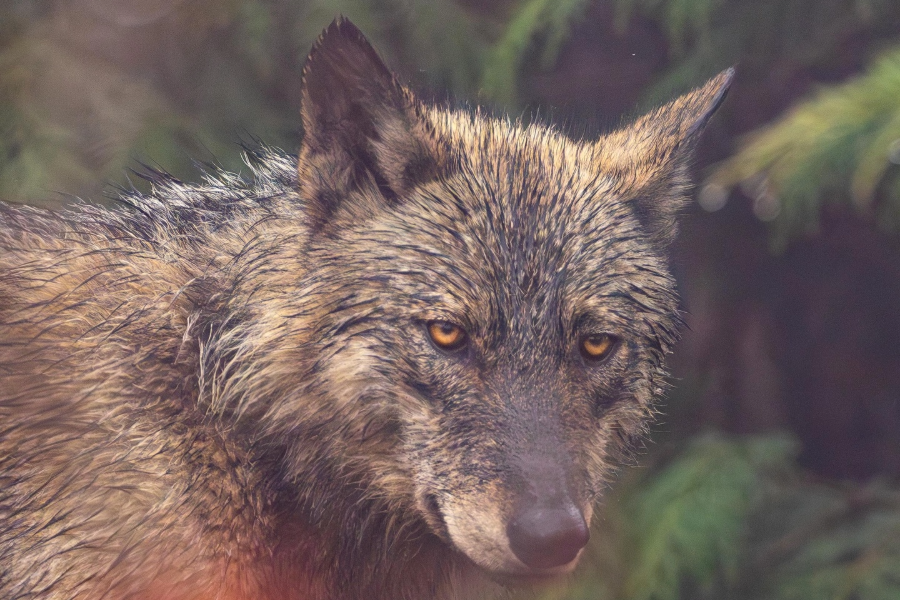
Iberian wolf. Photo: DR.
It is essential to align our actions with the objectives of the Alcateia Program in the area of preventing and fighting environmental crime
In a context where stronger action by authorities is required to control crime—which is responsible for a significant number of deaths among endangered species, including the Iberian wolf—it is essential to categorically counter this trend by aligning the actions of authorities with the objectives of the Alcateia Program in the area of preventing and fighting environmental crime. The State must promote environmentally responsible behaviors consistent with conservation objectives, ensuring that public support instruments do not contribute, directly or indirectly, to reinforcing practices harmful to biodiversity, rather than supporting producers who openly commit environmental crimes, thereby effectively benefiting the offender.
The NGOs signing this statement believe in reconciling the conservation of natural values with agricultural production, which can complement each other when framed by coherent public policies and truly sustainable management practices.
These changes, proposed by the GPP as a way to “simplify” procedures for PEPAC grant recipients, send a deeply negative signal to society and the agricultural sector by undermining the alignment between public subsidies and Iberian wolf conservation goals.
The PEPAC channels European funds to support agriculture, livestock farming, and forestry, including measures designed to encourage practices that promote biodiversity conservation and the protection of endangered species.
The 21 undersigned environmental NGOs call on the Minister of Environment and Energy to block these proposed amendments and reaffirm the commitment made not to alter the national policy for the protection of the Iberian wolf, avoiding any form of restriction on its conservation.
The undersigned environmental NGOs
A Nossa Terra - Associação Ambiental
AEPGA - Associação para o Estudo e Protecção do Gado Asinino
APAP - Associação Pé Ante Pé
Associação ALDEIA
Associação de Património de Coruche
CPADA - Confederação Portuguesa das Associações de Defesa do Ambiente
FAPAS - Associação Portuguesa para a Conservação da Biodiversidade
FEDRA – Federação de Defesa e Resgate Animal
GEOTA – Grupo de Estudos de Ordenamento do Território e Ambiente
Grupo Ecológico de Cascais
Grupo Lobo - Associação para a Conservação do Lobo e do seu Ecossistema
LPDA - Liga Portuguesa dos Direitos do Animal
LPN - Liga para a Proteção da Natureza
Palombar - Associação de Conservação da Natureza e do Património Rural
Quercus - Associação Nacional de Conservação da Natureza
Rewilding Portugal
SOS Animal Portugal - Grupo de Socorro Animal de Portugal
SPEA - Sociedade Portuguesa para o Estudo das Aves
SPECO – Sociedade Portuguesa de Ecologia
WWF Portugal
Zero - Associação Sistema Terrestre Sustentável