


20 April 2026
“Kids in the Hills”: schoolchildren explore the world of birds in the Douro International Natural Park
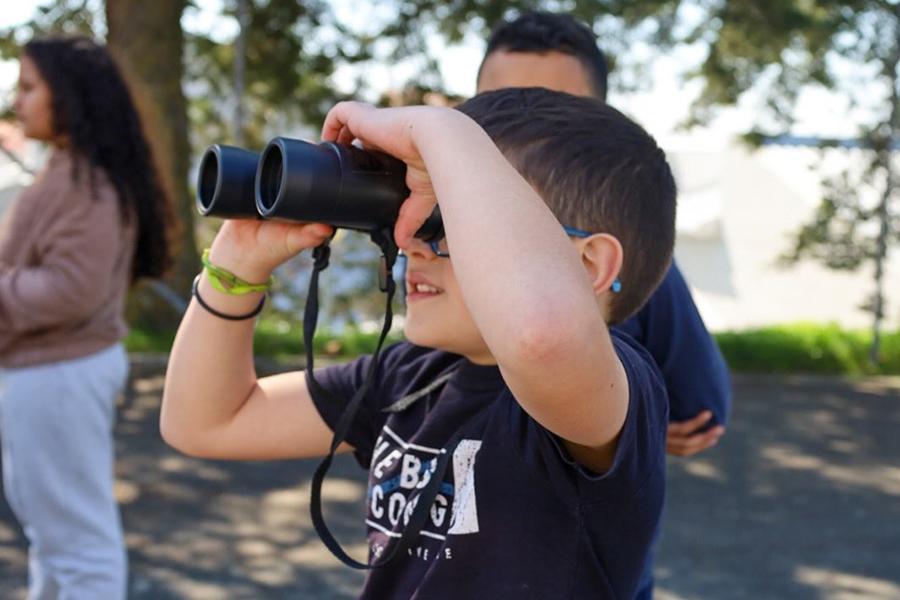
Schoolchildren observed various species of birds. Photo: Municipality of Miranda do Douro.
During March, Palombar organised another series of activities as part of the environmental education project Kids in the Hills (“Miúdos pelo Monte”), promoted by the Co-management Committee of the Douro International Natural Park (PNDI) and led by the Association of Municipalities of the Upper Douro, with funding from the NORTE 2030 programme. This time, the focus was on the birds found in the PNDI, with a special emphasis on vultures.
From theory to practice: exploring the birdlife of the PNDI and diving into the world of scavenger birds
Following an initial series of activities held in the classroom during November 2025, which focused on the theoretical aspects of the importance of forests, biodiversity and ecosystem services, the second cycle took the same group of 147 Year 4 schoolchildren from the Mogadouro, Miranda do Douro and Freixo de Espada à Cinta school groups outside the classroom.
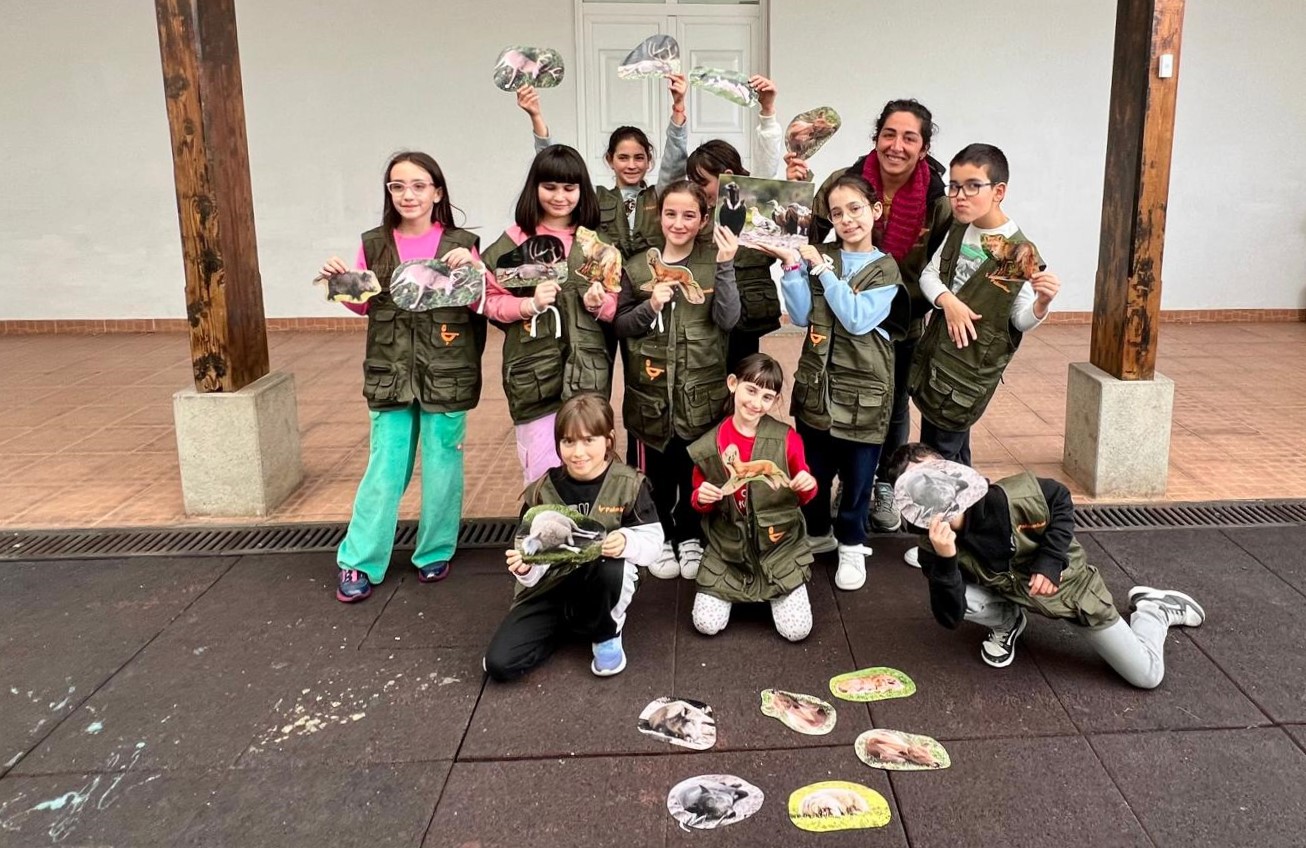
On 20 March, in Freixo de Espada à Cinta and Figueira de Castelo Rodrigo; 24 March, in Miranda do Douro and Sendim; and 25 March, in Mogadouro, all schoolchildren, along with teachers and teaching assistants, had the opportunity to explore, under the open sky, the world of the birds that inhabit the PNDI, in particular that of scavengers. Before coming out here, a number of concepts and topics were covered in the classroom.
Immersion in the lives of these special birds, which fulfil a vital role in ecosystems – acting as the environment’s clean-up crew, consuming dead matter that is no longer needed by anyone and preventing the spread of disease – took place through observation with binoculars of the species and the landscape, and educational games that enabled the pupils to identify vulture species, and sharing stories. The activities were led by Palombar’s Environmental Education specialists Sara Freire and Duarte Pinto.
The schoolchildren learned about the life cycle of scavenger birds and the work carried out in the PNDI to protect them, both by state bodies such as the ICNF – Institute for Nature Conservation and Forests, and by environmental non-governmental organisations such as Palombar, which manages several feeding stations for scavenger birds in areas of the PNDI.
Vultures: sentinels of threats
The threats affecting these species were also discussed, such as the serious problem of the illegal use of poisons, which kills various species and contaminates habitats; as well as the importance of vultures as sentinel species for detecting various threats not only to wildlife but also to humans.
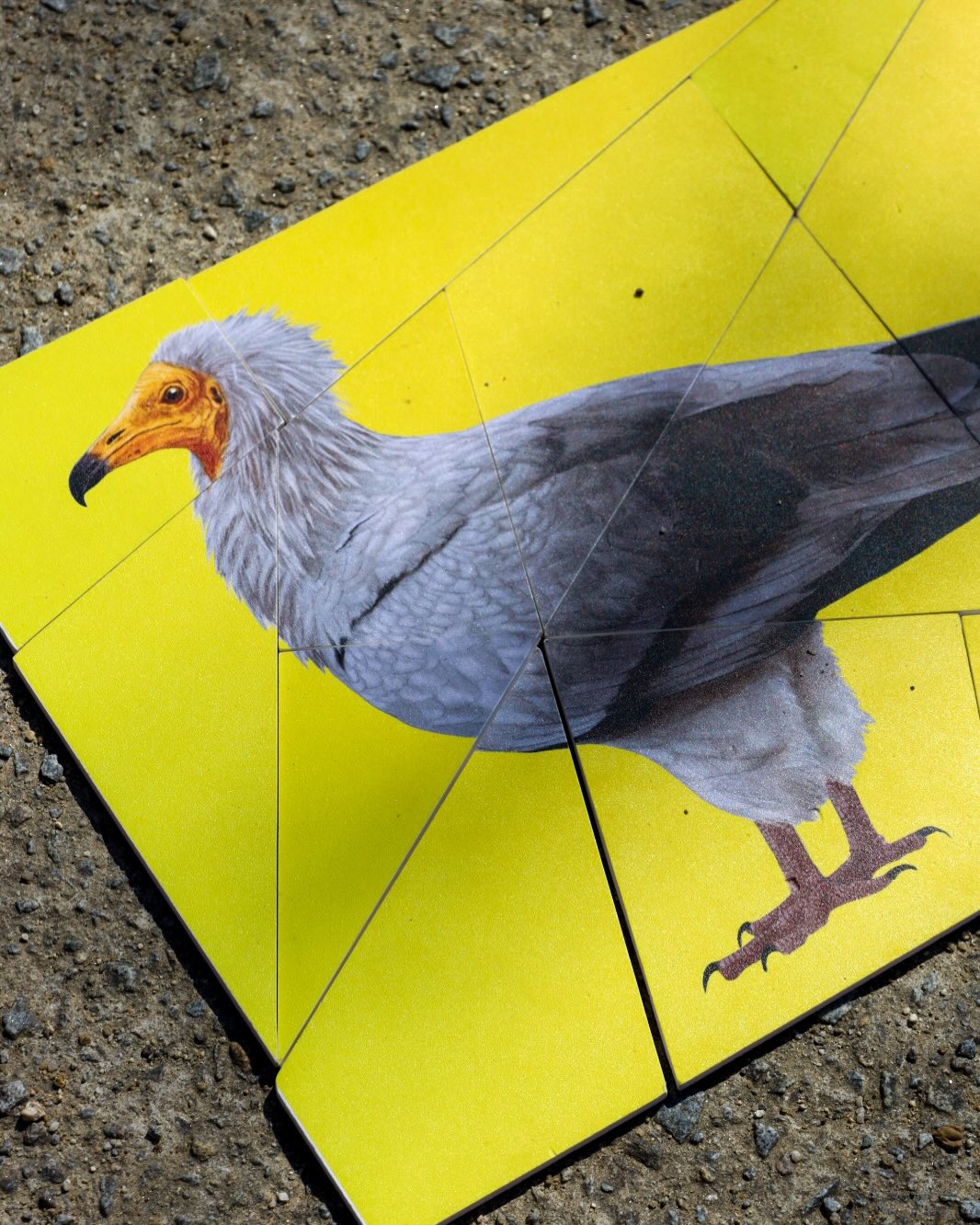
The innate curiosity and active engagement of children in this age group enable them to absorb values and adopt attitudes towards nature, ensuring greater environmental responsibility throughout all stages of life.
Upcoming activity cycles: International Douro Natural Park Day and an eco-cruise on the cross-border Douro
The next series of activities for the “Miúdos pelo Monte” project will take place in May, centred on the celebrations for International Douro Natural Park Day (11 May), and in June, through a sensory experience involving an environmental cruise on the waters of the cross-border Douro.
About the project
“Miúdos pelo Monte” is an environmental education project promoted by the PNDI Co-Management Committee, of which Palombar is a member representing environmental non-governmental organisations, and led by the Association of Municipalities of the Upper Douro, with funding from the NORTE 2030 programme.
This project aims to introduce and foster knowledge of the territory and the Park’s rich biodiversity among children in Year 4 of the first cycle of basic education in school clusters within the municipalities covered by the PNDI, through theoretical and practical experiences. The aim is to bring new generations closer to the Park’s natural environment, fostering a sense of belonging that underpins a proactive attitude towards biodiversity conservation and environmental sustainability.
The series of activities that took place in March was organised in collaboration with the municipalities of Figueira de Castelo Rodrigo, Freixo de Espada à Cinta, Mogadouro and Miranda do Douro.
From theory to practice: exploring the birdlife of the PNDI and diving into the world of scavenger birds
Following an initial series of activities held in the classroom during November 2025, which focused on the theoretical aspects of the importance of forests, biodiversity and ecosystem services, the second cycle took the same group of 147 Year 4 schoolchildren from the Mogadouro, Miranda do Douro and Freixo de Espada à Cinta school groups outside the classroom.
The "Miúdos pelo Monte" project aims to bring younger generations closer to nature. Photo: Palombar.
On 20 March, in Freixo de Espada à Cinta and Figueira de Castelo Rodrigo; 24 March, in Miranda do Douro and Sendim; and 25 March, in Mogadouro, all schoolchildren, along with teachers and teaching assistants, had the opportunity to explore, under the open sky, the world of the birds that inhabit the PNDI, in particular that of scavengers. Before coming out here, a number of concepts and topics were covered in the classroom.
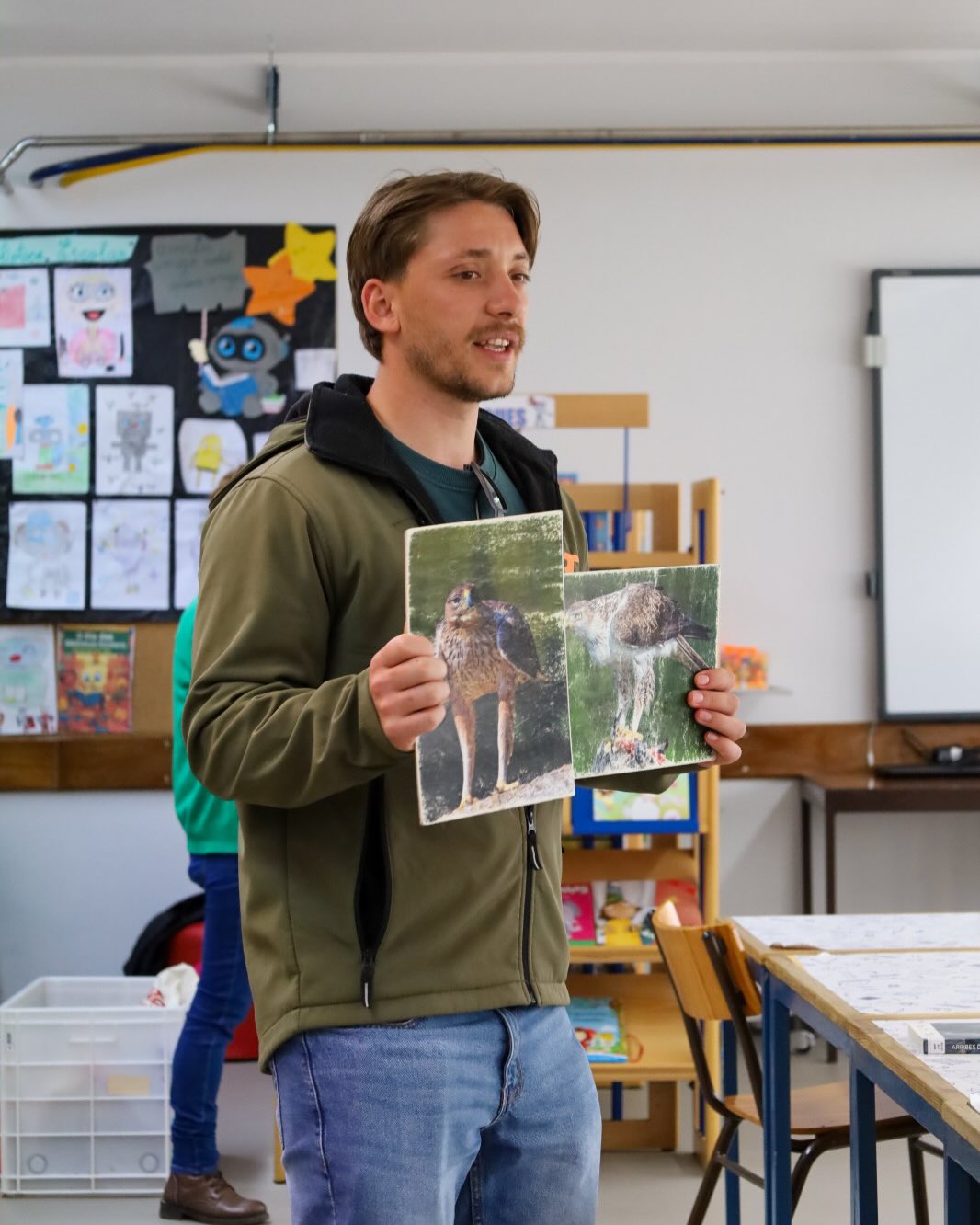
The activities were led by Palombar’s experts Duarte Pinto and Sara Freire. Photo: Municipality of Miranda do Douro.
Immersion in the lives of these special birds, which fulfil a vital role in ecosystems – acting as the environment’s clean-up crew, consuming dead matter that is no longer needed by anyone and preventing the spread of disease – took place through observation with binoculars of the species and the landscape, and educational games that enabled the pupils to identify vulture species, and sharing stories. The activities were led by Palombar’s Environmental Education specialists Sara Freire and Duarte Pinto.
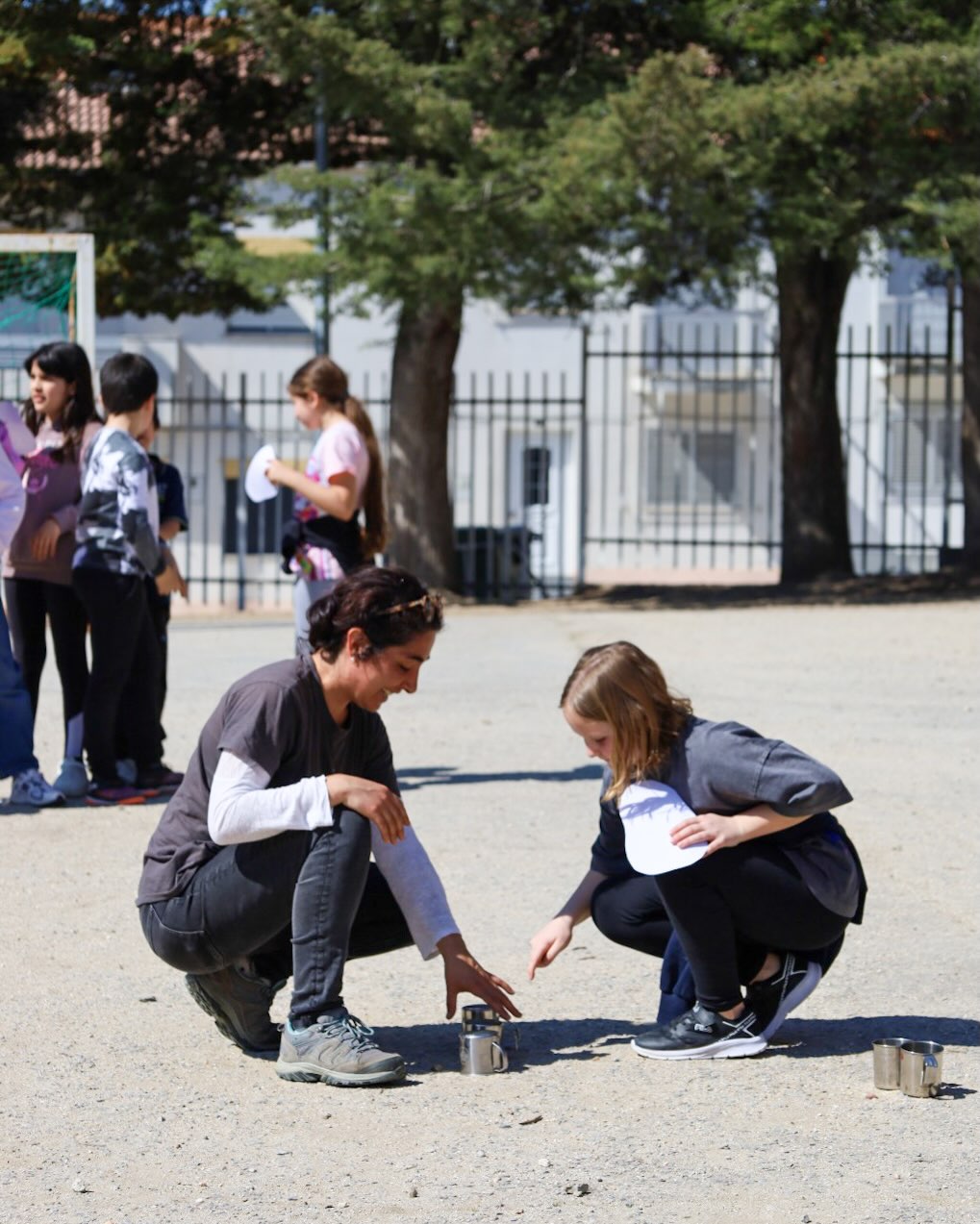
Connecting with the local area, learning to play and creating memories are essential for forging a bond with nature and the region. Photo: Municipality of Miranda do Douro.
The schoolchildren learned about the life cycle of scavenger birds and the work carried out in the PNDI to protect them, both by state bodies such as the ICNF – Institute for Nature Conservation and Forests, and by environmental non-governmental organisations such as Palombar, which manages several feeding stations for scavenger birds in areas of the PNDI.
Vultures: sentinels of threats
The threats affecting these species were also discussed, such as the serious problem of the illegal use of poisons, which kills various species and contaminates habitats; as well as the importance of vultures as sentinel species for detecting various threats not only to wildlife but also to humans.
Vultures: sentinels of danger who also act as the ecosystem’s cleaners. Photo: Palombar.
The innate curiosity and active engagement of children in this age group enable them to absorb values and adopt attitudes towards nature, ensuring greater environmental responsibility throughout all stages of life.
Upcoming activity cycles: International Douro Natural Park Day and an eco-cruise on the cross-border Douro
The next series of activities for the “Miúdos pelo Monte” project will take place in May, centred on the celebrations for International Douro Natural Park Day (11 May), and in June, through a sensory experience involving an environmental cruise on the waters of the cross-border Douro.
About the project
“Miúdos pelo Monte” is an environmental education project promoted by the PNDI Co-Management Committee, of which Palombar is a member representing environmental non-governmental organisations, and led by the Association of Municipalities of the Upper Douro, with funding from the NORTE 2030 programme.
This project aims to introduce and foster knowledge of the territory and the Park’s rich biodiversity among children in Year 4 of the first cycle of basic education in school clusters within the municipalities covered by the PNDI, through theoretical and practical experiences. The aim is to bring new generations closer to the Park’s natural environment, fostering a sense of belonging that underpins a proactive attitude towards biodiversity conservation and environmental sustainability.
The series of activities that took place in March was organised in collaboration with the municipalities of Figueira de Castelo Rodrigo, Freixo de Espada à Cinta, Mogadouro and Miranda do Douro.