


11 August 2026
"Festa dos Pombais" 2026: Uva once again celebrated heritage, culture and nature in a memorable edition
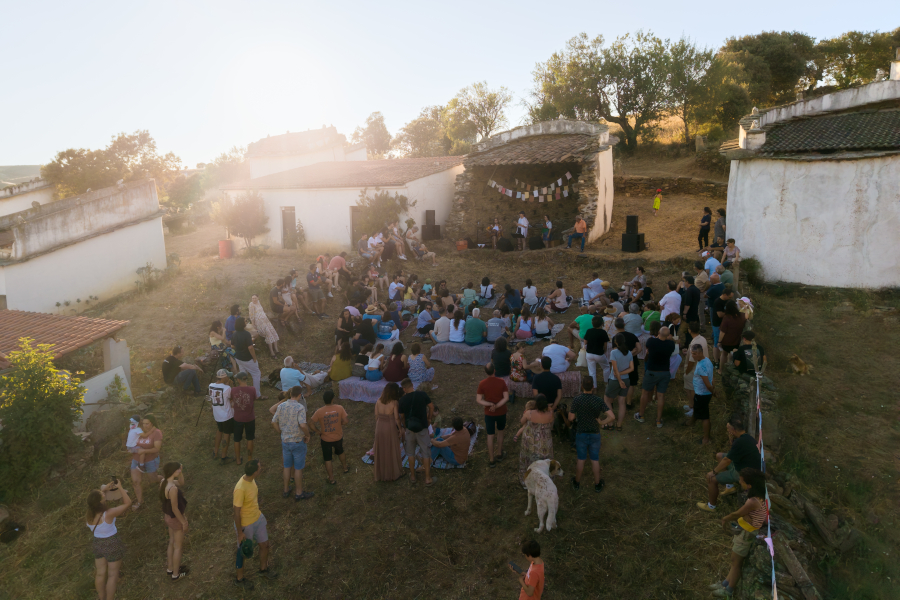
A unique celebration, a fusion of art, culture and tradition to honour the rural landscape and its identity. Photo: Pedro Alves/Palombar.
Over two days, locals, visitors, artists and other participants from various regions of the country came together for a festival characterised by the convergence of community, art and nature.
With a varied programme spread across several iconic venues in the village, the "Festa dos Pombais" (Dovecote Party) once again showcased the traditional dovecotes of Uva, a piece of vernacular heritage that inspires the event’s very name and constitutes one of the region’s most unique architectural ensembles.
Two days of culture, tradition and art
The 2026 edition began on Friday evening with the theatre production “Os Anjos Nus” by Peripécia Teatro, as part of the ContoContigo project. The adaptation of António Manuel Pires Cabral’s short story prompted the audience to reflect on belief, tradition and the human condition, in a moment that marked the official opening of the festival.
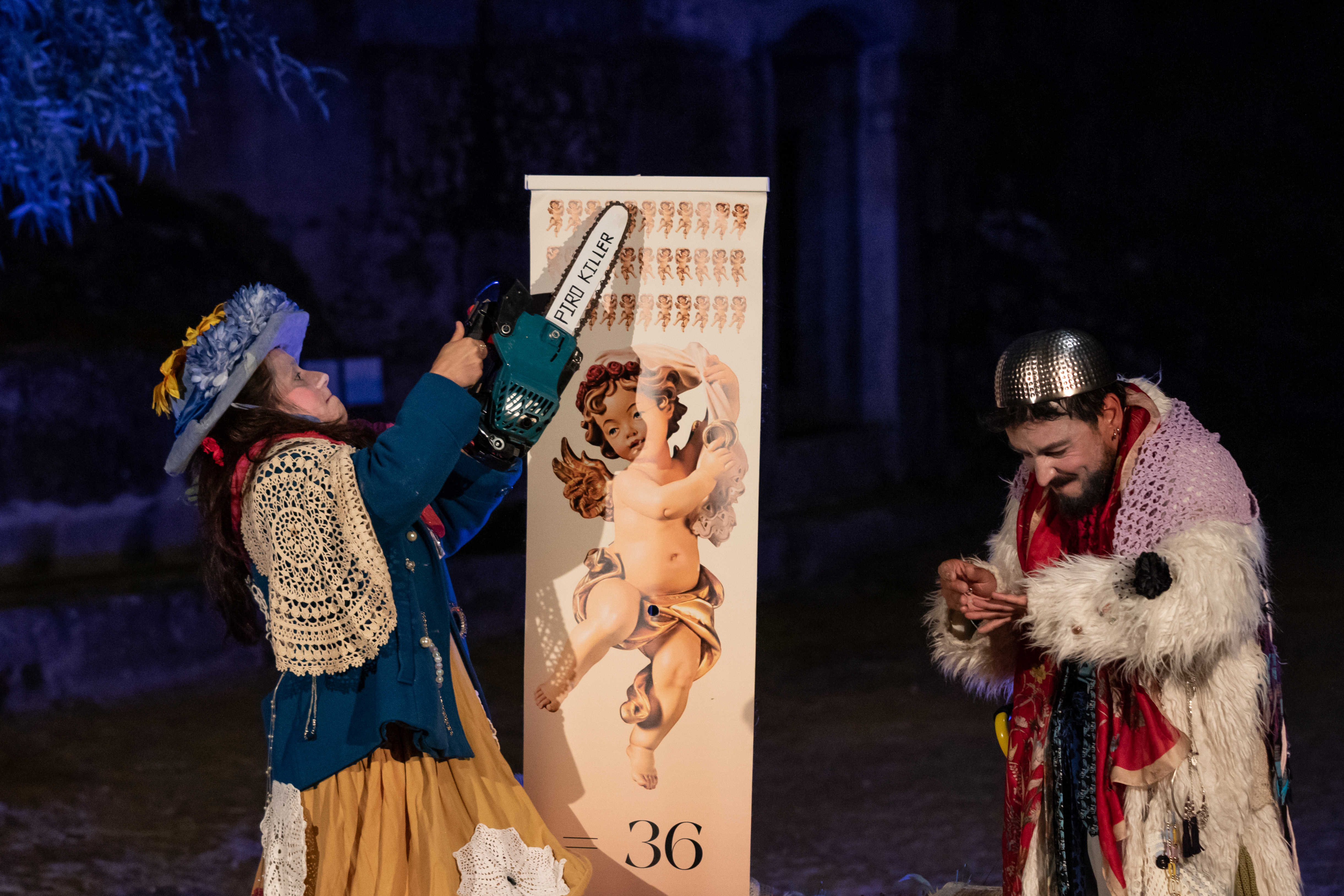
In this theatre production, the story-collectors Baltasar and Belmira reimagined narratives about the sacred and the profane, prompting everyone to reflect on our very being and our place in the world. Photo: Pedro Alves/Palombar.
Early the following morning, dozens of participants joined the Interpretive Walk to the Traditional Dovecotes, organised by Palombar, on a guided tour that provided a deeper understanding of the history, architecture and ecological importance of these structures that shape the cultural landscape of Uva.
Throughout the day, visitors also had the opportunity to take part in creative and experimental workshops. The workshop "À Volta do Hipericão" (St. John’s Wort), led by Joana Vitória Martins, explored the traditional uses of this aromatic and medicinal plant, whilst the U_NICK™_CAMPO COMUM screen-printing workshop, led by Fernando Travassos and Gil Mac, invited the public to print on items of clothing and experiment with artistic processes linked to the reuse of materials.
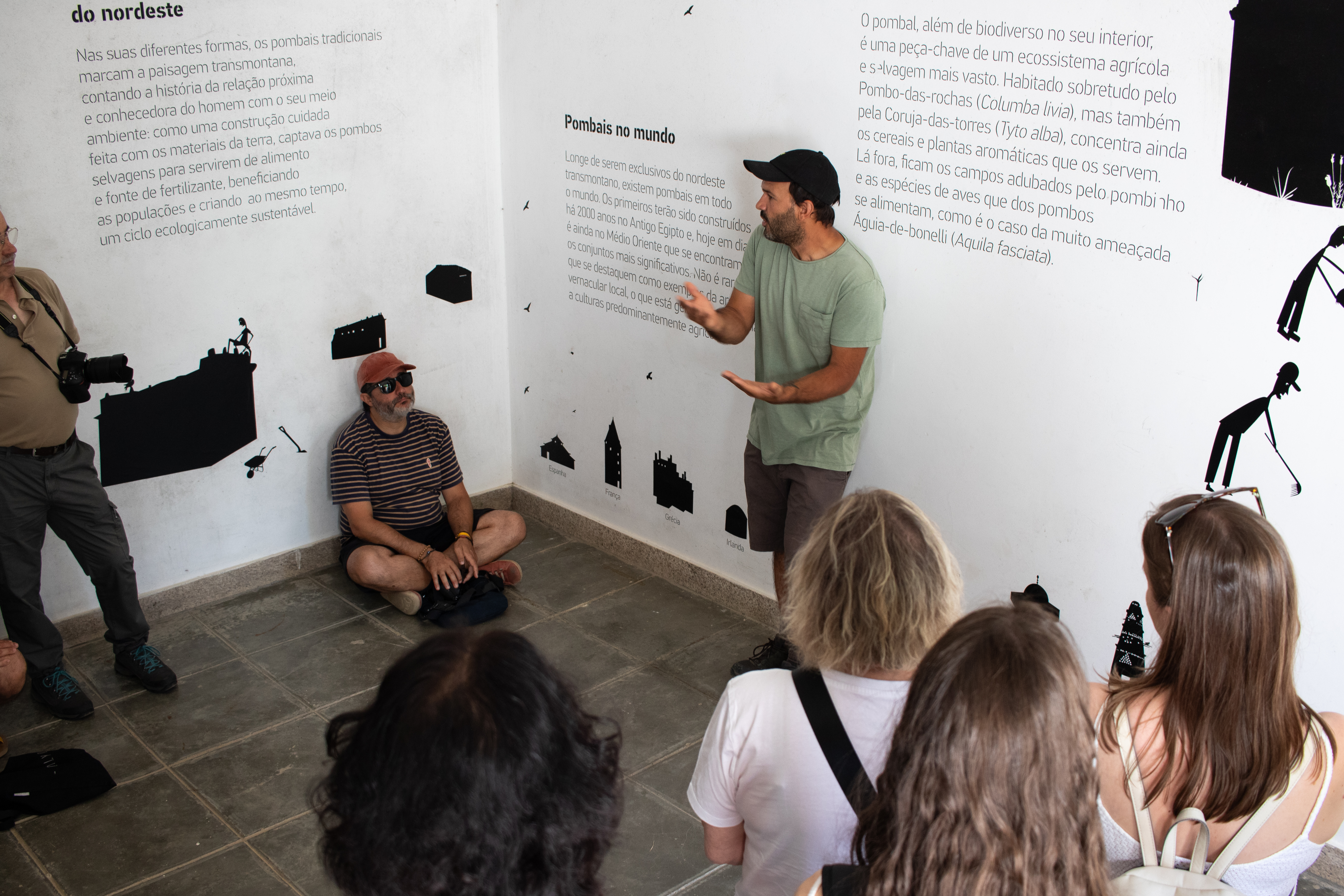
Biologist Américo Guedes from Palombar led the participants on an immersive tour of the traditional dovecotes. Photo: Pedro Alves/Palombar.
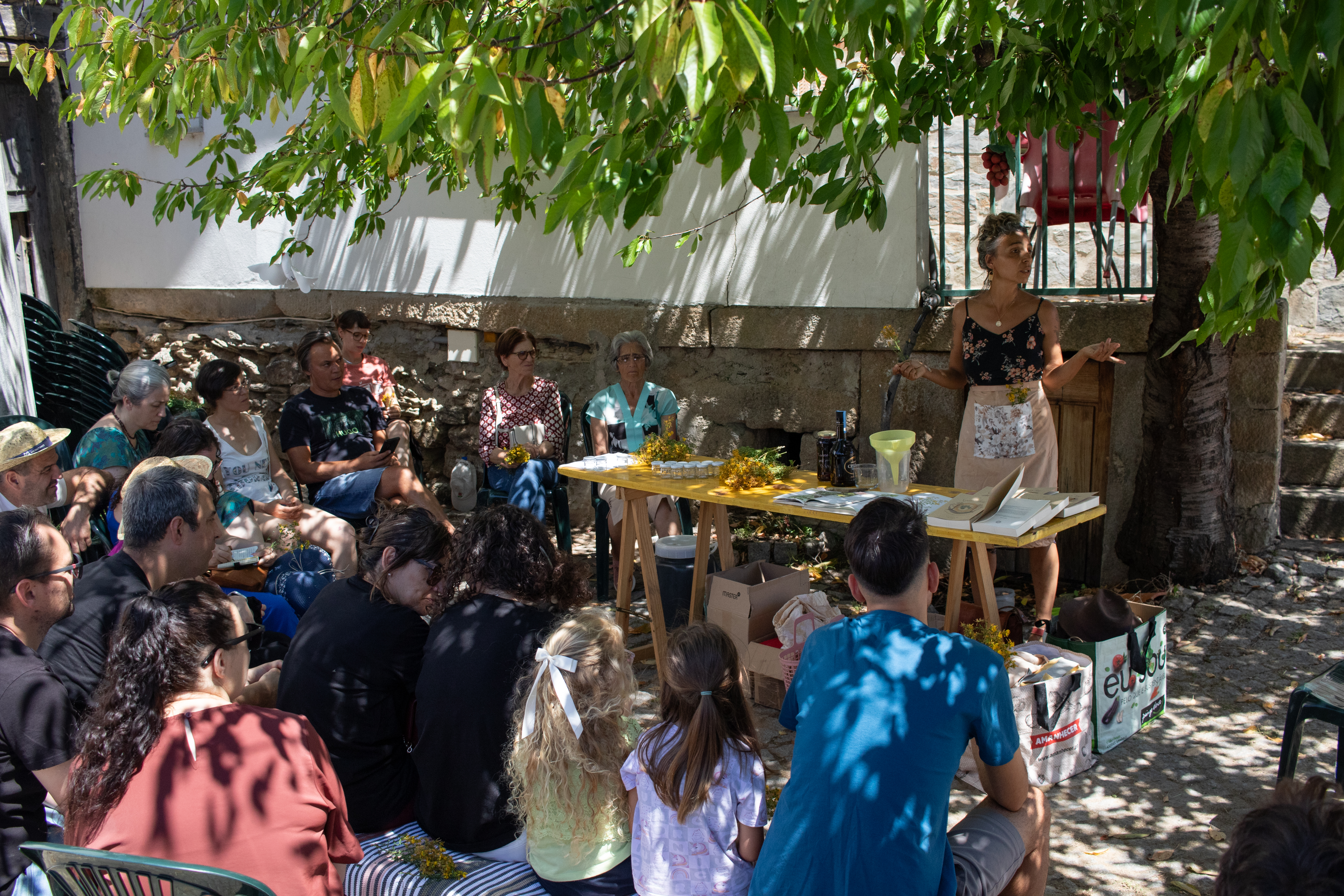
In this experimental workshop, we explored the versatility of St John’s wort and highlighted the value of aromatic and medicinal plants for our health and wellbeing. Photo: Pedro Alves/Palombar.
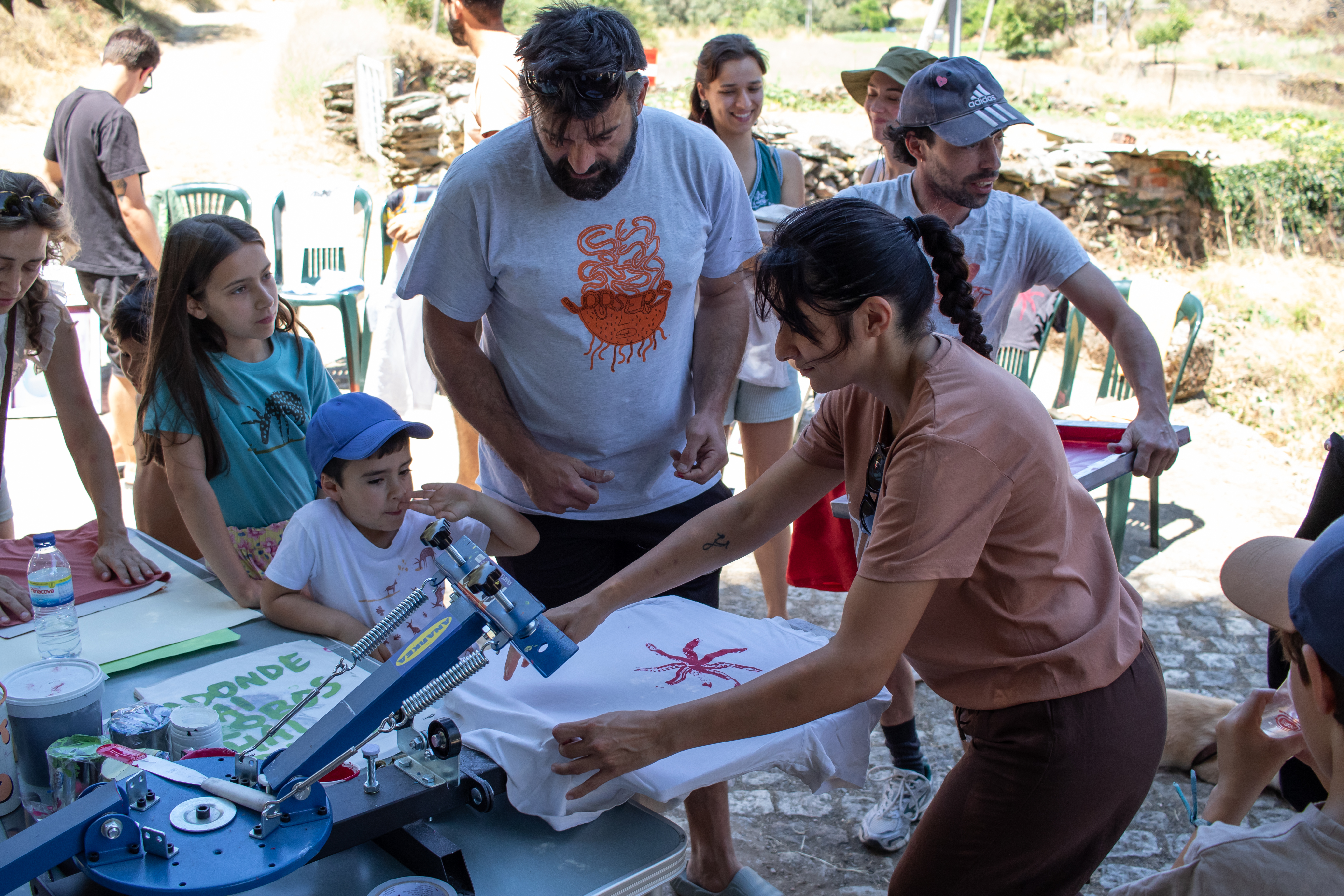
In the screen-printing workshop, we breathed new life into second-hand clothes through art and creativity. Photo: Pedro Alves/Palombar.
The afternoon’s programme featured a number of artistic performances. The ‘Story Swappers’ ("Trocadores de Histórias") from the 5.ª Oficina brought back the charm of oral tradition to the village through ancestral tales told in an irreverent and participatory manner, in a space steeped in its own history: Tio Emílio’s Courtyard, once a place of trades… it was once a carpenter’s workshop, a barber’s shop and hosted other trades requiring a steady hand; it is now the venue for the life and traditions of the "Festa dos Pombais", kindly made available by the heirs of Tio Emílio, whose memory we wish to keep alive.
At the "Curralada", David Silva’s performance ‘Veredas’ offered a sensory experience centred on memory, the landscape and the sounds of the region, whilst the artistic performance “Adonde hai lhobos hai bida”, part of the "Futuros Partilhados" project, challenged the audience to reflect on the coexistence between humans and large carnivores, critically re-examining practices and imaginaries associated with the wolf on the Mirandese Plateau. There was also space for a street procession that gave voice to the wolf in the village streets, with messages of connection.
These initiatives reinforced one of the distinctive features of the "Festa dos Pombais": its ability to bring together heritage, contemporary art, traditional knowledge and reflection on the current challenges facing the rural world.
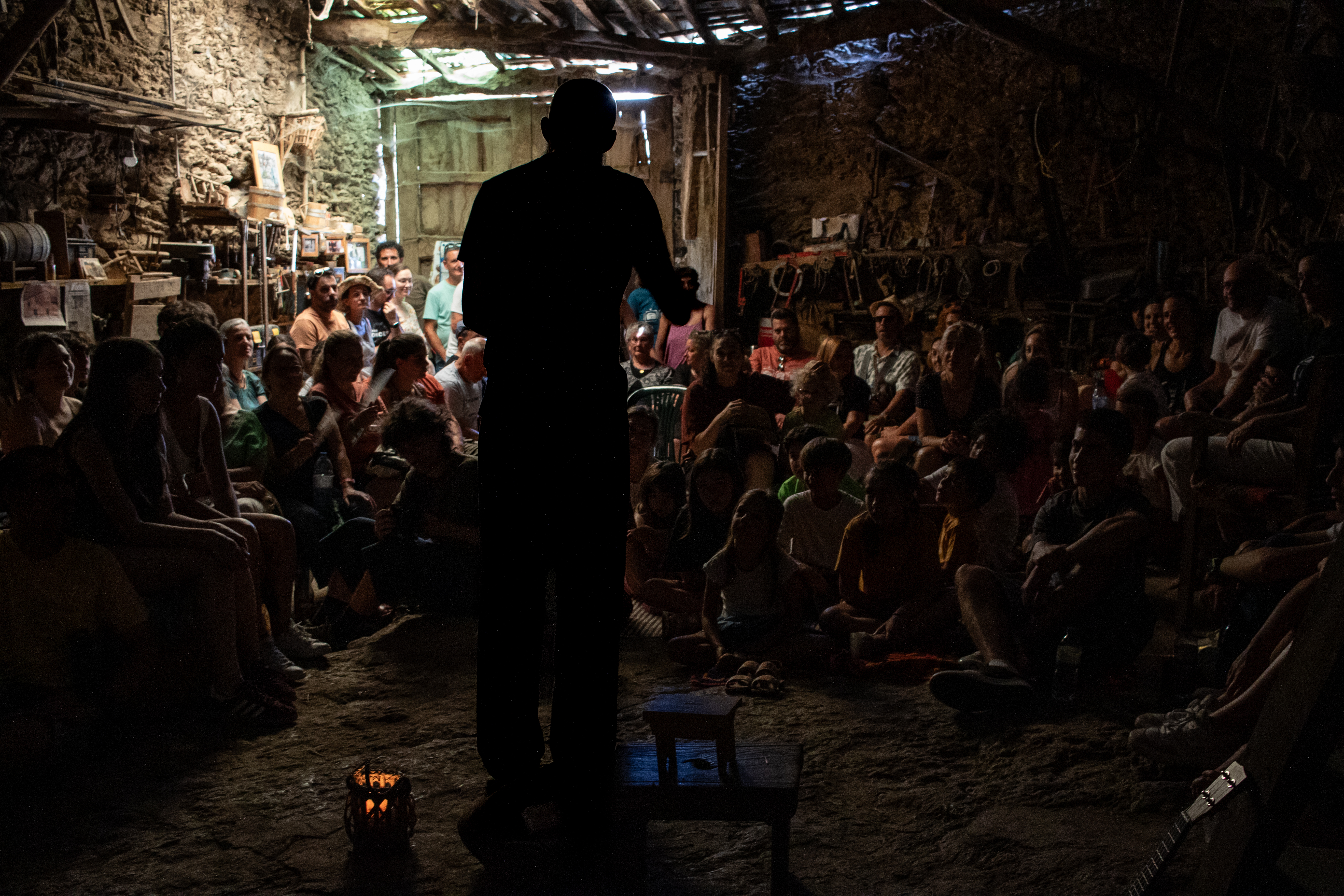
The ‘Trocadores de Histórias’ recounted tales and shared their experiences at Tio Emílio's courtyard, a place that also preserves knowledge, stories and traditions. Photo: Pedro Alves/Palombar.
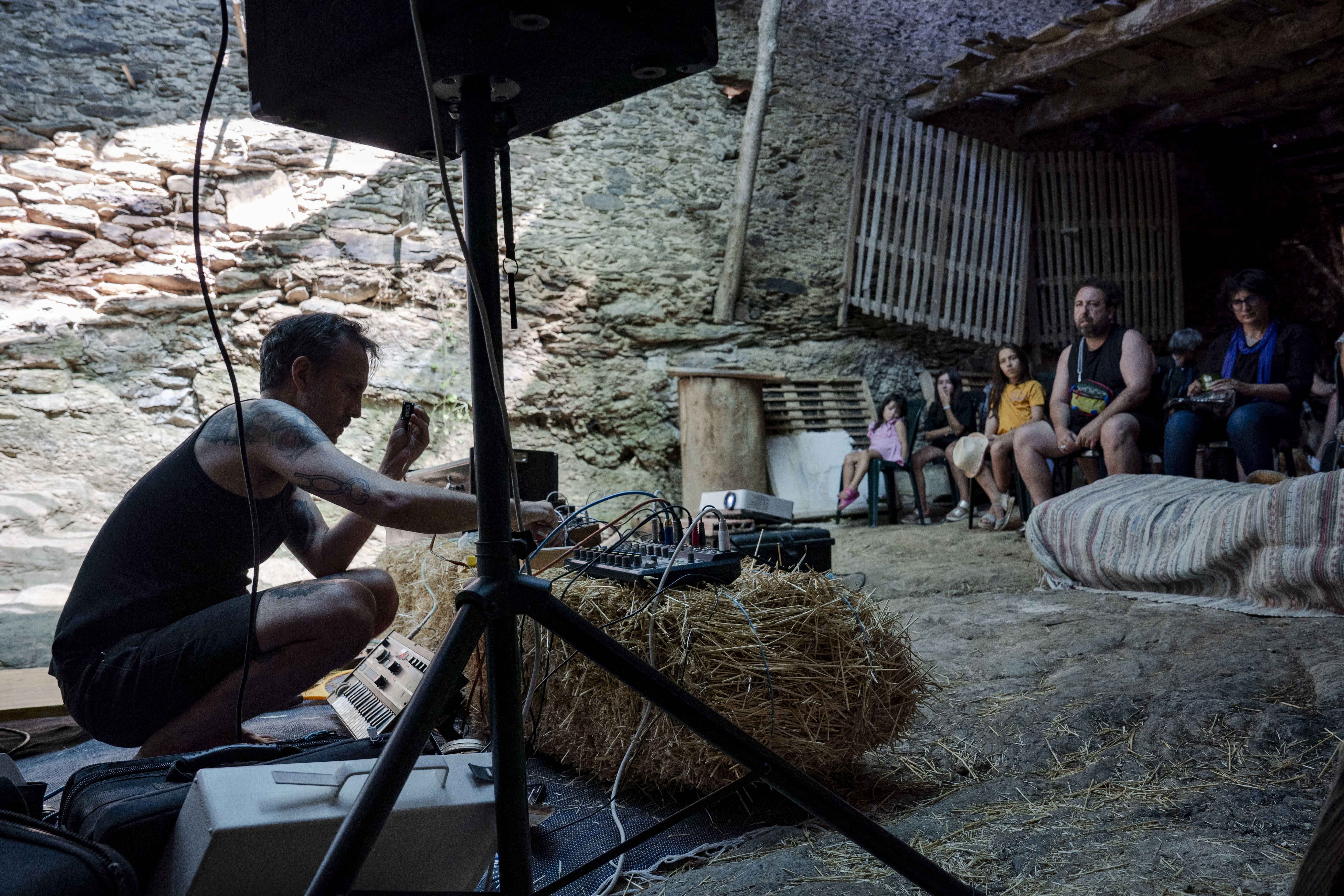
In the performance ‘Veredas’, we set out along the paths of experimental sounds, with the landscape as a backdrop, where everything is uncertain and possible. Photo: José Farinha.
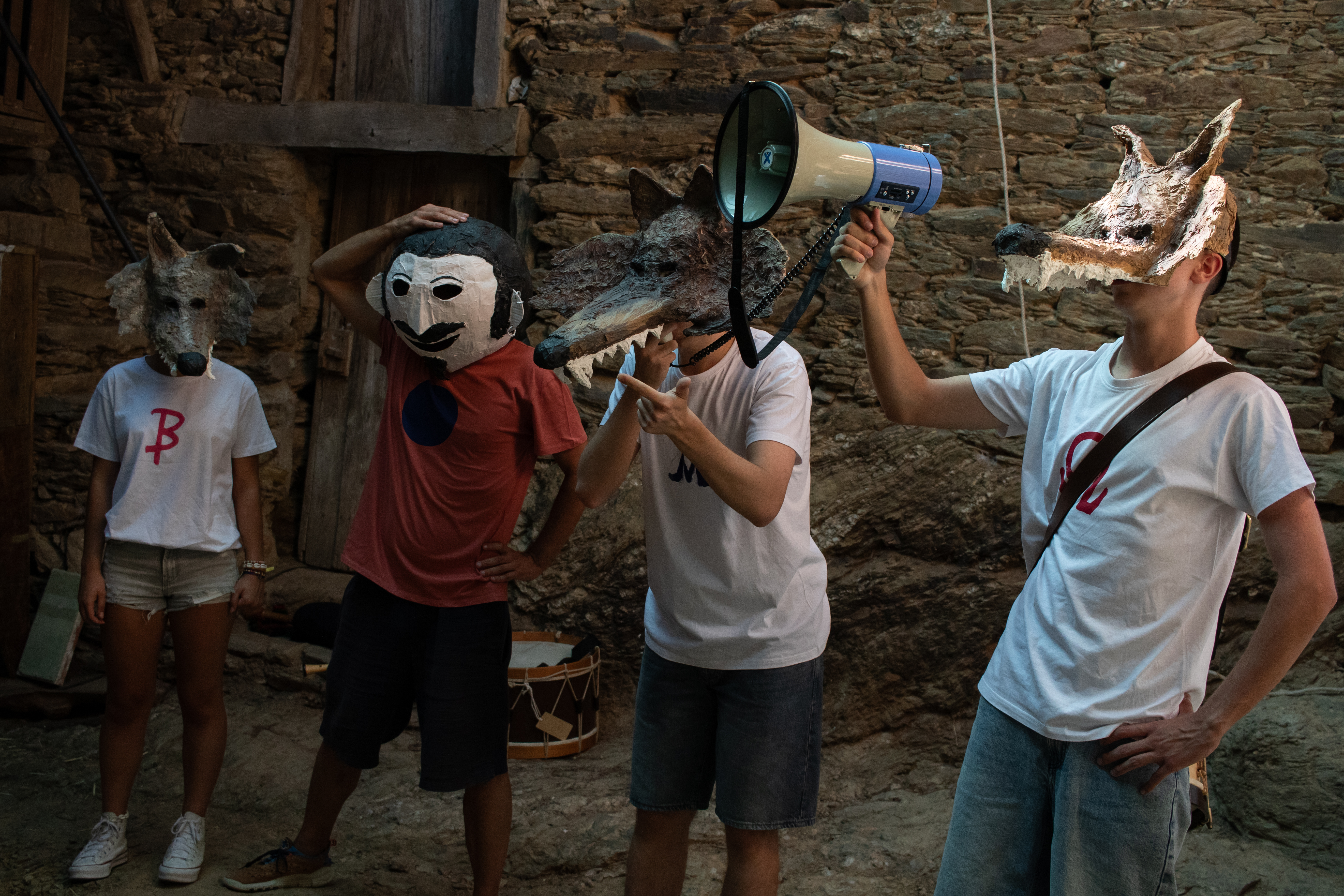
The art performance “Adonde hai lhobos hai bida”, part of the "Futuros Partilhados" project, encouraged collective reflection on the coexistence between humans and non-humans, between wolves and humanity. Photo: Pedro Alves/Palombar.
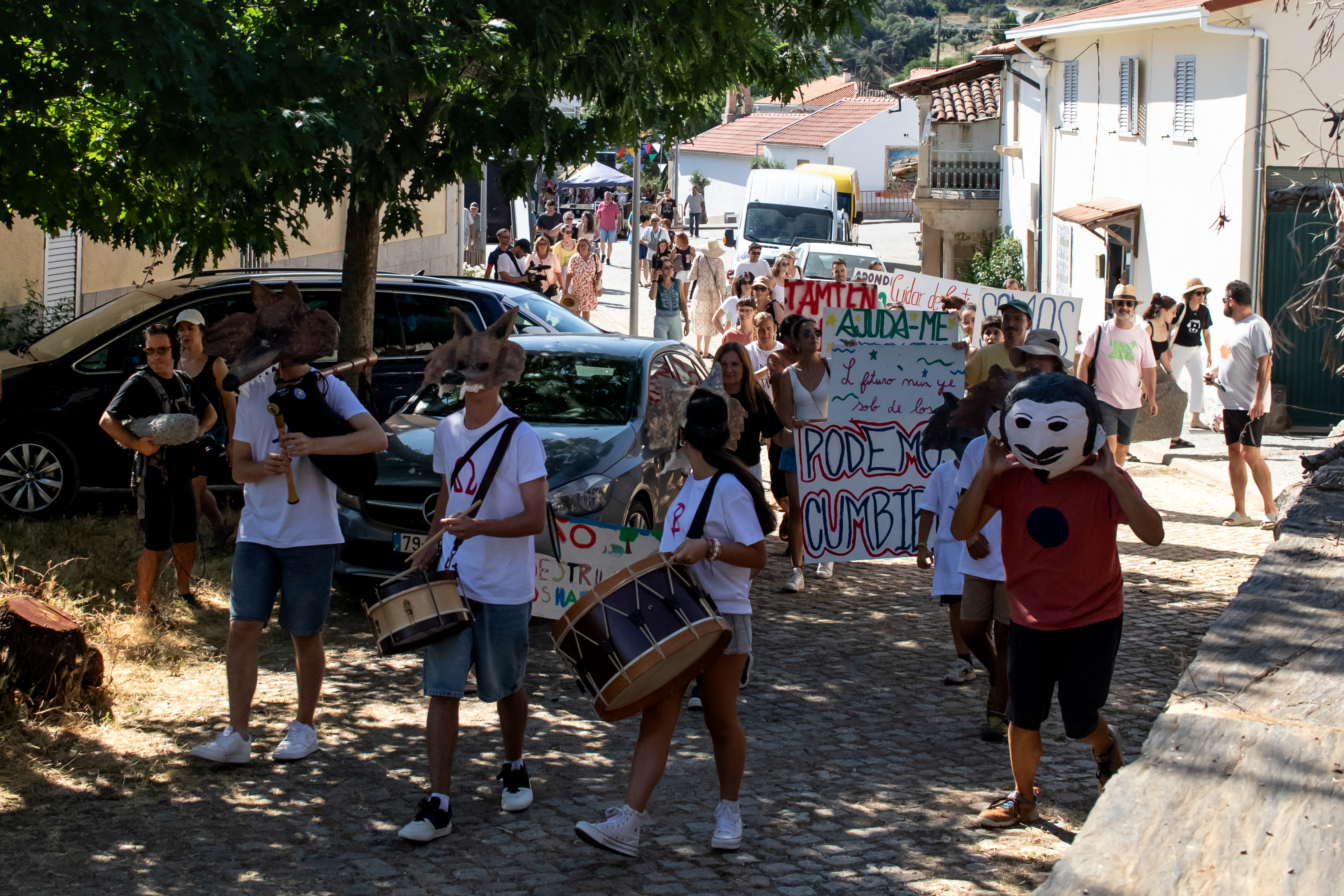
A street performance through the village’s streets and alleys gave voice to the wolf to create spaces for connection. Can we put ourselves in someone else’s shoes? Photo: Pedro Alves/Palombar.
Market, crafts and local knowledge
In the early afternoon, the traditional Handicrafts & Gastronomy Market opened, a prime meeting place for those keen to discover local produce, regional crafts and the area’s distinctive flavours.
Throughout the event, the streets of Uva remained lively thanks to the presence of the ‘Sons das Arribas’ bagpipers, who led several street parades, and the Traditional Games, organised by the Bragança District Association of Popular Games and the AEPGA – the Association for the Study and Protection of Donkeys – which provided opportunities for intergenerational interaction and the celebration of intangible cultural heritage.
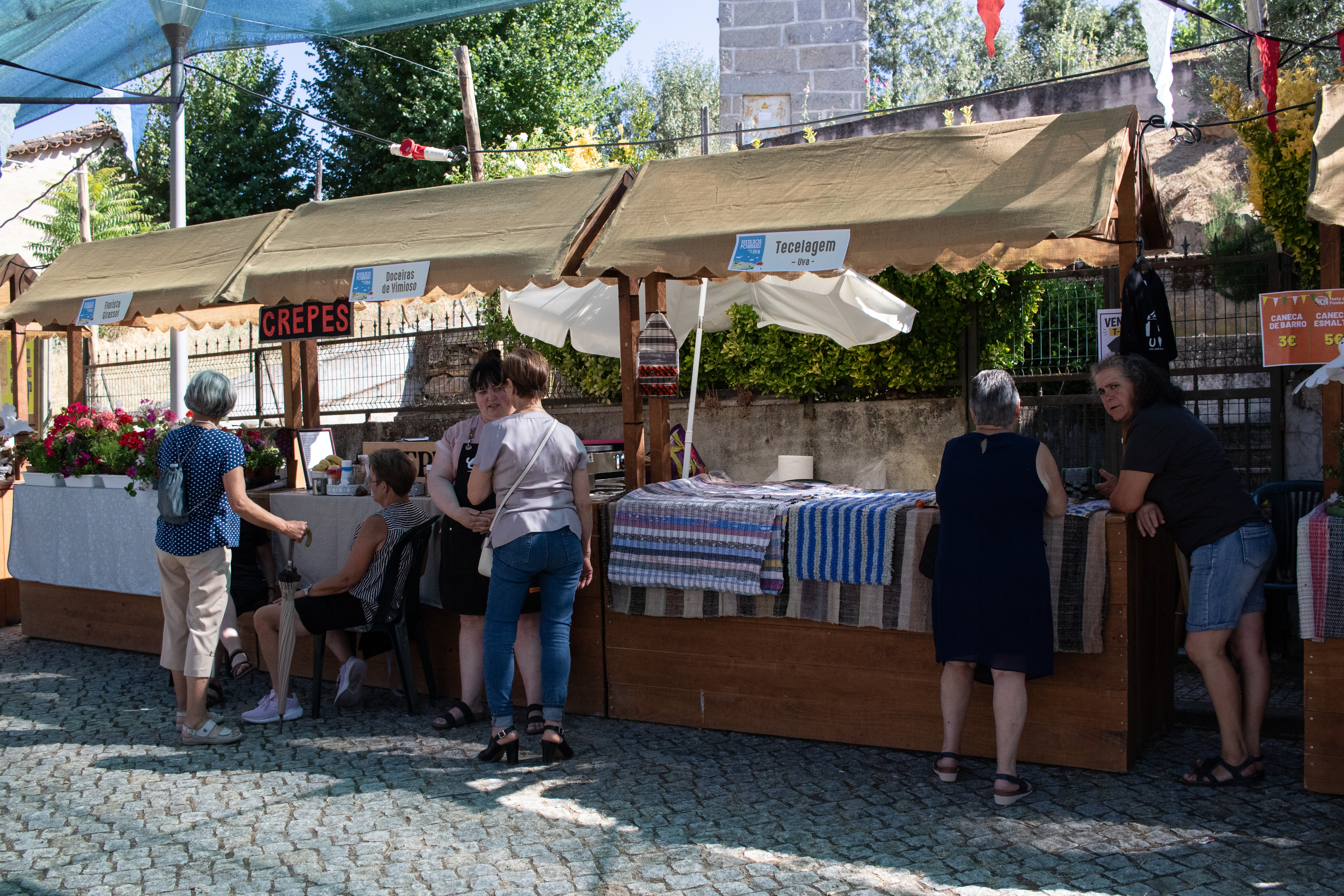
The Handicrafts and Food Market showcased local flavours and crafts. Photo: Pedro Alves/Palombar.
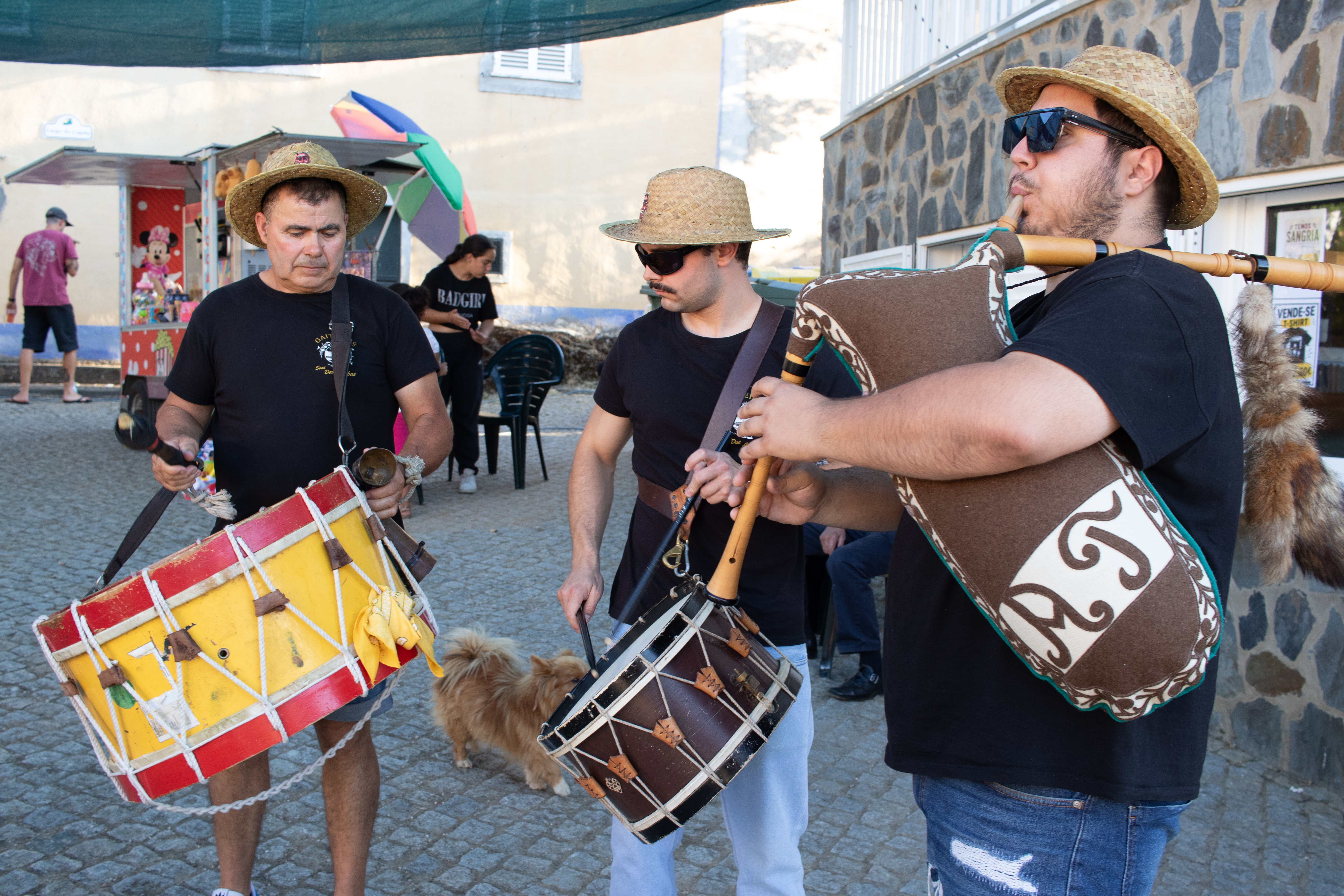
The bagpipers "Sons das Arribas" have always set the pace for the festivities. Photo: Pedro Alves/Palombar.
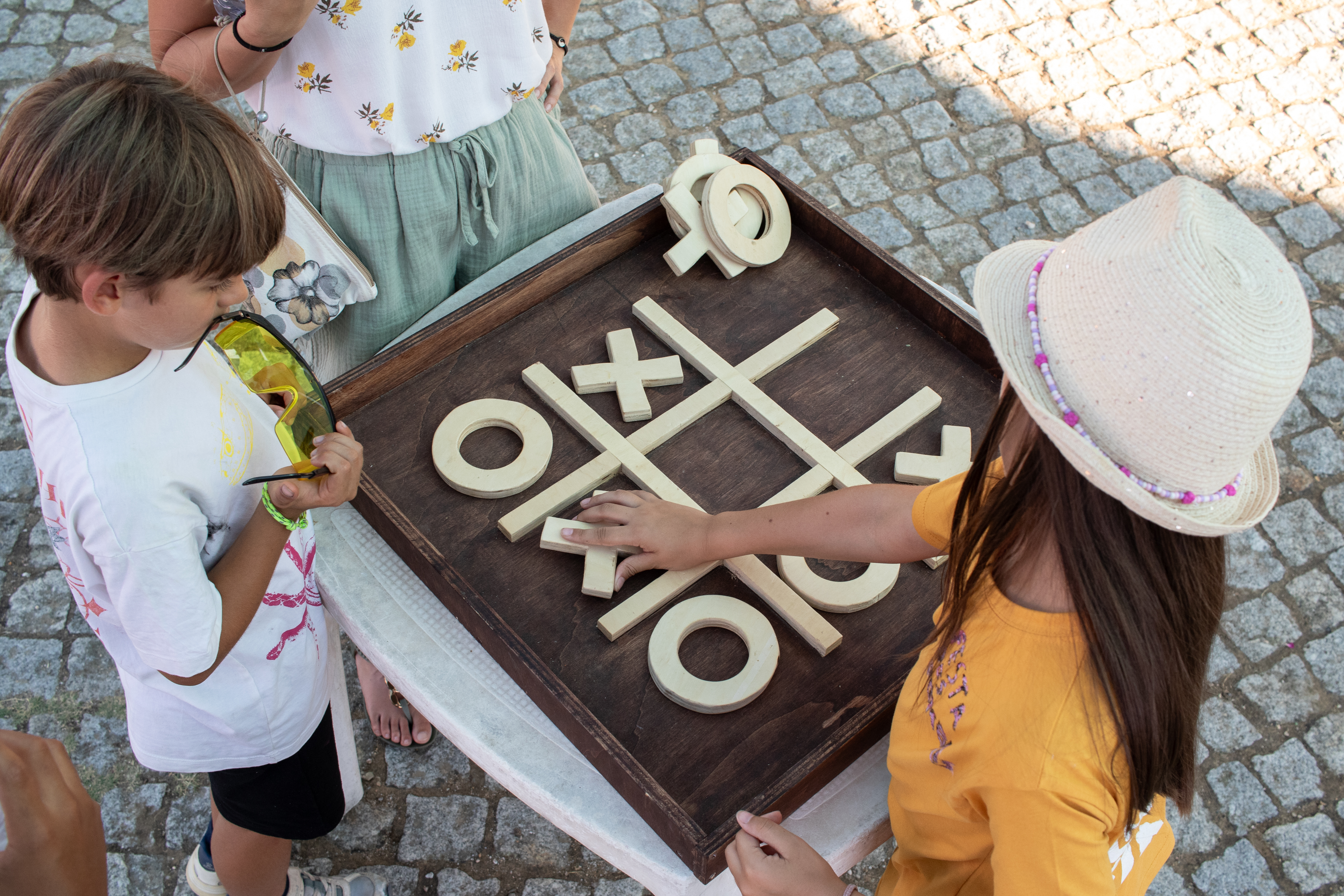
Traditional games brought generations together and lifted spirits. Photo: Pedro Alves/Palombar.
Concerts rooted in the identity of Trás-os-Montes
One of the most eagerly awaited moments of the programme took place in the late afternoon at the Open Dovecote, with a concert by Alma de Esteva. The trio, comprising Joana Lopes, Joana Cardoso Pereira and Fátima Gigante, presented a repertoire inspired by Portuguese musical traditions, reinterpreting folk songs through vocal harmonies and contemporary arrangements.
The evening’s entertainment continued on the main stage with Batucada, a musical project that blends the Trás-os-Montes tradition of the bagpipes and percussion with electronic sounds and urban influences, delivering a vibrant concert that brought together audiences of all ages.
Come midnight, DJ Charley’s Horse brought the festival to a close, treating the village to an eclectic, experimental and danceable selection of music, keeping the energy of the celebration going until the early hours of the morning.
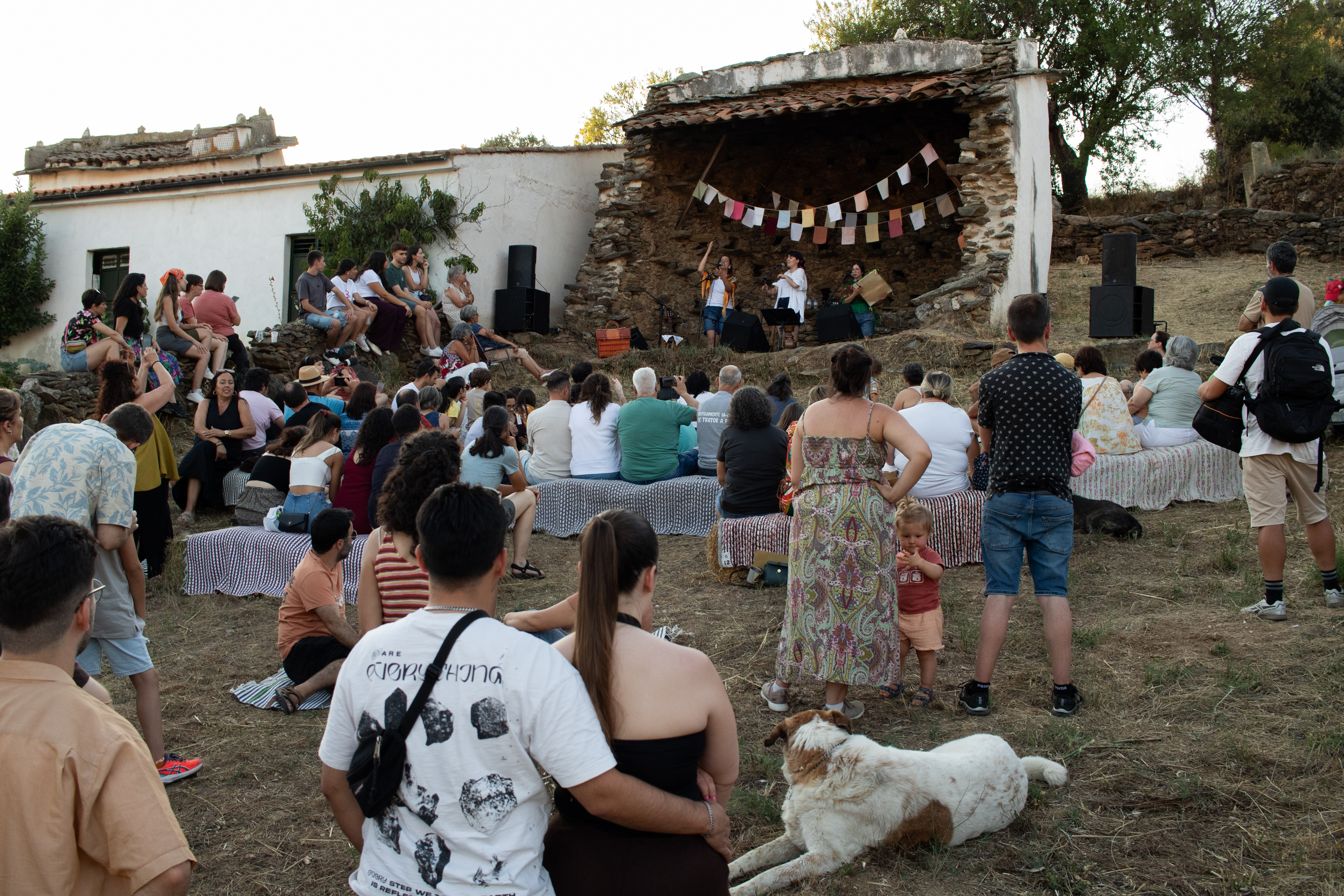
The Alma de Esteva group performed at "Pombal Aberto" in an intimate concert characterised by tradition, identity and modernity. Photo: Pedro Alves/Palombar.
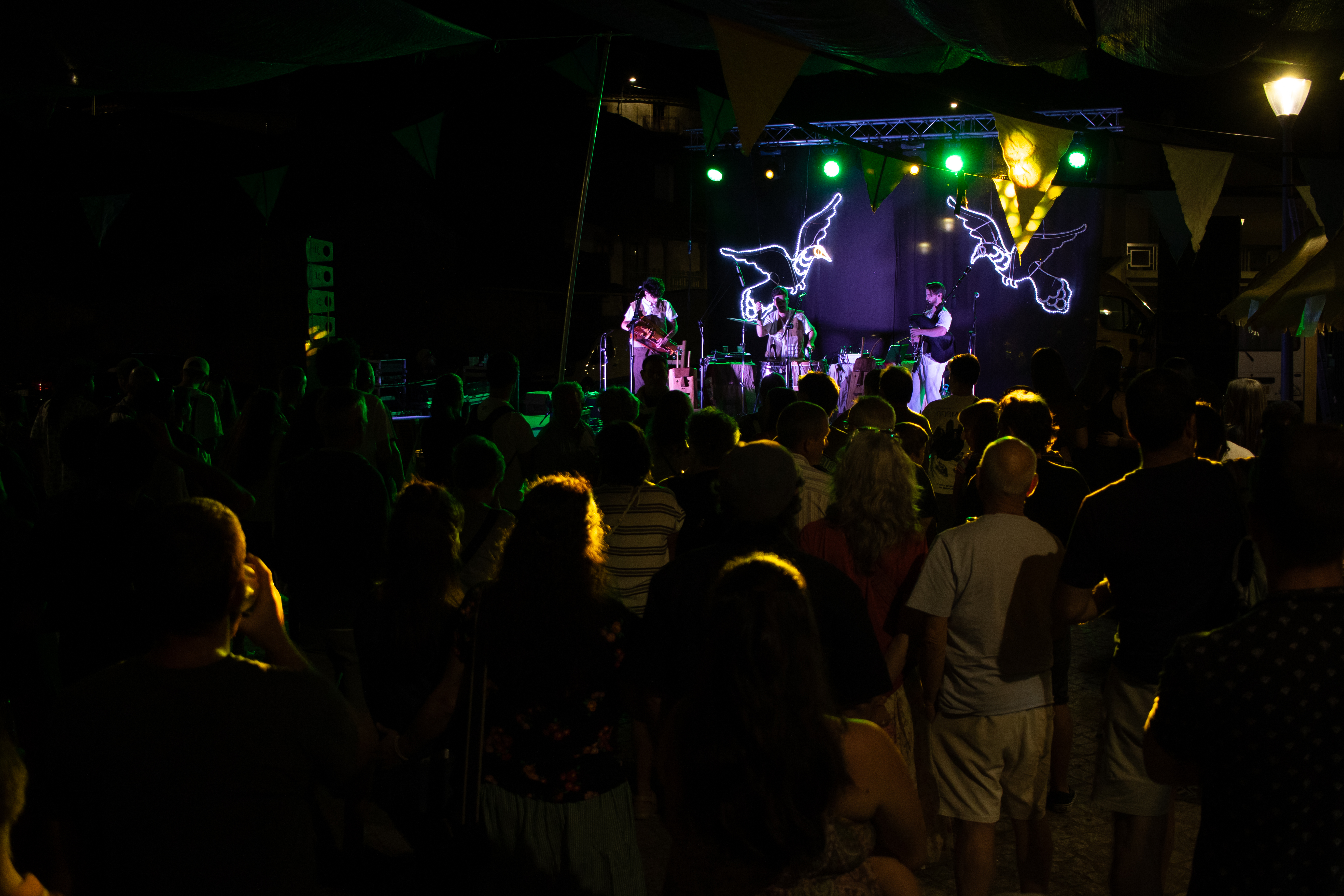
Batucada had everyone on their feet with their rhythm-filled, drum-driven sounds. Photo: Pedro Alves/Palombar.
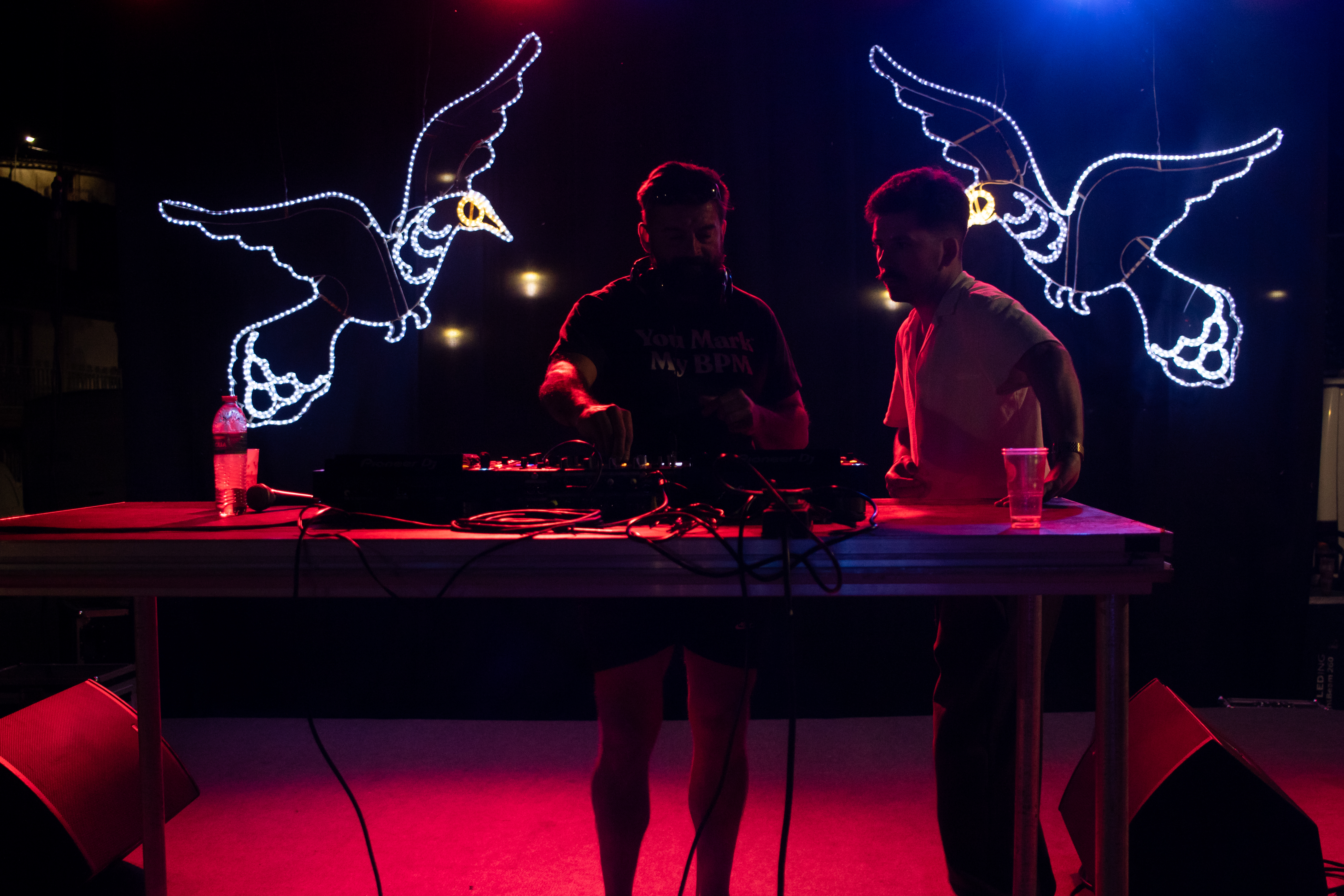
DJ Charley’s Horse got everyone moving after the clock struck twelve, playing eclectic, energetic experimental tracks. Photo: Pedro Alves/Palombar.
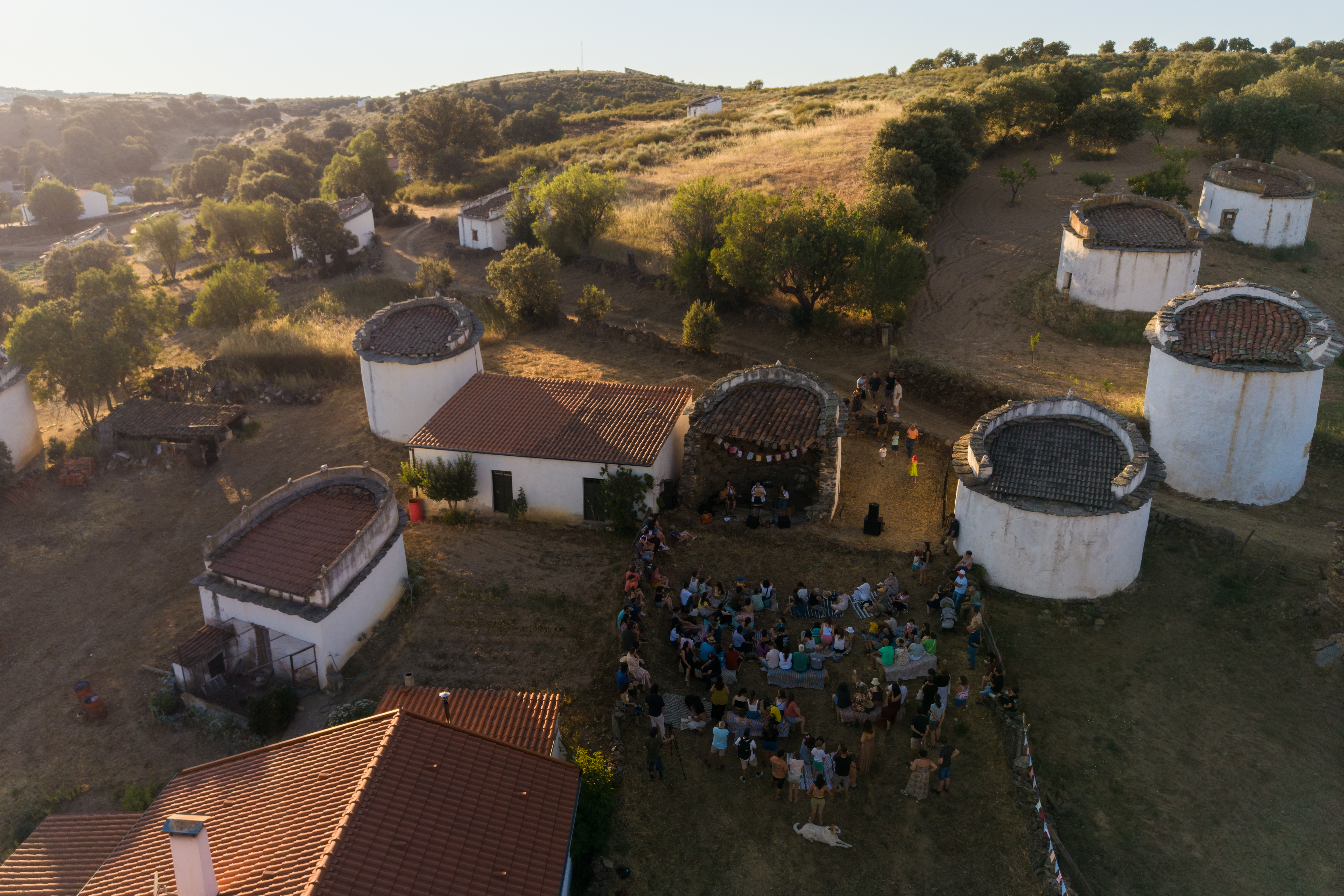
Next year, the festival continues and we look forward to seeing you there! Photo: Pedro Alves/Palombar.
About the "Festa dos Pombais"
Organised by the Union of Parishes of Algoso, Campo de Víboras and Uva and by Palombar – Conservation of Nature and Rural Heritage, in collaboration with Vimioso Town Council and with the support of the Uva Festivals Committee 2026/2027, the initiative once again demonstrates how the promotion of local heritage can be a driving force for community, cultural and regional revitalisation.