


8 September 2026
Livestock breeders in the Mirandese Plateau protested against the Government over wolf attacks, but their target was Palombar
We are allies, not enemies
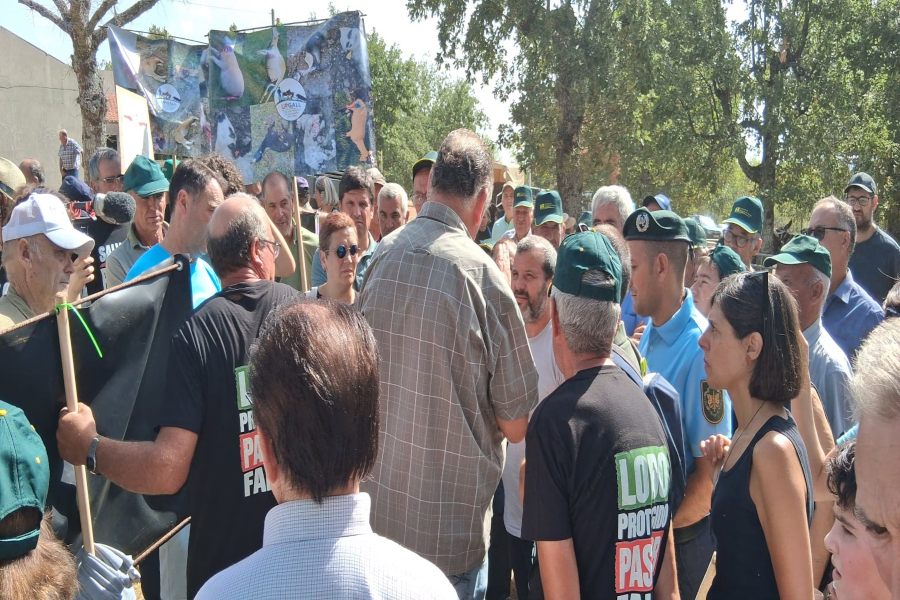
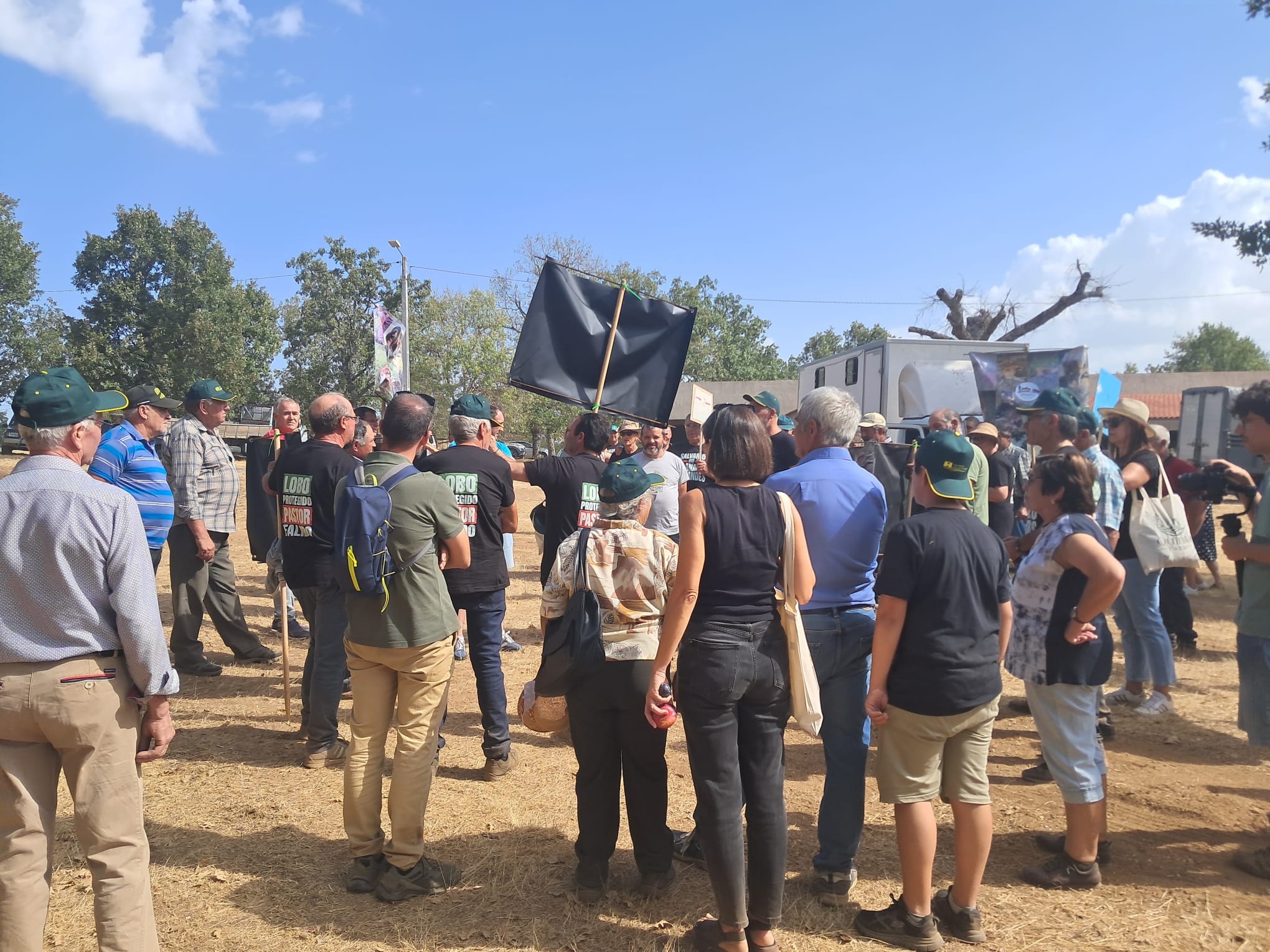
A group of more than 50 people linked to the agricultural and livestock sector organised a protest against the Government over wolf attacks on livestock in the Mirandese Plateau, during the traditional Feira do Naso, which took place in the village of Póvoa, in Miranda do Douro, last Sunday, 6 September. Although the organisers had publicly announced that the protest – which we consider legitimate and understand – was directed at the Government, in practice (and unfairly), the target was Palombar – the Association for the Conservation of Nature and Rural Heritage.
Some members of the Palombar team, who were present at the fair, were literally surrounded by the protesters, who hurled insults at them, made explicit threats of physical assault and harassment, as well as levelling unfounded accusations, making demands and calling for measures to be implemented that fall outside our remit. These were voiced by several protesters in a loud and aggressive tone. Palombar has deep roots in the region and has, for 26 years, carried out recognised and award-winning work to promote and revitalise the region; it has always defended local communities, including livestock farmers, making dialogue and understanding its guiding principles. We are allies, not enemies.
WHEN PALOMBAR IS ASKED TO DO WHAT IS NOT ITS RESPONSIBILITY
During the exchange of words and views with members of the Palombar team, several protesters accused the association of failing to pay compensation to livestock farmers following wolf attacks, and of various problems relating to these claims, such as the low amount allocated per head of livestock, delays in payment, etc.
Let us be clear: it is the State, through the ICNF – the Institute for Nature Conservation and Forests – that is the sole body responsible for allocating funds relating to support for livestock farmers following wolf attacks. Palombar has no authority in this matter. It bears no responsibility for managing these cases, nor does it receive or allocate any funds. This is not within our remit.
PALOMBAR SPOKE OUT IN PARLIAMENT ON BEHALF OF LIVESTOCK BREEDERS
Palombar has been working for decades to enhance the value of the countryside, in close collaboration with local communities. Our work has been recognised with awards and is widely acknowledged at regional, national and international levels.
In our field of expertise – the conservation of rural heritage and nature, the infrastructure that ensures the survival of us all, and its harmonisation with human activities – Palombar also defended, as always, livestock breeders at the hearing of the Committee on Agriculture and Fisheries, which took place on 2 June, in the Assembly of the Republic, on the protection of the Iberian wolf and the promotion of models of coexistence with livestock farming, at the request of PAN, and on the damage caused by the Iberian wolf, following the Ministry of the Environment and Energy’s approval of the Alcateia Programme 2025–2035, at the request of Chega.
During that session at the Assembly of the Republic, we acknowledged the serious problems caused by wolf attacks on livestock breeders in the Mirandese Plateau and advocated the adoption of effective measures to protect livestock (to minimise losses), as well as fair and prompt compensation whenever there are proven losses due to wolf attacks, so as to ensure a viable and sustainable coexistence with this endangered species.
WE HAVE ALSO SUPPORTED THE SECTOR THROUGH JOINT LETTERS ADDRESSED TO THE ICNF IN 2021 AND 2022
Together with other environmental non-governmental organisations, Palombar signed two joint letters addressed to the ICNF in 2021 and 2022, in which we defended livestock breeders and called for measures to be adopted to enable them to protect their livestock more effectively against wolf attacks.
In the letter sent in 2021, we expressed our concerns regarding the way in which the compensation scheme for damage caused by the Iberian wolf operates – a key element in mitigating conflicts with livestock breeders and promoting their coexistence with this endangered predator. We considered it essential and urgent to review Decree No. 54/2016 of 25 August, and that this should be done in a participatory manner, involving all relevant bodies, including livestock farmers’ associations and confederations and other civil society organisations, in order to foster a more comprehensive and consensus-based discussion that would effectively improve the Decree-Law in question.
In our 2022 letter, we had already expressed our concern regarding the delay in extending the transitional period provided for in Decree-Law No. 54/2016 of 25 August, concerning compensation for damage caused by the Iberian wolf to livestock farmers who do not meet the protection requirements set out in that legal document.
We have been working on all fronts to promote coexistence between livestock breeding and the presence of the wolf, a species with a long history in this region.
WE ARE ALLIES, NOT ENEMIES
Palombar has always based its approach on dialogue and understanding. Contrary to the accusations levelled against us, we are allies, not enemies. We are already taking action on the ground regarding the wolf issue, including carrying out, using our own funds and as yet without any external support, a more detailed monitoring programme of the species in the region, in order to identify areas of greater risk to livestock farming that require stricter protective measures, as well as through close collaboration with various livestock breeders in the Mirandese Plateau who understand that the solution to this problem can only be found more easily and effectively by working together, through mutual support and the sharing of knowledge, experiences and best practices.
.png)
And we have some very specific proposals, the main ones being: the establishment of pilot schemes for Emerging Conflict Zones to enable more targeted, rapid and effective action; an increase in payments to farmers in areas where wolves are present; greater support for the purchase of livestock guard dogs, as well as a review of the dog-to-livestock ratio, and support for the breeding of such dogs; specific incentives for native breeds; and promoting the adoption of protective measures by providing the necessary technical support.
We know the path ahead is difficult, but we can make it easier, with more effective solutions, if we are open to dialogue, understanding and joint action.
THREATS AS A METHOD AND HATRED AS A TACTIC DO NOT PRODUCE SOLUTIONS, ONLY PROBLEMS
The path to finding solutions lies in dialogue, non-judgement and mutual understanding. We cannot find joint solutions to collective problems through baseless attacks and personal threats in the public arena, on social media and in groups where both anonymous and non-anonymous individuals use threats as a method and hatred as a tactic, spreading rumours and myths such as the release of wolves (which never happened) and the misappropriation of public funds (which never took place), amongst others, which only serve to generate misunderstanding, misinformation and outrage within the sector.
Hatred and rumours have never produced solutions, but rather problems and discord. We are open to dialogue, and we want to support local communities within the scope of our remit.
WE CALL FOR INSTITUTIONAL RESPECT AND MODERATION IN DEALING WITH THE VARIOUS STAKEHOLDERS
Palombar is committed to diplomacy and to constructive and inclusive collaboration with all; we therefore call for institutional respect and moderation in dealing with the various social stakeholders, such as livestock breeders and associations linked to the sector, as well as politicians in government roles who have also adopted an inappropriate and entirely unconciliatory tone, both towards state bodies and towards the entities and organisations working in the field of nature conservation, which carry out essential grassroots work for society. This approach does not build social and institutional bridges; rather, it creates unproductive divisions within society, rather than the solutions we all seek.
A group of more than 50 people linked to the agricultural and livestock sector organised a protest against the Government over wolf attacks on livestock in the Mirandese Plateau, during the traditional Feira do Naso, which took place in the village of Póvoa, in Miranda do Douro, last Sunday, 6 September. Although the organisers had publicly announced that the protest – which we consider legitimate and understand – was directed at the Government, in practice (and unfairly), the target was Palombar – the Association for the Conservation of Nature and Rural Heritage.
Some members of the Palombar team, who were present at the fair, were literally surrounded by the protesters, who hurled insults at them, made explicit threats of physical assault and harassment, as well as levelling unfounded accusations, making demands and calling for measures to be implemented that fall outside our remit. These were voiced by several protesters in a loud and aggressive tone. Palombar has deep roots in the region and has, for 26 years, carried out recognised and award-winning work to promote and revitalise the region; it has always defended local communities, including livestock farmers, making dialogue and understanding its guiding principles. We are allies, not enemies.
WHEN PALOMBAR IS ASKED TO DO WHAT IS NOT ITS RESPONSIBILITY
During the exchange of words and views with members of the Palombar team, several protesters accused the association of failing to pay compensation to livestock farmers following wolf attacks, and of various problems relating to these claims, such as the low amount allocated per head of livestock, delays in payment, etc.
Let us be clear: it is the State, through the ICNF – the Institute for Nature Conservation and Forests – that is the sole body responsible for allocating funds relating to support for livestock farmers following wolf attacks. Palombar has no authority in this matter. It bears no responsibility for managing these cases, nor does it receive or allocate any funds. This is not within our remit.
PALOMBAR SPOKE OUT IN PARLIAMENT ON BEHALF OF LIVESTOCK BREEDERS
Palombar has been working for decades to enhance the value of the countryside, in close collaboration with local communities. Our work has been recognised with awards and is widely acknowledged at regional, national and international levels.
In our field of expertise – the conservation of rural heritage and nature, the infrastructure that ensures the survival of us all, and its harmonisation with human activities – Palombar also defended, as always, livestock breeders at the hearing of the Committee on Agriculture and Fisheries, which took place on 2 June, in the Assembly of the Republic, on the protection of the Iberian wolf and the promotion of models of coexistence with livestock farming, at the request of PAN, and on the damage caused by the Iberian wolf, following the Ministry of the Environment and Energy’s approval of the Alcateia Programme 2025–2035, at the request of Chega.
During that session at the Assembly of the Republic, we acknowledged the serious problems caused by wolf attacks on livestock breeders in the Mirandese Plateau and advocated the adoption of effective measures to protect livestock (to minimise losses), as well as fair and prompt compensation whenever there are proven losses due to wolf attacks, so as to ensure a viable and sustainable coexistence with this endangered species.
WE HAVE ALSO SUPPORTED THE SECTOR THROUGH JOINT LETTERS ADDRESSED TO THE ICNF IN 2021 AND 2022
Together with other environmental non-governmental organisations, Palombar signed two joint letters addressed to the ICNF in 2021 and 2022, in which we defended livestock breeders and called for measures to be adopted to enable them to protect their livestock more effectively against wolf attacks.
In the letter sent in 2021, we expressed our concerns regarding the way in which the compensation scheme for damage caused by the Iberian wolf operates – a key element in mitigating conflicts with livestock breeders and promoting their coexistence with this endangered predator. We considered it essential and urgent to review Decree No. 54/2016 of 25 August, and that this should be done in a participatory manner, involving all relevant bodies, including livestock farmers’ associations and confederations and other civil society organisations, in order to foster a more comprehensive and consensus-based discussion that would effectively improve the Decree-Law in question.
In our 2022 letter, we had already expressed our concern regarding the delay in extending the transitional period provided for in Decree-Law No. 54/2016 of 25 August, concerning compensation for damage caused by the Iberian wolf to livestock farmers who do not meet the protection requirements set out in that legal document.
We have been working on all fronts to promote coexistence between livestock breeding and the presence of the wolf, a species with a long history in this region.
WE ARE ALLIES, NOT ENEMIES
Palombar has always based its approach on dialogue and understanding. Contrary to the accusations levelled against us, we are allies, not enemies. We are already taking action on the ground regarding the wolf issue, including carrying out, using our own funds and as yet without any external support, a more detailed monitoring programme of the species in the region, in order to identify areas of greater risk to livestock farming that require stricter protective measures, as well as through close collaboration with various livestock breeders in the Mirandese Plateau who understand that the solution to this problem can only be found more easily and effectively by working together, through mutual support and the sharing of knowledge, experiences and best practices.
And we have some very specific proposals, the main ones being: the establishment of pilot schemes for Emerging Conflict Zones to enable more targeted, rapid and effective action; an increase in payments to farmers in areas where wolves are present; greater support for the purchase of livestock guard dogs, as well as a review of the dog-to-livestock ratio, and support for the breeding of such dogs; specific incentives for native breeds; and promoting the adoption of protective measures by providing the necessary technical support.
We know the path ahead is difficult, but we can make it easier, with more effective solutions, if we are open to dialogue, understanding and joint action.
THREATS AS A METHOD AND HATRED AS A TACTIC DO NOT PRODUCE SOLUTIONS, ONLY PROBLEMS
The path to finding solutions lies in dialogue, non-judgement and mutual understanding. We cannot find joint solutions to collective problems through baseless attacks and personal threats in the public arena, on social media and in groups where both anonymous and non-anonymous individuals use threats as a method and hatred as a tactic, spreading rumours and myths such as the release of wolves (which never happened) and the misappropriation of public funds (which never took place), amongst others, which only serve to generate misunderstanding, misinformation and outrage within the sector.
Hatred and rumours have never produced solutions, but rather problems and discord. We are open to dialogue, and we want to support local communities within the scope of our remit.
WE CALL FOR INSTITUTIONAL RESPECT AND MODERATION IN DEALING WITH THE VARIOUS STAKEHOLDERS
Palombar is committed to diplomacy and to constructive and inclusive collaboration with all; we therefore call for institutional respect and moderation in dealing with the various social stakeholders, such as livestock breeders and associations linked to the sector, as well as politicians in government roles who have also adopted an inappropriate and entirely unconciliatory tone, both towards state bodies and towards the entities and organisations working in the field of nature conservation, which carry out essential grassroots work for society. This approach does not build social and institutional bridges; rather, it creates unproductive divisions within society, rather than the solutions we all seek.