


NOVEMBRO PELA FLORESTA

NOVEMBER FOR THE FOREST
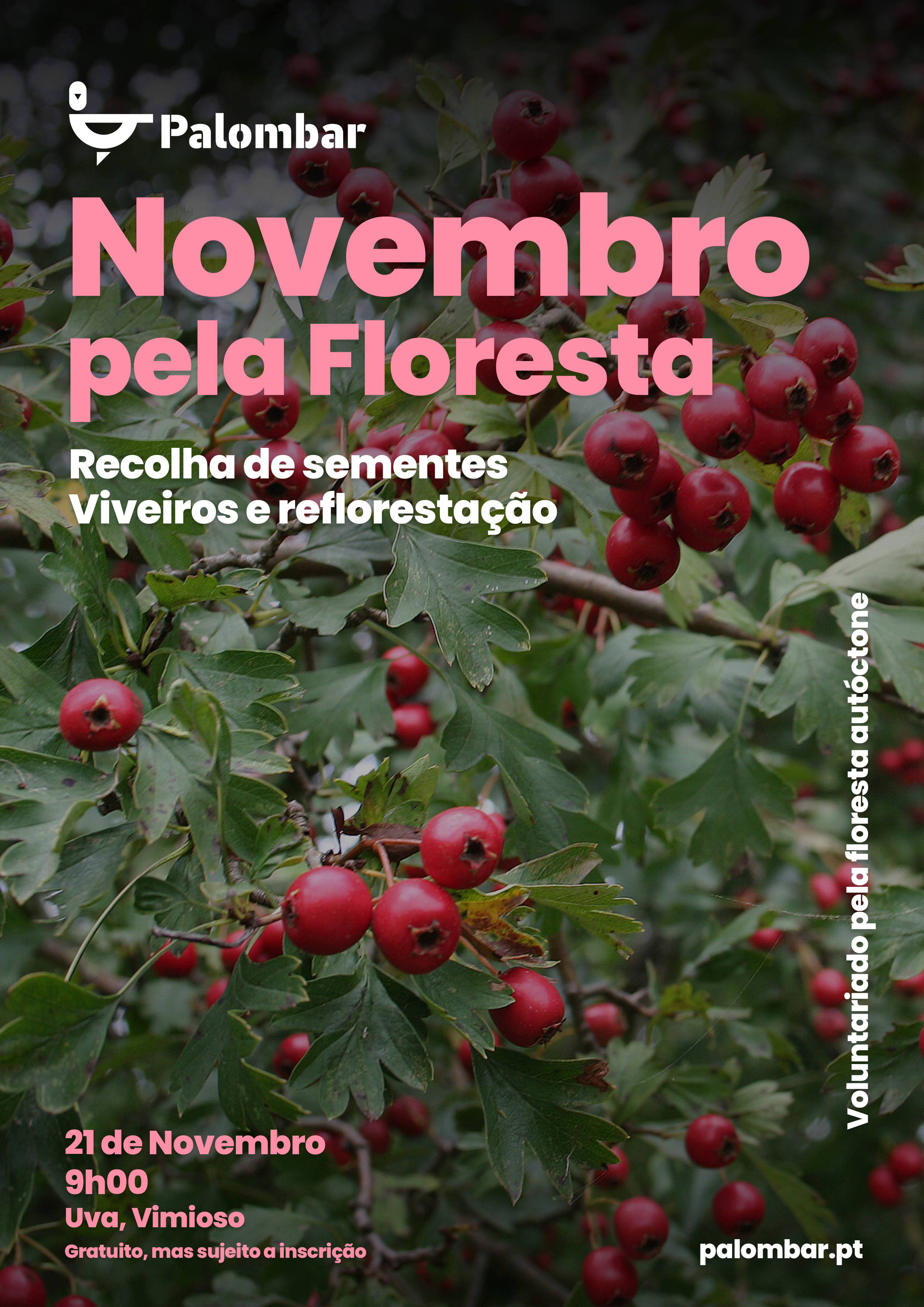
On 21 November 2026, Palombar – Nature and Rural Heritage Conservation is organising an event dedicated to native forests in the village of Uva, in the municipality of Vimioso. Together, we will collect seeds and plant seedlings of native plant species. The seeds collected will be sown in our forest nursery, and the resulting seedlings will be used in our reforestation and ecological restoration projects.
Join us on this day and help the native forest to thrive!
Join us on this day and help the native forest to thrive!
PROGRAMME
9.00 am Start | Meeting point: Traditional Dovecotes Interpretation Centre, in Uva (Vimioso), at the Palombar headquarters
9.30 am Seed collection
12.30 pm Light lunch provided by the organisers
1.30 pm–5.00 pm Planting of trees grown from seeds collected during previous editions of ‘November for the Forest’ and cultivated in the Palombar nursery
9.30 am Seed collection
12.30 pm Light lunch provided by the organisers
1.30 pm–5.00 pm Planting of trees grown from seeds collected during previous editions of ‘November for the Forest’ and cultivated in the Palombar nursery
REQUIREMENTS
Participants
Minimum – 5
Maximum – 12
To take part in the activity, you will need to sign a liability waiver.
NOTE
Palombar reserves the right to cancel or amend the activity programme should weather conditions be unsuitable for it to take place or should the minimum number of participants not be reached.
Minimum – 5
Maximum – 12
To take part in the activity, you will need to sign a liability waiver.
NOTE
Palombar reserves the right to cancel or amend the activity programme should weather conditions be unsuitable for it to take place or should the minimum number of participants not be reached.
REGISTRATION
The event is free of charge, but you must register using the form below.
The deadline for registration is 19 November 2026.
On 20 November 2026, you will receive an email confirming that the event will take place.
The deadline for registration is 19 November 2026.
On 20 November 2026, you will receive an email confirming that the event will take place.
NATIVE FOREST
Why grow and conserve them?
Native trees are indigenous to the area itself. Oak, arbutus, chestnut, holm oak and cork oak are examples of some of Portugal’s native trees.
Native forests are better adapted to the soil and climate conditions of the region, making them more resistant to pests, diseases, and long periods of drought or heavy rain than introduced species.
They also serve as important habitats and breeding grounds for a large number of native animal species, many of which are at risk of extinction; they also help to maintain soil fertility and the biological balance of the landscape.
Native forests are also vital for better regulating the water cycle and water quality and, although they grow more slowly, when well-established they are generally more resistant to forest fires.
Native forests are therefore essential to the balance of local ecosystems and provide services and resources on which we all depend.