


29 September 2026
2nd REGiMont Meeting: we sowed ideas, revitalised projects, gathered collaborations and moved forward

The REGiMont project is still under construction and remains open to the community. Photo: Palombar.
Between 18 and 20 September, the REGiMont community came together once again for its second in-person meeting. This time, it took place on the mountain slopes of the Peneda-Gerês National Park, in Branda do Murço, Soajo. Over the course of three days, participants from different regions of the country came together to strengthen collaborative relationships, further develop projects already underway and explore new opportunities for collective action.
A gathering hosted by the residents of Branda do Murço
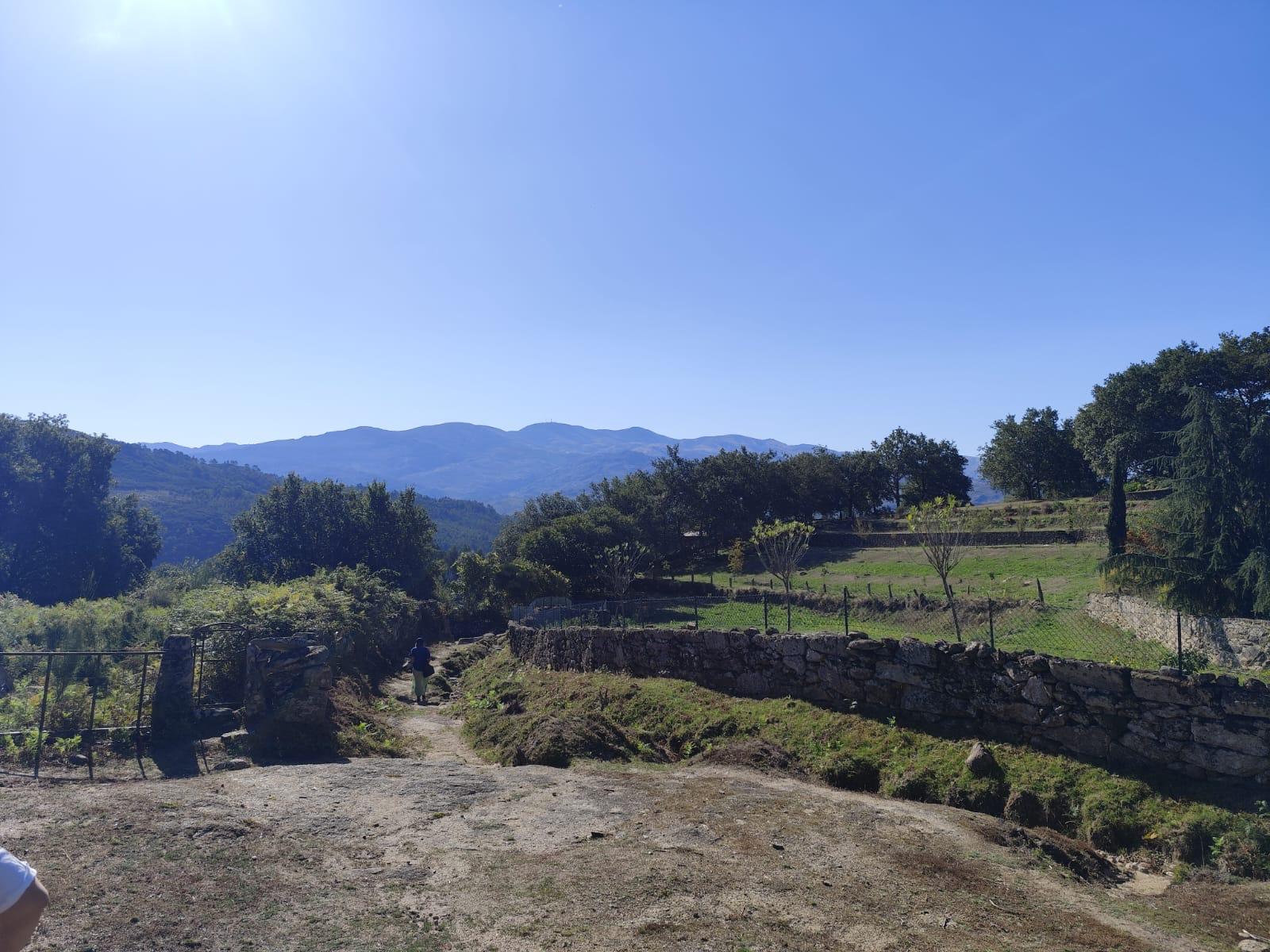
On the morning of Saturday 19 September, the REGiMont community was welcomed by local partners from Joyas da Terra, who led a guided tour of the area that hosted us throughout the weekend.
Situated in the heart of the mountains of the Peneda-Gerês National Park, above the village of Soajo, the Joyas da Terra project has been carrying out inspiring work in the fields of permaculture, agroforestry and ecological regeneration, whilst also incorporating practices linked to yoga and reconnecting with nature.
During the walk, we were able to explore the agroforestry areas, the cultivation plots and other regeneration processes that have been implemented over recent years by the many hands that care for the land with purpose.
Co-creation: from seeds to harvests
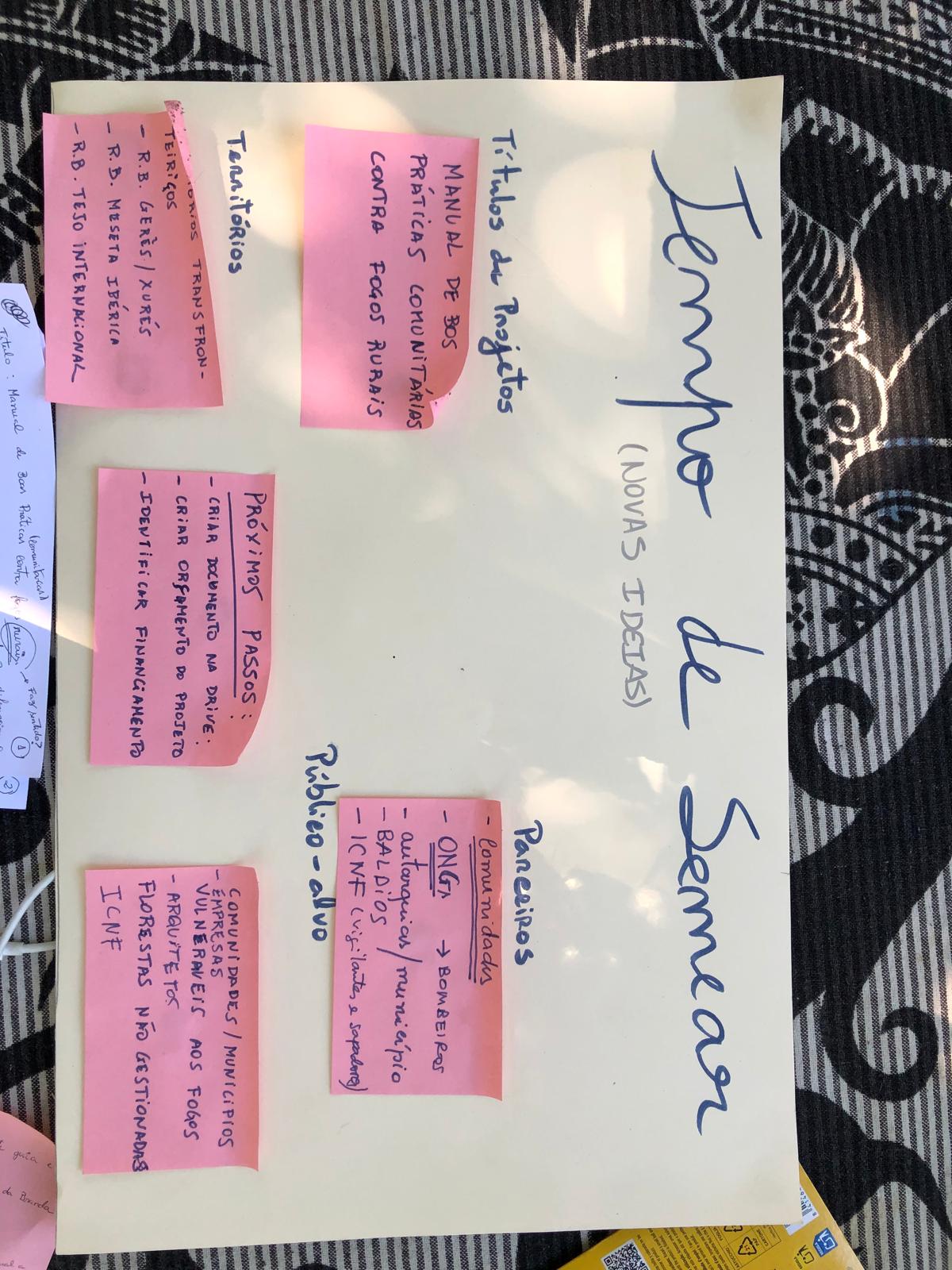
Following the visit to the area, one of the key moments of the gathering began: the REGiMont co-creation workshops. Inspired by the natural cycles of regeneration, these sessions were organised around three distinct phases:
"Time to Sow": dedicated to generating new ideas and the emergence of future initiatives;
"Time to Prune": a space for critical reflection and the reworking of existing projects, seeking new ways to adapt them to funding and collaboration opportunities;
And “Time to Harvest”: focused on projects in the maturing phase, with a view to structuring them and preparing them for funding applications.
Throughout the various sessions, participants worked on ideas already discussed in the online working sessions, continuing to develop proposals initiated in previous months and exploring new possibilities for collaboration.
Hands-on: a bio-construction workshop with CRU Atelier
On Saturday afternoon, participants had the opportunity to take part in a short bio-construction workshop led by Miguel del Castilho, from CRU Atelier. In a relaxed and participatory atmosphere, the workshop allowed participants to experiment with natural materials, explore low-impact building techniques and foster collective learning through hands-on practice.
The experience also provided a unique opportunity to strengthen relationships between participants, promoting creativity, experimentation and the building of trust within the group. Palombar would like to publicly thank Miguel del Castilho for his generosity and willingness to facilitate this session.
CRU Atelier, part of the Cooperativa Integral Minga in Montemor-o-Novo, carries out work centred on a responsible approach to construction, deeply rooted in the promotion of local materials and the ecological transition of the construction sector.
.jpeg)
“Villages of the Future”: inspiration to imagine alternative paths
Saturday evening concluded with a screening of the documentary “Villages of the Future”. This film showcases a range of people, communities, projects and experiences that seek to reinvent Portuguese villages as places of belonging, sharing, creativity and social innovation.
At a time when many rural areas are facing challenges linked to depopulation and demographic change, the documentary offers a moment of inspiration for all those who believe in the ability of communities to build new futures for their local areas.
.jpeg)
Experiencing community fire prevention first-hand
Sunday morning, 20 September, began once again with an immersion in the local area. This time, participants visited the ecological and fire prevention infrastructure developed by Vizinhos da Branda as part of the “United Neighbourhood, Protected Branda” project.
Throughout the visit, it was possible to observe various initiatives that had already been implemented, including: vegetation management work; the construction of embankments designed to reduce soil erosion; the preparation of areas for the future planting of native forest; improvements to emergency access routes; and the creation of a pond to support fire prevention and firefighting efforts.
The visit provided a practical insight into how simple solutions, designed and implemented collectively, can increase the resilience of local areas against the risk of fire.
Continuing to turn ideas into projects
After the visit, the participants returned to their working groups to continue the co-creation processes begun the previous day.
The focus was on consolidating ideas, defining next steps and developing projects with the potential for future applications for various funding opportunities.
Throughout the weekend, proposals relating to post-fire regeneration, green building, community learning and new forms of citizen participation and territorial regeneration were explored in greater depth.
“aBranda o Fogo”: a discussion on the future, community and prevention
Sunday afternoon was devoted to the open discussion “aBranda o Fogo”, held at the Casa do Povo in Soajo. The event provided an opportunity to explore different perspectives on fire prevention, landscape regeneration and the role of communities in building more resilient local areas.
Throughout the session, experiences, challenges and solutions relating to community-led territorial management were shared, reinforcing the importance of coordination between local initiatives, associations and public bodies.
A finale marked by local culture and identity
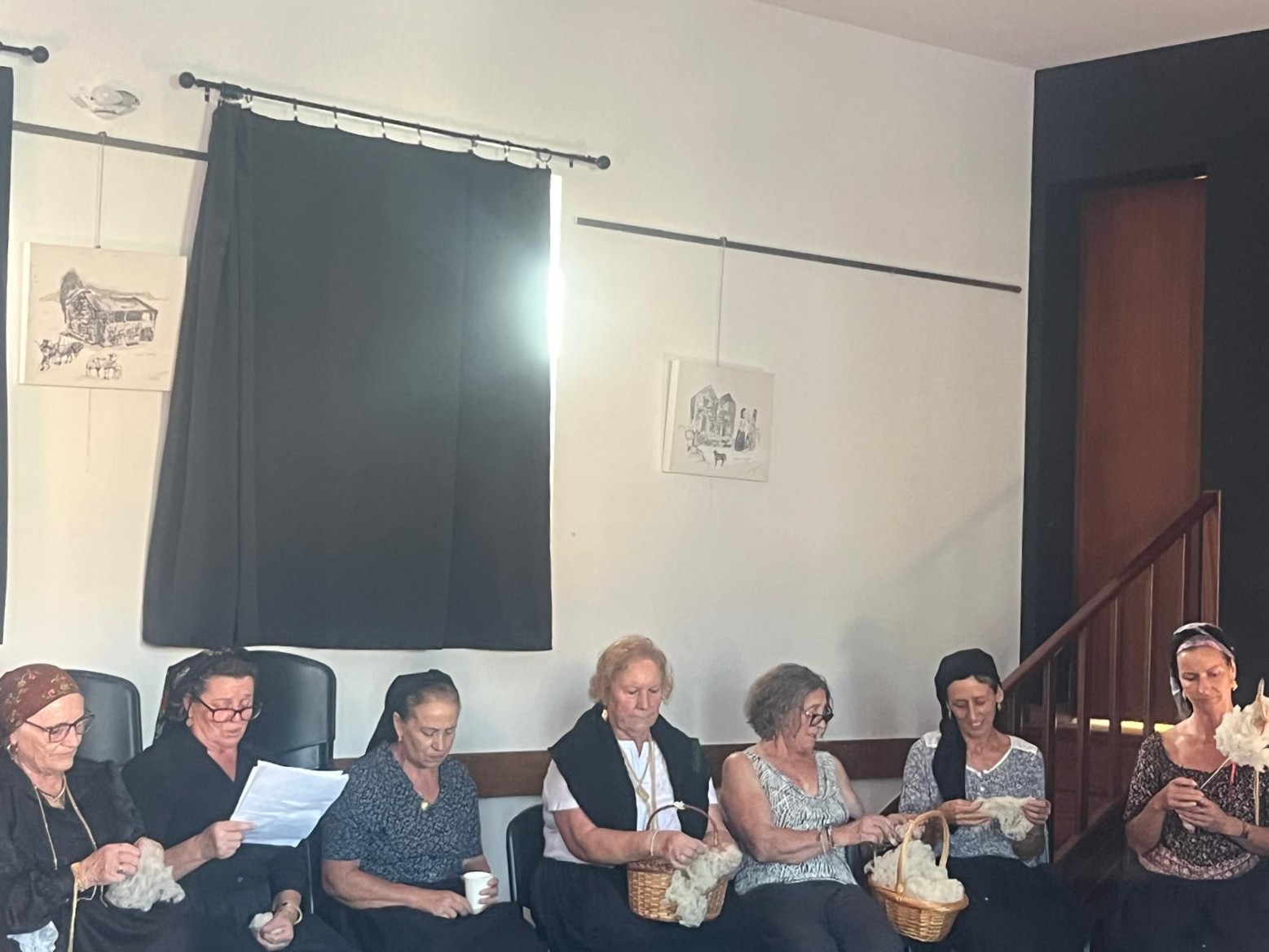
The event ended on a high note: with a musical performance by the Fiadeiras de Soajo, whose performance provided an important testament to the cultural heritage and local identity of the area.
It was a symbolic conclusion to a weekend that sought precisely to reinforce the link between ecological, cultural and community regeneration.
"Vizinhos da Branda": support community-led fire prevention
This event would not have been possible without the hard work and hospitality of "Vizinhos da Branda". This informal group of 13 residents from Branda do Murço has spent the last few years dedicated to reforesting the area, promoting biodiversity and implementing community-led solutions for fire prevention.
Through the “United Neighbourhood, Protected Branda” project, they are creating a living firebreak, restoring degraded ecosystems and demonstrating that prevention is possible when there is community organisation and a commitment to the area.
We invite everyone to find out more about this project and to support its crowdfunding campaign via this link.
What next? REGiMont continues, in a process that remains open to the community and is still evolving…
Over the coming months, the REGiMont community will build on the work already carried out through online sessions to monitor and facilitate the various working groups.
The aim will be to support the structuring of projects currently under development, consolidate partnerships and prepare applications for national and European funding opportunities.
The cycle will culminate in a final face-to-face meeting, scheduled for September 2027, in the Serra da Estrela region.
Throughout this journey, we have learnt that the diversity of experiences, knowledge and perspectives is one of the greatest strengths of territorial regeneration. For this reason, participation in the REGiMont community network remains open to anyone interested in contributing to the regeneration of rural areas.
If you would like to follow the work being carried out, take part in future sessions or join the working groups, you can do so by filling in this form. Everyone counts.
A gathering hosted by the residents of Branda do Murço
On the morning of Saturday 19 September, the REGiMont community was welcomed by local partners from Joyas da Terra, who led a guided tour of the area that hosted us throughout the weekend.
Situated in the heart of the mountains of the Peneda-Gerês National Park, above the village of Soajo, the Joyas da Terra project has been carrying out inspiring work in the fields of permaculture, agroforestry and ecological regeneration, whilst also incorporating practices linked to yoga and reconnecting with nature.
During the walk, we were able to explore the agroforestry areas, the cultivation plots and other regeneration processes that have been implemented over recent years by the many hands that care for the land with purpose.
The REGiMont community explored the area and learnt about local initiatives that are already bearing fruit. Photo: Palombar.
Co-creation: from seeds to harvests
Following the visit to the area, one of the key moments of the gathering began: the REGiMont co-creation workshops. Inspired by the natural cycles of regeneration, these sessions were organised around three distinct phases:
"Time to Sow": dedicated to generating new ideas and the emergence of future initiatives;
"Time to Prune": a space for critical reflection and the reworking of existing projects, seeking new ways to adapt them to funding and collaboration opportunities;
And “Time to Harvest”: focused on projects in the maturing phase, with a view to structuring them and preparing them for funding applications.
Throughout the various sessions, participants worked on ideas already discussed in the online working sessions, continuing to develop proposals initiated in previous months and exploring new possibilities for collaboration.
The event featured co-creation activities. Photo: Palombar.
Hands-on: a bio-construction workshop with CRU Atelier
On Saturday afternoon, participants had the opportunity to take part in a short bio-construction workshop led by Miguel del Castilho, from CRU Atelier. In a relaxed and participatory atmosphere, the workshop allowed participants to experiment with natural materials, explore low-impact building techniques and foster collective learning through hands-on practice.
The experience also provided a unique opportunity to strengthen relationships between participants, promoting creativity, experimentation and the building of trust within the group. Palombar would like to publicly thank Miguel del Castilho for his generosity and willingness to facilitate this session.
CRU Atelier, part of the Cooperativa Integral Minga in Montemor-o-Novo, carries out work centred on a responsible approach to construction, deeply rooted in the promotion of local materials and the ecological transition of the construction sector.
Participants shared their experiences, practices and knowledge. Photo: Palombar.
“Villages of the Future”: inspiration to imagine alternative paths
Saturday evening concluded with a screening of the documentary “Villages of the Future”. This film showcases a range of people, communities, projects and experiences that seek to reinvent Portuguese villages as places of belonging, sharing, creativity and social innovation.
At a time when many rural areas are facing challenges linked to depopulation and demographic change, the documentary offers a moment of inspiration for all those who believe in the ability of communities to build new futures for their local areas.
‘Villages of the Future’: a documentary to inspire and shape the future. Photo: Palombar.
Experiencing community fire prevention first-hand
Sunday morning, 20 September, began once again with an immersion in the local area. This time, participants visited the ecological and fire prevention infrastructure developed by Vizinhos da Branda as part of the “United Neighbourhood, Protected Branda” project.
Throughout the visit, it was possible to observe various initiatives that had already been implemented, including: vegetation management work; the construction of embankments designed to reduce soil erosion; the preparation of areas for the future planting of native forest; improvements to emergency access routes; and the creation of a pond to support fire prevention and firefighting efforts.
The visit provided a practical insight into how simple solutions, designed and implemented collectively, can increase the resilience of local areas against the risk of fire.
Continuing to turn ideas into projects
After the visit, the participants returned to their working groups to continue the co-creation processes begun the previous day.
The focus was on consolidating ideas, defining next steps and developing projects with the potential for future applications for various funding opportunities.
Throughout the weekend, proposals relating to post-fire regeneration, green building, community learning and new forms of citizen participation and territorial regeneration were explored in greater depth.
“aBranda o Fogo”: a discussion on the future, community and prevention
Sunday afternoon was devoted to the open discussion “aBranda o Fogo”, held at the Casa do Povo in Soajo. The event provided an opportunity to explore different perspectives on fire prevention, landscape regeneration and the role of communities in building more resilient local areas.
Throughout the session, experiences, challenges and solutions relating to community-led territorial management were shared, reinforcing the importance of coordination between local initiatives, associations and public bodies.
A finale marked by local culture and identity
The event ended on a high note: with a musical performance by the Fiadeiras de Soajo, whose performance provided an important testament to the cultural heritage and local identity of the area.
It was a symbolic conclusion to a weekend that sought precisely to reinforce the link between ecological, cultural and community regeneration.
Music and tradition to celebrate the region’s identity. Photo: Palombar.
"Vizinhos da Branda": support community-led fire prevention
This event would not have been possible without the hard work and hospitality of "Vizinhos da Branda". This informal group of 13 residents from Branda do Murço has spent the last few years dedicated to reforesting the area, promoting biodiversity and implementing community-led solutions for fire prevention.
Through the “United Neighbourhood, Protected Branda” project, they are creating a living firebreak, restoring degraded ecosystems and demonstrating that prevention is possible when there is community organisation and a commitment to the area.
We invite everyone to find out more about this project and to support its crowdfunding campaign via this link.
What next? REGiMont continues, in a process that remains open to the community and is still evolving…
Over the coming months, the REGiMont community will build on the work already carried out through online sessions to monitor and facilitate the various working groups.
The aim will be to support the structuring of projects currently under development, consolidate partnerships and prepare applications for national and European funding opportunities.
The cycle will culminate in a final face-to-face meeting, scheduled for September 2027, in the Serra da Estrela region.
Throughout this journey, we have learnt that the diversity of experiences, knowledge and perspectives is one of the greatest strengths of territorial regeneration. For this reason, participation in the REGiMont community network remains open to anyone interested in contributing to the regeneration of rural areas.
If you would like to follow the work being carried out, take part in future sessions or join the working groups, you can do so by filling in this form. Everyone counts.