


31 Mars 2026
LIFE SOS Pygargus attends INTER LIFE PT 2026 and the closing ceremony of LIFE CAP PT II
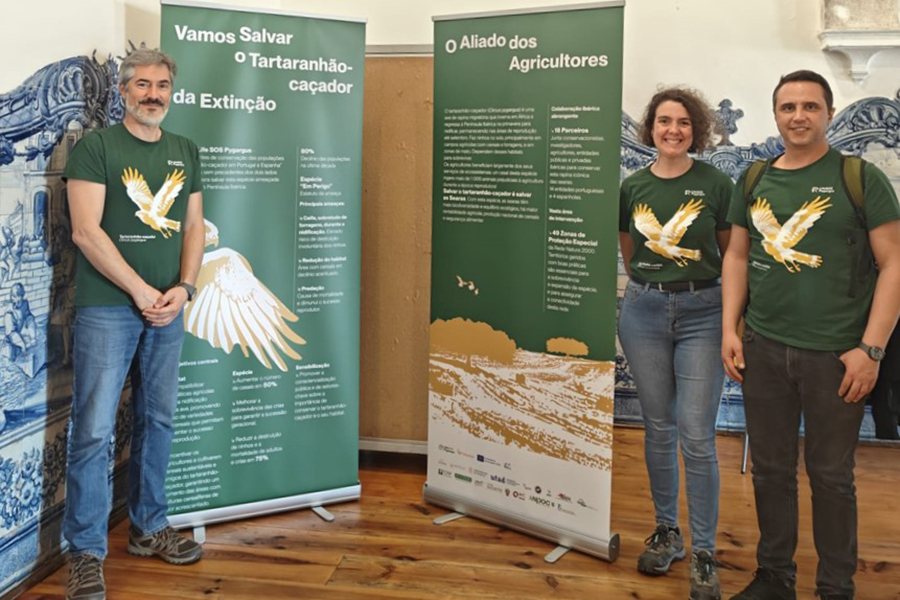
LIFE SOS Pygargus attended the 5th edition of INTER LIFE PT and the closing of LIFE CAP PT II, with the participation of José Pereira, Joaquim Teodósio and Liliana Barosa, from Palombar. Photo: Palombar
INTER LIFE is based on the sharing of experiences between LIFE projects, promoting networking and fostering the development of partnerships for future projects. Under the theme “The LIFE Programme in the Iberian Peninsula”, this 5th edition featured national projects due to end in 2026, projects now getting underway, winners of the 2024 call, and projects developed by the University of Évora, the event’s host, as well as projects coordinated by teams from Spain involving national partnerships. The programme also included a field visit to the LIFE Scrubsnet Project at Herdade Terra de Freiras.
.jpg)
The 5th edition of INTER LIFE PT 2026 featured the presentation of Portuguese and Spanish projects. Photo: Palombar
.jpg)
The INTER LIFE PT 2026 programme also included a field visit to the LIFE Scrubsnet Project at Herdade Terra de Freiras. Photo: Palombar
The closing session of LIFE CAP PT II marked the culmination of a project that has helped to strengthen national capacity for participation in the LIFE Programme, supporting Portuguese organisations in the preparation and management of applications. It was an opportunity to reflect on the key milestones achieved and the positive impact generated within the Portuguese LIFE community, featuring presentations by Joaquim Teodósio, conservation officer at Palombar and coordinator of LIFE SOS Pygargus, in Panel I “LIFE Programme: A Story with Impact”, assessing the evolution of the LIFE Programme over the years, and José Pereira, Chair of the Board of Palombar, in Panel III “Capacity Building Generates Projects: Success Stories”, on the impact of capacity building and the “community” effect among LIFE projects, citing the example of LIFE SOS Pygargus.
.png)
Presentation by Joaquim Teodósio, conservation officer at Palombar and coordinator of LIFE SOS Pygargus, in Panel I “LIFE Programme: A Story with Impact”. Photo: Palombar
.png)
Presentation by José Pereira, Chair of the Board of Palombar, at Panel III “Capacity Building Generates Projects: Success Stories”. Photo: Palombar
It was a two-day event held in an informal setting, focused on sharing information and experiences, which helped to raise awareness of the LIFE SOS Pygargus project and establish new contacts that will undoubtedly contribute to achieving the project’s objectives.
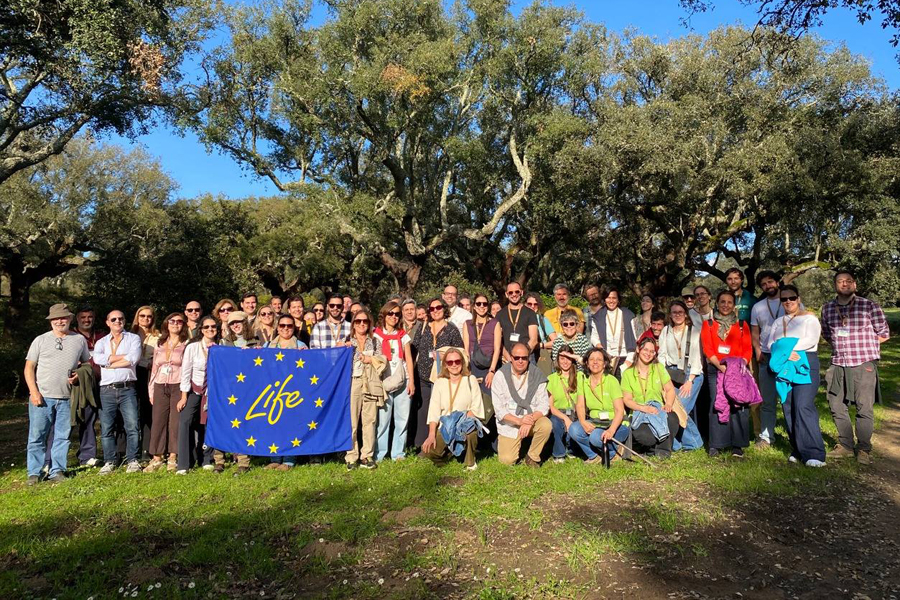
Participants in the field visit of the 5th edition of INTER LIFE PT 2026. Photo: LIFE CAP PT II
About the project
LIFE SOS Pygargus – Urgent conservation actions for Montagu’s harrier populations in Portugal and Spain is an Iberian project co-funded at 75% by the European Union’s LIFE Programme. It also receives co-funding from Viridia – Conservation in Action, Lightsource bp, the Portuguese Environmental Fund, and the Biodiversity Foundation of the Spanish Ministry for Ecological Transition and Demographic Challenge.
It is implemented by a consortium that includes Palombar – Nature and Rural Heritage Conservation (coordinating entity), BIOPOLIS-CIBIO Association, AEPGA – Association for the Study and Protection of Donkeys, ANPOC – National Association of Protein, Oilseed and Cereal Producers, CCDR-N – North Regional Coordination and Development Commission, EDIA – Alqueva Development and Infrastructure Company SA, ICNF – Institute for Nature Conservation and Forests, INIAV – National Institute for Agricultural and Veterinary Research, LPN – Nature Protection League, MC Shared Services SA, Modelo Continente Hipermercados SA, SPEA – Portuguese Society for the Study of Birds, UTAD – University of Trás-os-Montes and Alto Douro, Vita Nativa – Environmental Conservation, AMUS – Action for Wild World, the Department of Agriculture, Livestock and Sustainable Development of the Regional Government of Extremadura, GREFA – Group for the Rehabilitation of Native Fauna and its Habitat, and the University of Murcia.